A pizza stone can transform the crust of homemade pizza, but it does not need to look brand-new to perform well. In fact, dark spots, discoloration, and a well-used appearance are completely normal. What matters is keeping the surface free from thick, raised food residue while protecting the stone from moisture and sudden temperature changes.
Unlike an aluminum or stainless steel baking tray, a traditional cordierite or unglazed ceramic baking stone is porous. That porous structure helps absorb moisture from pizza dough, but it also means the stone needs a different cleaning routine. As a chef, my rule is simple: clean gently, avoid unnecessary moisture, and never rush the cooling process. Many other professional chef, like those from Food Network and King Arthur Baking, also emphasize allowing the stone to cool completely before cleaning and avoiding soap because porous surfaces can absorb it.
If you’re still choosing a stone for your kitchen, you can also see our guide on the Best Baking Stones for Oven in 2026.
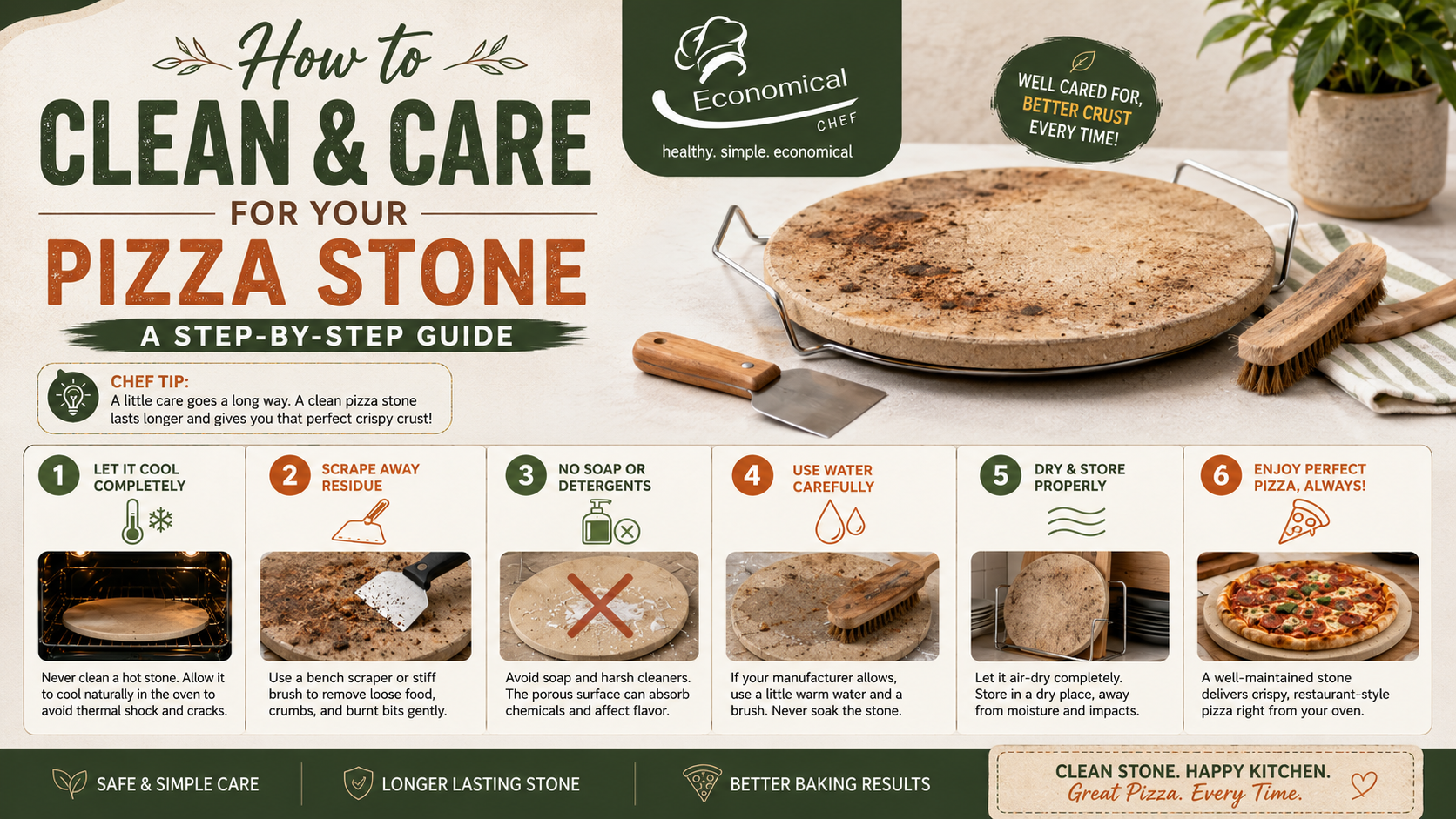
How to Clean a Pizza Stone Step by Step
1. Let the Pizza Stone Cool Completely
The most important rule is to never clean a hot pizza stone.
After cooking, turn off the oven or pizza oven and allow the stone to cool naturally. Don’t carry a scorching-hot stone to the kitchen sink and don’t pour water over it. A sudden temperature change can create thermal shock, potentially causing the stone to crack.
Depending on how hot the stone became, cooling can take an hour or longer. Food Network recommends letting the stone cool completely before brushing or cleaning it.
Chef’s tip: If you’re using a conventional oven, leaving the stone inside while the oven cools is often the safest approach.
2. Scrape Away Burnt Food and Crumbs
Once the stone is completely cool, remove loose flour, cheese, sauce, and other food particles.
Use a wooden or plastic scraper, bench scraper, or stiff brush to gently loosen stubborn residue. Avoid aggressively digging into the surface because scratches and grooves can create places where food becomes trapped.
For routine maintenance, you may not need anything more than brushing away crumbs after each use. It’s worth to note that pizza stones generally require very little deep cleaning unless there has been a significant spill.
3. Avoid Soap and Harsh Cleaning Products
One of the biggest mistakes when cleaning a pizza stone is treating it like a regular baking tray.
Do not use dish soap or detergent unless the manufacturer specifically says it is safe for your particular stone. Porous, unglazed stones can absorb cleaning products, potentially affecting the flavor of food during subsequent baking.
You should also avoid abrasive metal scourers that can damage the cooking surface.
4. Be Careful With Water
This is one area where care instructions can vary between manufacturers.
Some manufacturers and cooking authorities allow a brief rinse or light scrubbing with warm water after the stone has completely cooled. Others, including Ooni and King Arthur Baking, recommend keeping porous stones dry and avoiding water altogether.
For that reason, always follow the cleaning instructions supplied with your specific pizza stone.
If the manufacturer permits water, use only a small amount of warm water and never soak the stone. Let it air-dry completely before using it again.
5. Don’t Worry About Dark Stains
A frequently used pizza stone will naturally develop brown, black, or gray marks. This is not necessarily a sign that the stone needs aggressive cleaning.
Think of these marks as part of the stone’s cooking history. Food Network and King Arthur Baking both note that discoloration and patina are normal as pizza stones are repeatedly heated and used.
Instead of trying to make the stone look factory-new, focus on removing thick, loose, or sticky residue that could smoke or burn during your next pizza session.
How to Remove Stubborn Burnt-On Food
For cheese or sauce that has become firmly baked onto the surface, allow the stone to cool completely and then use a scraper to gently lift the residue.
Some manufacturers recommend using a dry brush after heating the oven to burn away food residue. Ooni, for example, recommends running its pizza ovens at high heat to carbonize residue before brushing the cooled stone clean.
If your stone’s manufacturer permits water-based cleaning, a small baking-soda paste can sometimes help with stubborn stains. However, don’t assume this method is suitable for every stone — check the manufacturer’s care instructions first.
How to Prevent Pizza Stone Damage
Good maintenance starts before the cleaning process. Avoid these common mistakes:
❌ Don’t put a cold stone into an already extremely hot oven.
❌ Don’t place a hot stone under cold or running water.
❌ Don’t soak or submerge the stone.
❌ Don’t use dish soap or detergent unless specifically approved.
❌ Don’t use harsh metal scourers.
❌ Don’t oil or season a traditional pizza stone like cast iron.
❌ Don’t place heavy cookware on top of a stored stone.
Sudden temperature changes are particularly important to avoid because thermal shock can cause cracking.
How to Store a Pizza Stone
Once the stone is completely clean and dry, store it somewhere protected from impacts and moisture. A cupboard or pantry with enough room around the stone is ideal.
If you frequently use a stone in a conventional oven, you may choose to leave it inside the oven between baking sessions, provided the manufacturer allows it and it doesn’t interfere with other cooking. Normally, storing a stone in the oven can reduce unnecessary handling and the risk of accidentally dropping it.
For outdoor cooking, however, it’s better to protect the stone from rain and humidity and store it somewhere dry when it isn’t being used.
Final Chef’s Tips for Long-Lasting Pizza Stone Care
The best way to care for a pizza stone is surprisingly simple: let it cool, scrape it clean, keep it dry when required by the manufacturer, and accept normal discoloration. You don’t need to scrub away every dark mark, and aggressive cleaning can do more harm than good.
A well-maintained stone can provide years of use for baking crisp homemade pizzas, frozen pizzas, breads, and flatbreads. If you’re ready to upgrade your baking setup, explore our 15 Best Baking Stones for Oven in 2026 to compare different sizes, materials, and designs for your kitchen.