If you’ve ever tried grating cheese and ended up with a clogged, messy grater instead of clean, fluffy shreds — you’re not alone. It’s one of the most common kitchen frustrations, and as the visual guide shows, it usually comes down to a few simple mistakes.
From a professional kitchen standpoint, cheese sticking isn’t random. It’s caused by heat, moisture, fat, and friction—and once you control those, grating becomes smooth and effortless.
Let’s break down exactly why cheese sticks — and the five practical fixes you can start using immediately.
Why Cheese Sticks to Your Grater
Before jumping into solutions, here’s what’s really happening that cause cheese to stick on your grater:
- Warm cheese softens and smears instead of cutting cleanly
- Fat content causes cheese to cling to metal surfaces
- Moisture buildup increases friction
- Residue on the grater makes sticking worse over time
So, the goal is simple: reduce friction and keep the cheese firm enough to grate cleanly.
5 Easy Ways to Prevent Cheese from Sticking to Your Grater
1. Lightly Oil the Grater (Instant Non-Stick Trick)
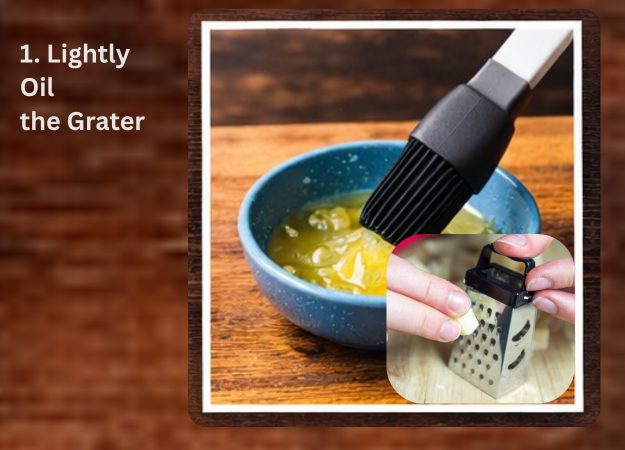
As we have shown in the image, applying a small amount of oil to the grater surface can dramatically reduce sticking.
How to Do It:
- Lightly brush or rub a thin layer of cooking oil over the grater
- Use a paper towel or brush for even coverage
- Don’t overdo it—a thin film is enough
Why It Works:
Oil creates a barrier between the cheese and the metal, preventing it from clinging to the surface.
Best For:
- Sticky cheeses like cheddar or mozzarella
- Large batch grating
Chef’s Tip: Use a neutral oil (like vegetable oil) to avoid affecting flavor.
2. Use Non-Stick Spray (Fastest Shortcut)
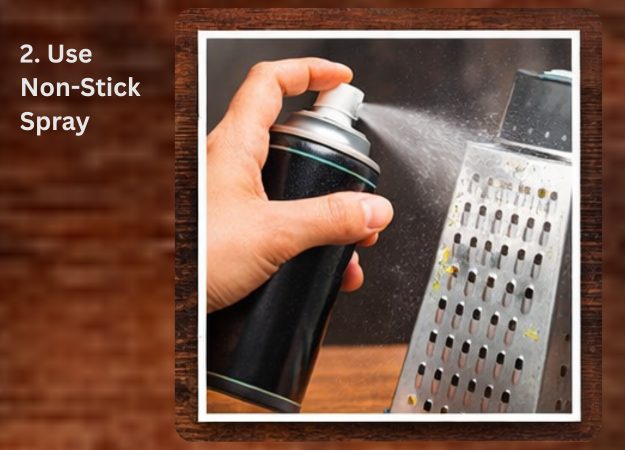
Our image also highlights a spray-on solution—this is the quickest method if you want convenience.
How to Do It:
- Spray a light coat directly onto the grater
- Let it sit for a few seconds before grating
Why It Works:
Non-stick spray contains oil and emulsifiers that reduce friction instantly.
Best For:
- Quick cooking sessions
- Beginners looking for an easy fix
Chef’s Tip: This works especially well when you’re grating multiple types of cheese back-to-back.
👉 Related: Learn Why Your Cheese Won’t Grate Properly (And How to Fix It) for more texture-related issues.
3. Dust the Grater or Cheese Lightly (Moisture Control)
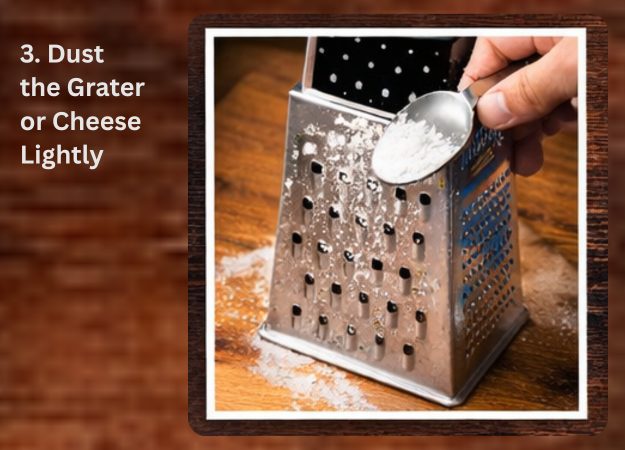
Another method shown is sprinkling a small amount of flour onto the grater.
How to Do It:
- Lightly dust the grater surface or the cheese itself
- Shake off excess before grating
Why It Works:
The flour absorbs moisture and reduces stickiness, helping cheese pass through the grater more cleanly.
Best For:
- High-moisture cheeses
- Situations where sticking is severe
Chef’s Tip: Use this method carefully—it’s best for recipes where a tiny amount of flour won’t affect the final dish (like sauces or baked meals).
4. Chill the Cheese Before Grating (Most Effective Method)
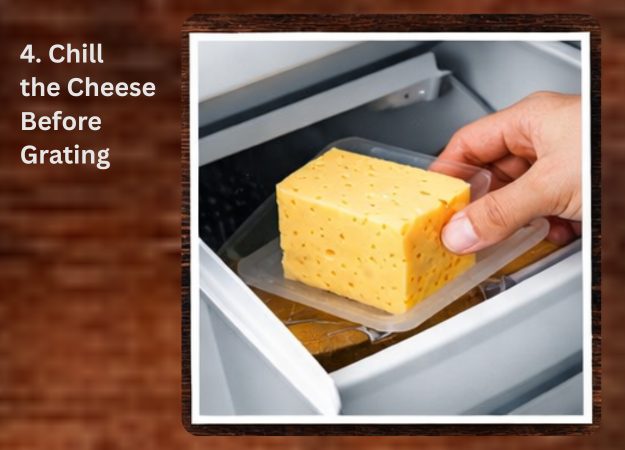
Chill your cheese in the freezer — this is one of the most reliable solutions.
How to Do It:
- Place cheese in the freezer for 15–20 minutes
- Remove once firm but not frozen solid
Why It Works:
Cold cheese is firmer and less sticky, allowing it to shred cleanly with a microplane or rotary or electric grater instead of smearing.
Best For:
- Soft or semi-soft cheeses
- Hot kitchen environments
Chef’s Tip: This is the go-to method in professional kitchens. If you only use one trick from this list — make it this one.
👉 Related: Check out our guide on How to Soften Hard Cheese for Easier Grating if your cheese is too firm to work with.
5. Keep Your Grater Clean and Dry
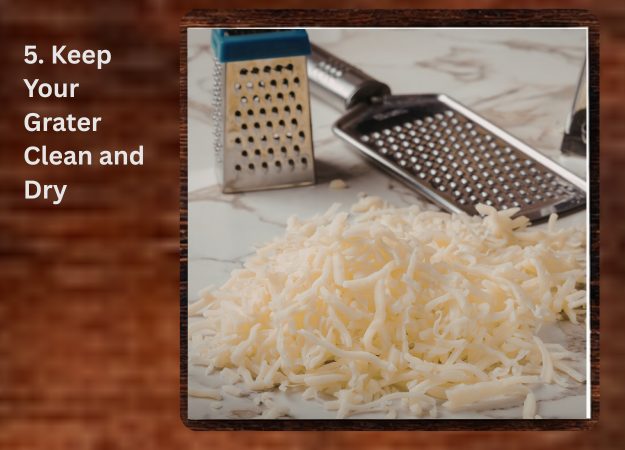
A dirty grater is one of the biggest hidden causes of sticking, as shown in the guide.
How to Do It:
- Wash your grater immediately after use
- Use a brush to remove stuck cheese
- Dry completely before storing
Why It Works:
Old residue creates a sticky surface that fresh cheese clings to instantly.
Best For:
- Everyday kitchen maintenance
- Long-term performance
Chef’s Tip: If cheese starts sticking mid-process, rinse and dry the grater quickly—it makes a noticeable difference.
Choosing the Right Approach
Each method works—but the best choice depends on your situation:
- For quick results: Non-stick spray
- For best overall performance: Chill the cheese
- For heavy sticking issues: Combine oil + chilling
- For long-term improvement: Keep your grater clean
In real kitchen workflows, combining two methods often gives the best results.
Extra Chef Tips for Smooth, Mess-Free Grating
Beyond what’s shown in the image, these small adjustments can make a big difference:
1. Don’t Press Too Hard
Let the grater do the work. Too much pressure increases friction and causes sticking.
2. Use Steady, Controlled Movements
Fast, uneven motion creates heat—which softens cheese and leads to clumping.
3. Rotate the Cheese Block
This prevents uneven wear and keeps the surface firm.
4. Work in Small Batches
If the cheese starts warming up, pause and chill it again.
Final Thoughts
Cheese sticking to your grater isn’t a tool failure — it’s a technique issue that’s easy to fix. As the visual guide demonstrates, a few simple adjustments—like chilling the cheese, oiling the surface, or keeping your grater clean—can completely change your results.
From a chef’s perspective, efficiency in the kitchen comes down to control. When you manage temperature, moisture, and friction, even the simplest tools perform better.
Once you apply these fixes, you’ll get clean, consistent shreds every time — no clumps, no frustration, and no wasted effort.
1 thought on “How to Prevent Cheese from Sticking to Your Grater (5 Easy Fixes That Actually Work)”