A cast iron skillet with a lid is more versatile than a basic frying pan. You can use it to sear a steak, fry chicken, sauté vegetables, braise meat, simmer sauces, bake, and finish dishes in the oven — all in the same piece of cookware. Cast iron is especially useful for high-heat cooking because it retains heat well, which helps maintain a steady cooking temperature when food is added. The University of Maine Cooperative Extension also highlights cast iron’s heat retention and its usefulness for searing proteins. As a chef, I recommend preheating gradually rather than automatically turning the burner to maximum. Cast iron holds onto that heat, so once the pan is properly heated, moderate-to-medium-high heat is often enough.
The lid expands that versatility even further. Instead of using the skillet only for open-pan cooking, you can trap heat and moisture for braising, simmering, steaming, and finishing dishes. As a chef, I recommend thinking of the skillet and lid as a two-part cooking system: use the uncovered pan to build color and flavor, then use the lid when you need moisture and controlled cooking.
Here’s Our Chef’s 7 Tips on How to Effectively Use a Cast Iron Skillet with a Lid
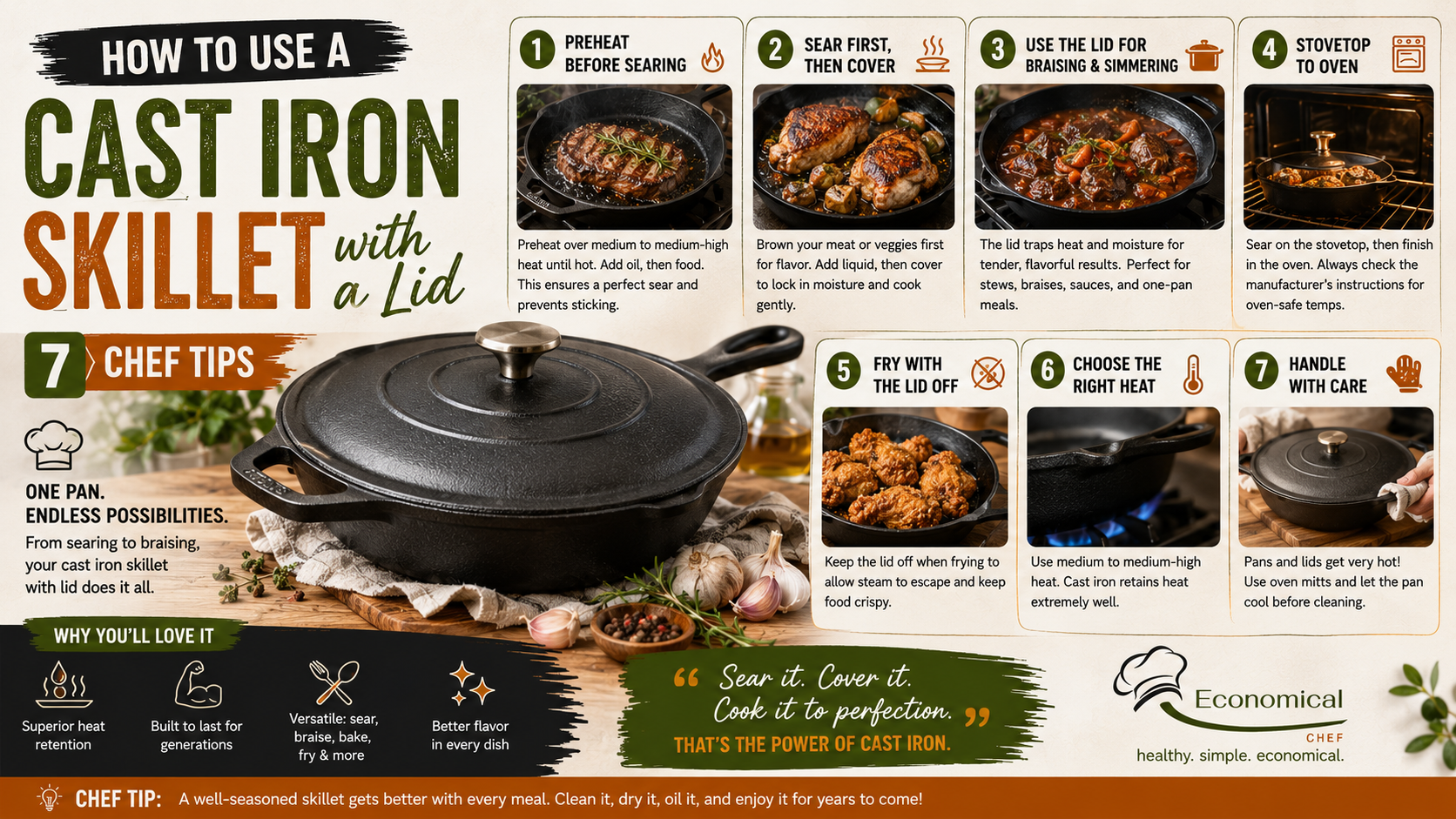
1. Preheat the Skillet Before Searing
One of the biggest mistakes beginners make with cast iron is adding food to a cold pan. Because cast iron takes longer to heat than lightweight cookware, give it time to come up to temperature gradually.
For searing steak, chicken, pork, or vegetables, preheat the skillet over medium to medium-high heat before adding your cooking oil. Once the oil is shimmering, add the food and give it enough space.
I don’t recommend immediately turning the burner to maximum heat. Cast iron retains heat extremely well, so moderate heat is often enough once the pan is properly heated. This helps you develop a good crust without unnecessarily scorching the outside of the food.
2. Sear First, Then Cover
This is where a cast iron skillet with lid becomes particularly useful.
When braising meat or preparing a one-pan meal, start with the lid off. Brown your meat or vegetables first to develop color and flavor. Once you’ve built the initial sear, add your cooking liquid, aromatics, or sauce and put the lid on.
The covered environment slows moisture loss and allows the food to cook more gently. This technique works particularly well for chicken thighs, pork chops, short ribs, sausages, cabbage, and hearty vegetables.
Chef’s Tip: Don’t cover the skillet too early. If you’re trying to brown meat, trapped steam works against you. Brown first; cover second.
3. Use the Lid for Braising and Simmering
A fitted lid transforms a skillet into a useful braising pan. After browning your ingredients, add enough liquid to create a moist cooking environment without completely submerging the food.
Reduce the heat, cover the skillet, and allow the food to cook gently.
This is especially useful for:
- Braised chicken
- Pork chops
- Sausages and peppers
- Meatballs
- Beans
- Cabbage
- Root vegetables
- Tomato-free pan sauces
- One-pan comfort meals
Some cast iron lids include raised condensation points designed to return moisture toward the food. These are particularly useful when slow cooking because they help reduce unnecessary moisture loss.
4. Use It for Stovetop-to-Oven Cooking
One of my favorite reasons to use cast iron is the ability to start a dish on the stovetop and finish it in the oven. This eliminates an extra pan and reduces cleanup.
For example, you can:
- Sear chicken thighs on the stovetop.
- Add vegetables and seasoning.
- Add a small amount of stock or sauce.
- Cover the skillet.
- Transfer it to a preheated oven.
- Finish cooking until the food reaches the desired doneness.
Many cast iron skillets are oven compatible, but never assume every lid or handle has the same heat rating. Glass lids, silicone handle covers, stainless-steel knobs, and enameled surfaces may have different temperature limitations. Always check the manufacturer’s instructions before oven use. Illinois Extension similarly recommends checking cookware labeling to confirm that a material is oven-safe.
5. Fry With the Lid Off
Cast iron is excellent for frying because it retains heat well. Use it for fried chicken, potatoes, eggs, vegetables, and other foods that benefit from a stable cooking temperature.
For most frying tasks, however, I recommend keeping the lid off.
A lid traps steam, which can soften food you’re trying to keep crisp. If you’re frying chicken or potatoes, for example, you generally want moisture to escape rather than remain trapped inside the pan.
The lid becomes more useful after frying or browning, when you want to transition into simmering or covered cooking.
6. Choose the Right Heat for the Job
Cast iron doesn’t need maximum heat to perform well. In fact, controlling the heat is one of the most important skills when cooking with it.
For delicate foods such as eggs or fish, start with moderate heat and allow the pan to stabilize. For steaks and other foods that need a strong sear, medium-high heat may be appropriate after proper preheating.
Remember that cast iron remains hot for a long time. If the skillet becomes too hot, simply turning the burner down may not cool it immediately.
The University of Illinois Extension also notes that cast iron is highly versatile and can be used for everything from searing and stir-frying to baking.
7. Be Careful When Handling the Lid and Pan
Cast iron cookware becomes extremely hot, including the handles and lid. Always use a dry oven mitt, thick towel, or appropriate heat-resistant handle cover when moving it.
This is particularly important when transferring a full skillet from the stovetop to the oven or table. A 12-inch cast iron skillet filled with food can be surprisingly heavy.
For outdoor cooking, cast iron is also well suited to grills and campfires. As chef, we recommend using appropriate heat protection and stable cooking equipment when preparing food over a fire.
Foods That Work Especially Well
If you’re new to cooking with a lidded cast iron skillet, start with recipes that take advantage of its strengths.
- For high-heat cooking: steak, pork chops, chicken, burgers, and roasted vegetables.
- For covered cooking: braised chicken, sausages, cabbage, beans, and vegetables.
- For oven cooking: cornbread, skillet potatoes, casseroles, baked pasta, and roasted meats.
- For one-pan meals: chicken and vegetables, sausage and peppers, skillet rice dishes, and hearty breakfast hashes.
One caution: if you’re cooking highly acidic, moisture-rich foods for an extended period in traditional bare cast iron, pay attention to the condition of your seasoning. University of Illinois Extension notes that acidic foods can interact with cast iron and may require more frequent re-seasoning. Enameled cast iron can be a useful alternative for cooks who frequently prepare acidic dishes.
Chef’s Final Tip
The best way to think about a lidded cast iron skillet is as a searing pan, braiser, roasting vessel, and one-pan cooker in one. Start uncovered when you need browning and evaporation; add the lid when you want to retain heat and moisture. Once you learn to control the heat and use the lid at the right stage, a good cast iron skillet can handle a surprisingly large portion of everyday cooking.
If you’re looking for the right pan for these techniques, check out our guide to Best Cast Iron Skillets with Lids in 2026, where we compare traditional and enameled options for different cooking needs.