Hard cheese can be a real workout in the kitchen. You grab your rotary or electric grater, apply pressure — and instead of smooth, even shreds, you get resistance, uneven chunks, or worse, sore hands.
As our chef’s visual guide below shows, the problem isn’t your technique — it’s the texture of the cheese. When cheese is too hard, dry, or cold, it simply won’t cooperate.
The good news? You don’t need expensive tools or special equipment. With a few practical methods used in professional kitchens, you can soften hard cheese quickly and make grating effortless.
Let’s break down the four most effective methods—and when to use each one.
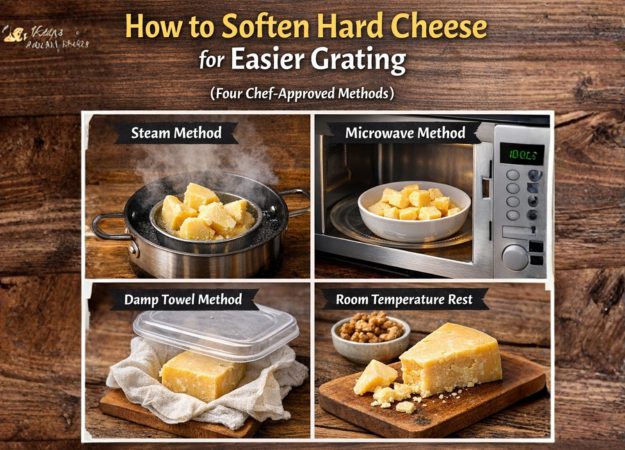
Why Hard Cheese Is Difficult to Grate
Before jumping into solutions, it’s important to understand what’s happening.
Hard cheeses lose moisture as they age. That’s why varieties like aged cheddar or parmesan feel dense and brittle. When you try to grate them:
- They resist pressure
- They break unevenly
- They can crumble instead of shred
The goal isn’t to melt the cheese—it’s to slightly soften the structure so it cuts cleanly against the grater.
The Four Methods by Our Chef
1. Steam Method (Gentle and Even Softening)
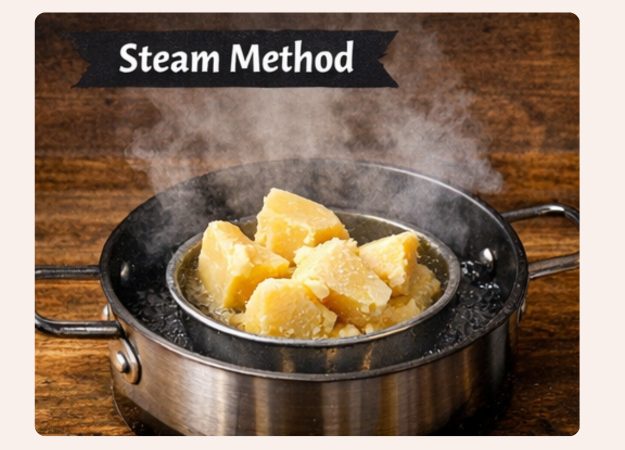
As shown in the image, our chef uses the method of steaming to gently warm the cheese without direct contact with water.
How to Do It:
- Bring a small pot of water to a simmer.
- Place the cheese in a heat-safe bowl or strainer above the steam (not touching water).
- Cover loosely and let it sit for 2–5 minutes.
Why It Works:
Steam adds gentle heat and a touch of moisture, softening the outer layer without melting the cheese.
Best For:
- Very hard cheeses (parmesan, pecorino)
- Large blocks that need even softening
Chef’s Tip: Keep an eye on it. Too much steam can make the surface damp, which may affect grating.
2. Microwave Method (Fastest Option)
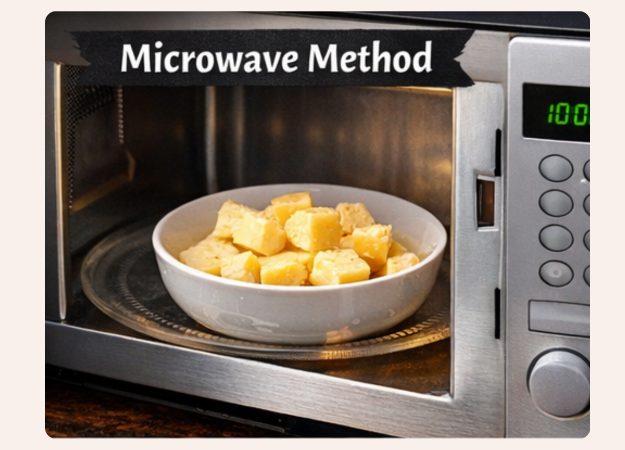
Another method that our chef always does is the use of microwave to soften the cheese. In this method, our chef has placed the cheese cubes briefly heated in a microwave — this is the quickest fix when you’re short on time.
How to Do It:
- Cut cheese into small chunks.
- Place in a microwave-safe bowl.
- Heat in 5–10 second intervals.
- Check frequently and stop once slightly softened.
Why It Works:
Short bursts of heat soften the fat inside the cheese, making it easier to grate.
Best For:
- Quick meal prep
- Semi-hard cheeses
Chef’s Tip: Be careful — microwaving too long will melt the cheese, not soften it. Once it starts sweating or glossing, stop immediately.
3. Damp Towel Method (Balanced Moisture Control)
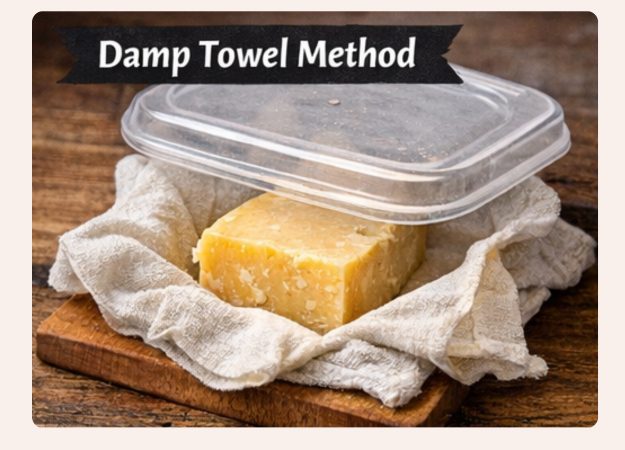
Do you know you can also use the towel to warm your cheese? It’s one of the easy ways. you just wrap your cheese in a damp cloth and cover it for awhile. This method uses retained moisture to soften the cheese gradually.
How to Do It:
- Wrap the cheese in a clean, slightly damp towel.
- Place it in a container or cover it loosely.
- Let it rest for 10–15 minutes.
Why It Works:
The damp towel prevents the cheese from drying out while gently softening the exterior.
Best For:
- Medium to hard cheeses
- Maintaining natural flavor and texture
Chef’s Tip: Make sure the towel is only slightly damp—not wet. Too much moisture can make the cheese sticky.
4. Room Temperature Rest (Simplest Method)
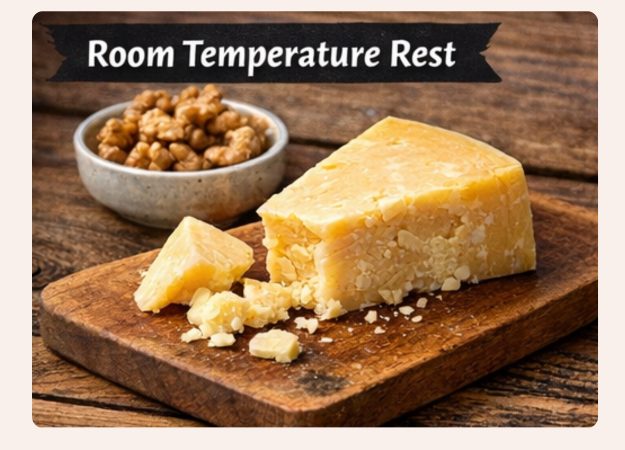
As the old chef saying, sometimes the easiest solution is the best. You just need to give your cheese time to rest. Leaving your cheese resting on a board for sometimes — no tools, no heat. Yet, this method will only works if you are not in a rush.
How to Do It:
- Remove cheese from your fridge.
- Let it sit at room temperature for 20–30 minutes.
Why It Works:
As the cheese warms naturally, the fats soften, making it easier to grate.
Best For:
- Everyday cooking
- Semi-hard cheeses like cheddar or gouda
Chef’s Tip: This method preserves the cheese’s original texture the best. It’s the safest option if you’re unsure.
Choosing the Right Method
Each method has its place depending on your situation:
- In a hurry? → Microwave method
- Working with very hard cheese? → Steam method
- Want balanced results? → Damp towel
- Prefer simplicity? → Room temperature rest
In a professional kitchen, timing matters. At home, you can choose the method that fits your workflow.
Extra Chef Tips for Perfect Grating
Even after softening, a few small adjustments can improve your results:
1. Use the Right Grater Surface
Match the cheese to the grater:
- Fine holes → hard cheeses
- Large holes → softer cheeses
2. Don’t Over-Soften
Cheese should feel slightly firm—not soft or sticky. Over-softening leads to clogging.
3. Work in Small Batches
If the cheese starts firming up again, repeat the process instead of forcing it.
4. Keep Your Grater Clean
A clean grater reduces friction and improves consistency.
Final Thoughts
Hard cheese doesn’t have to slow you down in the kitchen. As the guide shows, a few simple techniques—steam, microwave, damp towel, or just time—can transform a tough block into something easy to work with.
From a chef’s perspective, control is everything. You don’t need fancy equipment—just a good understanding of how temperature and moisture affect texture.
Once you start softening cheese the right way, grating becomes faster, smoother, and far more consistent—exactly what you want when cooking efficiently.