A cold press juicer can produce excellent homemade juice, but regular cleaning is essential if you want the machine to remain convenient and perform well. Pulp, fruit sugars, and vegetable fibers can quickly collect around the auger, strainer, chute, and other components.
As a chef, I’ve found that cleaning a cold press juicer immediately after use is much easier than trying to remove dried-on residue later. Food Network also recommends disassembling juicers after use, washing removable components with warm, soapy water, and giving particular attention to the fine filter where pulp can accumulate.
The good news is that cold press juicer cleaning doesn’t have to be difficult. With the right routine, you can usually rinse, scrub, dry, and reassemble the machine without spending much time on it. Here’s my step-by-step method for keeping a masticating or slow juicer clean and ready for the next batch.
A Step-by-Step Guide to Clean a Cold Press Juicer
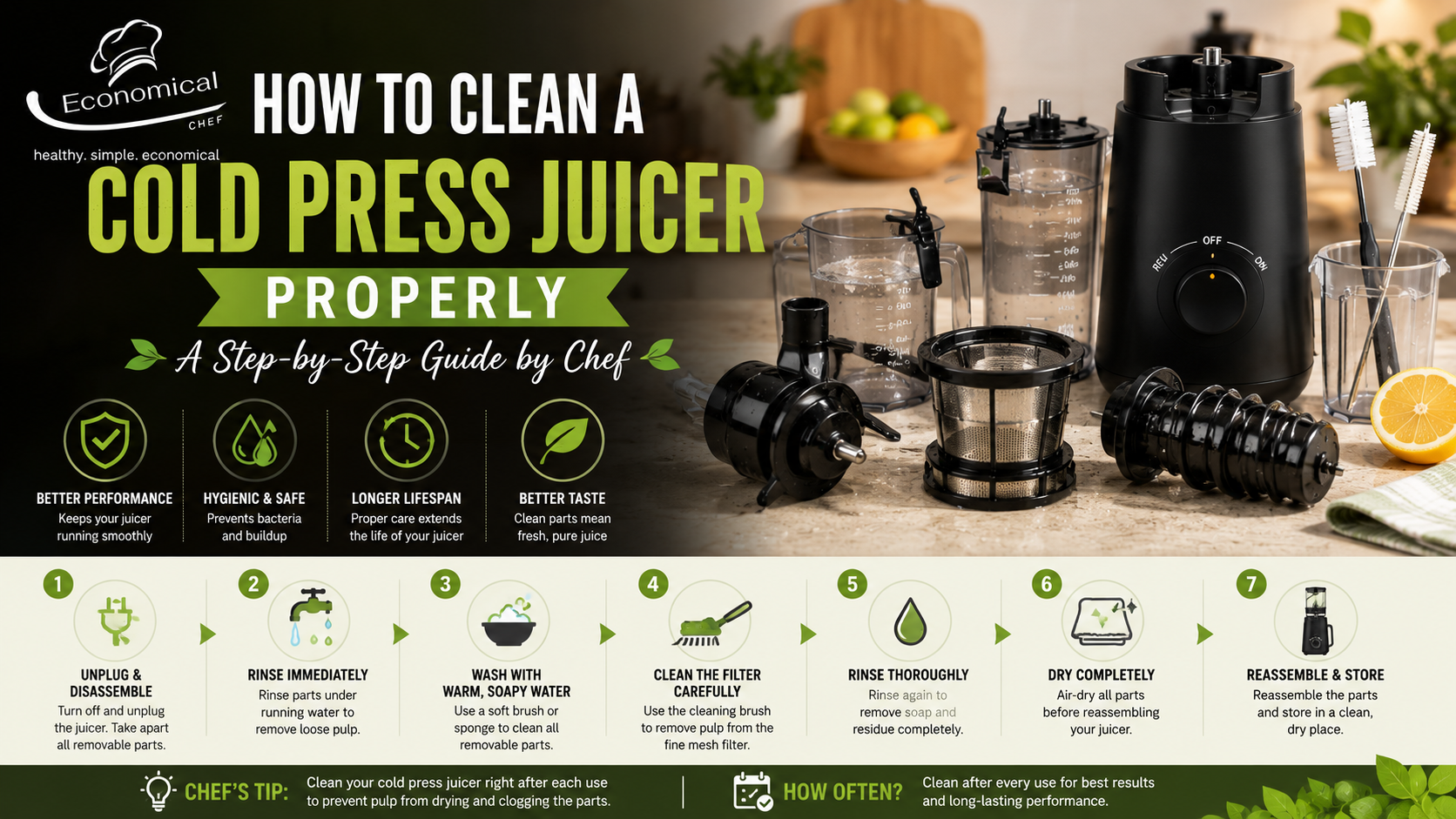
Step 1: Unplug the Juicer and Disassemble It
Before cleaning, switch off the machine and unplug it from the electrical outlet. Never attempt to clean around the motor while the juicer is connected to power.
Remove the juice container, pulp container, feeding chute, auger, strainer, and other removable components according to the manufacturer’s instructions. Don’t force parts apart if they feel stuck. Some models use locking mechanisms that need to be turned or released in a specific order.
The motorized base should remain separate from the water. We recommends wiping the motor housing with a damp cloth rather than submerging it.
If you’re still deciding which model to buy, cleaning should be one of your priorities. A juicer that is easy to disassemble, clean, and reassemble is more likely to become part of your regular kitchen routine. You can compare those practical features in Our Guide to the Best Cold Press Juicers for Your Kitchen before choosing your next machine.
Step 2: Rinse Away Fresh Pulp Immediately
Don’t let the leftover pulp sit on the components while you finish other kitchen tasks. Rinse removable parts soon after juicing to loosen the wet pulp before it dries.
This is especially important when working with fibrous ingredients such as celery, ginger, leafy greens, and carrots. These ingredients can leave strands behind that become much harder to remove once they dry.
A quick rinse immediately after use is one of my simplest juicer maintenance tips. It can make the deeper cleaning process considerably easier.
Step 3: Wash the Removable Parts
Use warm water and dish soap to wash the removable components. A soft sponge or suitable cleaning brush works well for the auger, juice container, pulp container, and feeding components.
Some cold press juicers have dishwasher-safe parts, but don’t assume every component can go into the dishwasher. Always check the manufacturer’s instructions first, particularly for plastic components, seals, strainers, and other specialized parts.
We also recommend washing removable juicer components with hot, soapy water and checking whether individual parts are dishwasher-safe.
Step 4: Pay Special Attention to the Juicer Filter
The filter or strainer is usually the part that requires the most attention. Its tiny openings separate juice from pulp, so fine particles can become trapped inside them.
If you’re wondering how to clean a cold press juicer filter, start by rinsing it under running water. Then use the cleaning brush supplied with the machine — or another soft-bristled brush — to gently work pulp out of the openings.
For stubborn buildup, soaking the filter in warm, soapy water can help loosen residue before brushing. It is also recommended soaking a stainless-steel filter basket for approximately 10 minutes when necessary.
Avoid using abrasive tools that could damage the filter. A clean filter is particularly important for maintaining consistent juice flow and preventing unnecessary buildup.
Step 5: Clean the Seals, Corners, and Small Openings
After cleaning the major components, inspect the areas that are easy to overlook. Check around rubber seals, juice outlets, grooves, locking points, and small corners where pulp can hide.
If your juicer has a silicone stopper or juice cap, open or remove it according to the manufacturer’s instructions and rinse around the opening. Small amounts of trapped pulp can become sticky and unpleasant if left there repeatedly.
This step is also important when learning how to prevent pulp buildup in a juicer. Regular attention to these small areas is much easier than waiting until residue becomes hardened.
Step 6: Wipe the Motor Base
The main motor base should generally be cleaned with a damp cloth rather than being placed under running water or submerged.
Wipe away juice splashes, fingerprints, and food residue from the exterior. Then dry the surface with a clean towel.
Never allow water to enter electrical openings, switches, or other areas that aren’t designed to get wet. When in doubt, follow the cleaning instructions supplied with your particular model.
Step 7: Rinse and Dry Everything Completely
Once the removable components are clean, rinse away any remaining soap. Place the parts on a clean drying rack or towel and allow them to dry completely before reassembling the machine.
We recommend ensuring juicer components are completely dry before putting the machine back together and storing it.
From a practical kitchen perspective, I prefer air-drying the parts separately rather than immediately stacking everything together. This gives moisture a chance to evaporate and makes it easier to spot any remaining pulp.
How Often Should You Clean a Cold Press Juicer?
You should clean a cold press juicer after every use. A quick rinse immediately after juicing followed by proper washing is the best routine for regular home use. If residue has already dried or accumulated, a longer soak may be necessary.
Also remember that cleaning the appliance is only part of good juicing hygiene. The U.S. Food and Drug Administration (FDA) recommends washing fresh fruits and vegetables thoroughly under running water before preparing them and advises against using soap or household detergent on produce.
Final Tips for Easier Cold Press Juicer Cleaning
The easiest way to maintain a masticating juicer is to clean it as soon as you’re finished juicing. Keep the supplied cleaning brush nearby, rinse the filter before pulp dries, and check the manufacturer’s instructions before using a dishwasher or any cleaning solution.