Fresh cold press juice is best enjoyed soon after extraction, but sometimes making a larger batch is more convenient than preparing a glass every time. Proper storage can help preserve the juice’s flavor and quality while reducing unnecessary waste. However, homemade juice is unpasteurized, so storage should also be approached as a food-safety issue — not simply a matter of keeping the juice tasting fresh. The U.S. Food & Drug Administration (FDA) notes that fresh-squeezed juice can contain harmful bacteria unless it has been pasteurized or otherwise treated, which makes proper handling, refrigeration, and clean preparation especially important.
As a chef, my approach is simple: make only as much as you reasonably expect to drink, refrigerate any extra juice promptly, and keep it in a clean, tightly sealed container. Here’s how to store cold press juice safely at home while maintaining as much freshness and quality as possible.
Chef’s Guide on How to Store Fresh Cold Press Juice Safely
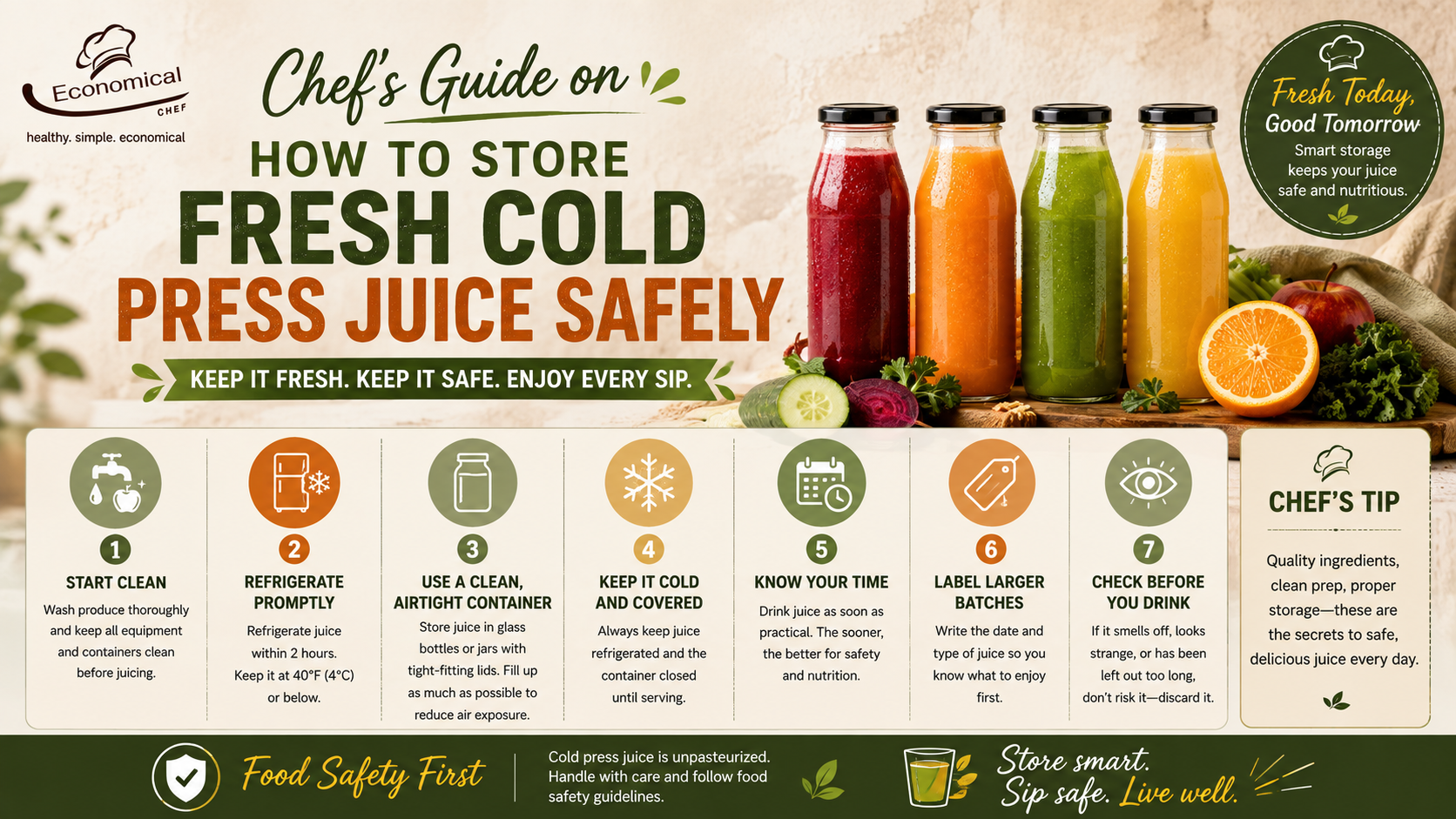
1. Start With Clean Produce and Equipment
Safe juice storage begins before the juicer is switched on. Wash your hands before preparing the ingredients and thoroughly rinse fruits and vegetables under running water. The FDA specifically recommends washing produce before cutting or preparing it and advises against using soap, detergent, or commercial produce washes.
Your juicer, cutting board, knife, containers, and other utensils should also be clean. Any contamination introduced during preparation can become a problem while the juice is being stored.
This is particularly important because a cold press juicer does not pasteurize the juice. It extracts juice from raw produce without applying a treatment designed to destroy harmful bacteria.
2. Refrigerate Fresh Juice Promptly
Once you’ve finished juicing, don’t leave the juice sitting on the kitchen counter for an extended period. Transfer it to a clean storage container and refrigerate it promptly.
The FDA recommends keeping refrigerated foods at 40°F (4°C) or below and following the two-hour rule for foods that require refrigeration.
From a practical kitchen perspective, I recommend making refrigeration part of your juicing routine. Finish juicing, clean the machine, and put the stored juice into the refrigerator rather than letting it sit out while you complete other kitchen tasks.
3. Use a Clean, Airtight Container
A clean, tightly sealed container is one of the simplest ways to protect homemade juice during refrigeration.
Glass bottles or jars with secure lids are convenient choices for storing individual portions. Choose a container that is appropriate for food storage and easy to clean thoroughly.
Try to use a container that is reasonably close to the amount of juice you’re storing. Leaving a large amount of empty space isn’t ideal for maintaining quality because it exposes more of the juice to air.
Most importantly, don’t store fresh juice in the juicer’s collection container unless the manufacturer specifically indicates that it is suitable for storage. Transfer the juice to a clean, covered food-storage container instead.
4. Keep the Juice Cold and Covered
Store your homemade juice in the refrigerator rather than at room temperature. Keep the container closed until you’re ready to drink it.
The FDA recommends maintaining refrigerators at 40°F or below and notes that prompt refrigeration helps slow bacterial growth.
Avoid repeatedly taking the same bottle in and out of the refrigerator throughout the day. If you’re preparing juice for several people, dividing it into individual portions can be more practical. Each person can take a serving without repeatedly opening the main container.
5. How Long Does Cold Press Juice Last in the Fridge?
This is where I recommend being conservative. There isn’t a single universally applicable FDA storage time for every type of homemade cold press juice. The ingredients, cleanliness, storage temperature, container, and handling all affect safety and quality.
Rather than promising that homemade juice will remain safe for a specific number of days, drink it as soon as practical after making it. Refrigeration slows bacterial growth but doesn’t make untreated juice shelf-stable. The FDA specifically warns that untreated juice can contain harmful bacteria and that acidity alone does not necessarily eliminate those risks.
If the juice has been left unrefrigerated for more than two hours, I would not try to extend its life by putting it back in the refrigerator. When in doubt about food safety, the safest choice is to discard it.
6. Label Larger Batches
If you prepare more juice than you plan to drink immediately, label the container with the date and, if helpful, the type of juice.
This is a simple professional-kitchen habit that helps you keep track of what was prepared first. It is particularly useful when you have several homemade juices in the refrigerator.
You can also prepare smaller batches rather than filling one large container. Smaller portions make it easier to serve only what you need and keep the remaining juice covered and refrigerated.
7. Watch for Changes in Quality
Fresh juice can naturally separate after sitting, especially when it contains different fruits and vegetables. Separation alone doesn’t necessarily mean the juice has spoiled; gently shaking the sealed container can recombine the ingredients.
However, don’t rely on smell, appearance, or taste alone to determine whether untreated juice is safe. Harmful bacteria may not always produce obvious signs of spoilage. If the juice has been handled improperly, left out too long, or you’re uncertain about its safety, it is better to discard it.
Chef’s Tips for Storing Homemade Juice
If you want to keep cold press juice fresh, focus on the basics:
- Wash produce thoroughly before juicing.
- Start with clean equipment and storage containers.
- Refrigerate juice promptly at 40°F (4°C) or below.
- Store it in a clean, tightly sealed container.
- Make smaller batches when possible.
- Label stored juice with the preparation date.
- Drink homemade juice as soon as practical.
- Don’t rely on taste or smell alone to determine safety.
For additional food-safety information, the FDA’s juice safety guidance provides detailed information about untreated and pasteurized juice.
Final Thoughts
Learning how to store fresh cold press juice properly is just as important as learning how to use and clean your juicer. From a chef’s perspective, the best approach is to prioritize freshness, cleanliness, prompt refrigeration, and sensible batch sizes rather than trying to keep homemade juice for as long as possible.
If you’re considering making fresh juice regularly, choosing a convenient machine can make the entire process easier. Our guide to the 15 best cold press juicers for your kitchen compares practical features such as ease of cleaning, juice yield, feed-chute design, and everyday usability to help you find a model that fits your kitchen routine.