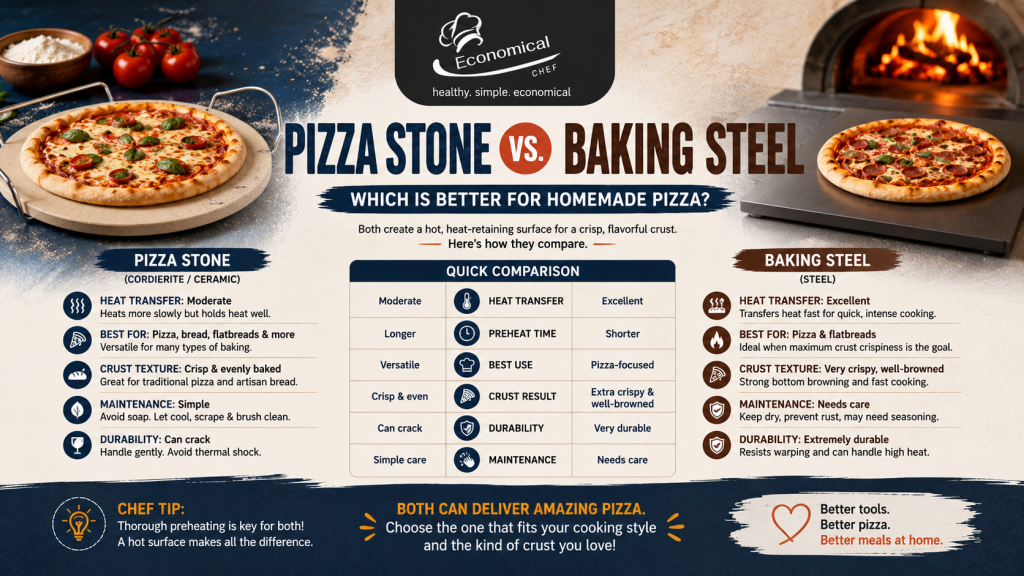
If you want a crispier homemade pizza crust, upgrading from a standard baking tray to a pizza stone or baking steel can make a noticeable difference. Both create a hot, heat-retaining surface that transfers energy directly into the dough, helping the bottom brown and crisp instead of remaining pale or soft.
But the two surfaces behave differently. A traditional pizza stone — often made from cordierite — heats and transfers heat more gradually, while steel is much more conductive and transfers heat into the dough faster. So, pizza stone vs. baking steel isn’t simply a matter of choosing the “better” product; it depends on what you bake, how you cook, and what kind of crust you prefer.
As a chef, I would summarize it this way: choose a stone for gentle, versatile baking and a steel when maximum heat transfer and fast, deeply browned pizza crust are your priorities.
What Is a Pizza Stone?
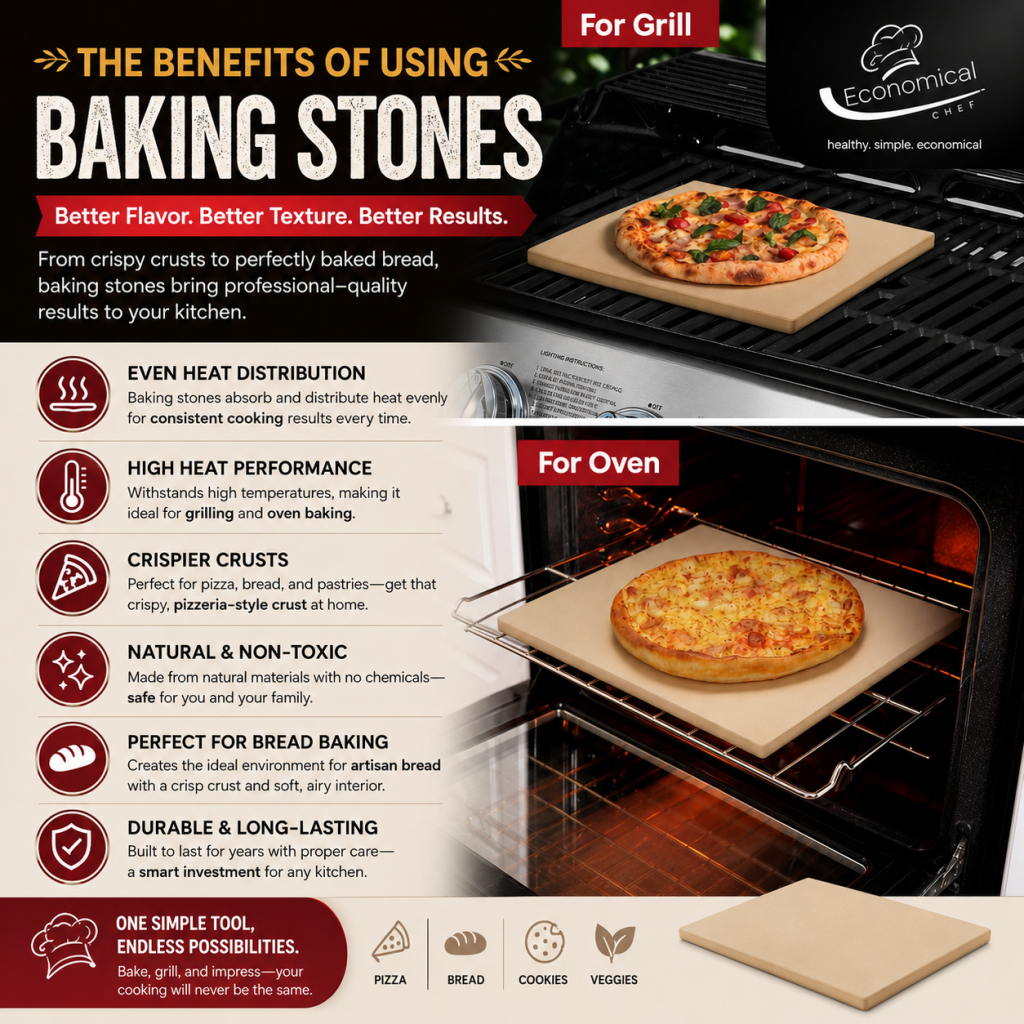
A pizza stone is a thick baking surface typically made from materials such as cordierite or ceramic. It is designed to absorb and retain substantial heat during preheating and then transfer that heat into the underside of your pizza.
The porous structure of many baking stones also helps manage moisture from the dough, contributing to a crispier bottom crust. Beyond pizza, a good stone can be useful for bread, flatbreads, and pies. Our chef’s testing found that a preheated stone can improve browning and crust texture across several types of baked goods.
The main limitation is conductivity. Stone does not transfer heat as rapidly as steel, so it generally needs a longer preheat to become fully effective.
What Is a Baking Steel?
The modern baking steel is a relatively recent innovation. The concept was commercialized in 2012 by Andris Lagsdin, who experimented with a thick steel plate in a home oven after learning about steel’s high thermal conductivity. His experiments eventually led to the original Baking Steel.
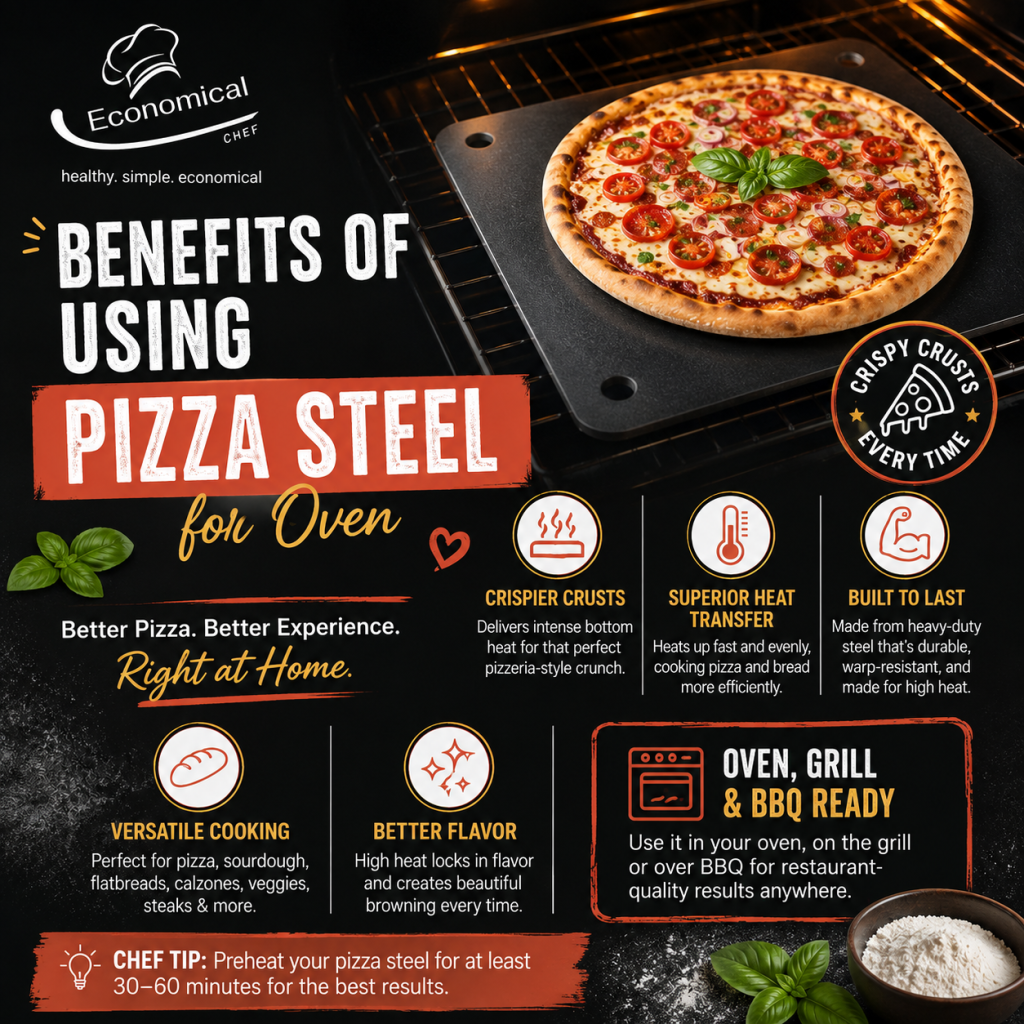
A baking steel is a thick slab of steel designed to function as a high-temperature baking surface. Like a stone, it stores heat, but metal has significantly higher thermal conductivity.
That means a properly preheated steel can transfer heat into pizza dough very quickly. Our chef’s recent comparison found that steel heats and transfers heat more effectively than stone, resulting in faster cooking and stronger browning.
For pizza lovers chasing a thin, crisp, well-browned underside, this rapid heat transfer is the main attraction.
Pizza Stone vs. Baking Steel: Key Differences
| Feature | Pizza Stone | Baking Steel |
|---|---|---|
| Material | Usually cordierite or ceramic | Steel |
| Heat transfer | Moderate | Excellent |
| Heat retention | Excellent | Excellent |
| Preheating | Generally longer | Generally faster |
| Crust texture | Crisp and evenly baked | Very crisp with strong browning |
| Best for | Pizza, bread, flatbreads | Pizza, flatbreads, breads |
| Durability | Can crack from thermal shock | Very durable |
| Maintenance | Generally simple | May require seasoning or rust prevention |
Heat Transfer
This is the biggest technical difference.
Both surfaces need to be thoroughly preheated, but steel’s superior thermal conductivity allows it to deliver heat to the dough more rapidly. We recommend thoroughly preheating either surface and notes that steel is particularly effective when fast heat transfer is the goal.
For a pizza with a beautifully browned bottom and relatively quick bake, steel has the advantage.
Crust Texture
Both can produce excellent pizza, but the results can differ slightly.
A baking stone provides a strong, steady source of heat that works particularly well for traditional pizza and bread baking. Steel transfers heat more aggressively, which can produce faster browning and a crispier underside.
In testing by our chef team, steel produced particularly strong browning and crispness compared with stone and a standard sheet pan.
That doesn’t make stone inferior. A properly preheated stone can still produce excellent homemade pizza, especially when your dough, oven temperature, and baking technique are good.
Which Is Better for Beginners?
For beginners, I would generally lean toward a pizza stone if versatility and straightforward maintenance are priorities.
Stones are widely available in different sizes and are useful for pizza, artisan bread, flatbreads, and other baked foods. They also tend to be lighter and less intimidating to handle than a thick steel slab.
However, if your primary goal is pizza and you want the strongest possible bottom-crust browning, a baking steel is worth considering. You may also find that steel requires less waiting between pizzas because it transfers heat rapidly.
Which Is Better for Crispy Pizza?
If your number-one goal is a crispy pizza crust, I’d give the advantage to baking steel.
Steel’s high thermal conductivity allows it to transfer heat rapidly into the dough. This can encourage faster browning and crisping before the interior of the pizza has time to become overly dry. Based on our testing and comparison both favor steel for maximum heat transfer and pizza crispness.
That said, the difference is only part of the equation. A cold steel will not outperform a properly preheated stone. Preheating is critical for both.
Which Is Better for Bread?
This is where I would give the stone more consideration.
A baking stone provides substantial thermal mass and steady heat, which can be useful for artisan loaves, baguettes, and other hearth-style breads. It is also less aggressive in heat transfer than steel, which can help prevent excessive browning on the bottom of certain breads.
Serious Eats similarly notes that stones can be advantageous for bread because they heat more gradually and release heat steadily, while steel’s strong conductivity is particularly beneficial for pizza and flatbreads. (Serious Eats)
Which Is Easier to Maintain?
A stone is generally straightforward to maintain but requires careful handling. Traditional porous stones should not normally be treated like ordinary cookware, and thermal shock can cause cracking.
Steel is much more resistant to physical damage, but it can develop rust if it isn’t properly cared for. Depending on the product, a steel may need seasoning and occasional maintenance to protect the cooking surface.
Neither surface should be treated as completely maintenance-free.
Pizza Stone vs. Baking Steel: Which One Should You Buy?
For most home cooks, either option can significantly improve pizza compared with baking directly on a cold sheet pan. Your choice should depend on your priorities.
Choose a pizza stone if you:
- Want a versatile surface for pizza and bread
- Prefer a more gradual heat transfer
- Want a traditional baking surface
- Regularly bake artisan loaves or flatbreads
- Are comfortable handling a more fragile material
Choose baking steel if you:
- Primarily want to make pizza
- Want maximum heat transfer
- Prefer deeply browned, crispy crusts
- Want a highly durable baking surface
- Regularly make several pizzas in succession
My Chef’s Verdict
If I were buying specifically for homemade pizza, I would choose a baking steel when maximum crust crispness and fast heat transfer are the priorities. For a more versatile baking setup that includes pizza, bread, and flatbreads, a quality cordierite pizza stone remains an excellent choice.
Whichever you choose, don’t underestimate the importance of proper preheating. Many professional chefs recommend heating both stones and steels thoroughly before baking, with its current guidance suggesting roughly an hour for maximum effectiveness.