If you want a crispier homemade pizza without investing in a dedicated pizza oven, a pizza steel can be a worthwhile upgrade for your kitchen. Unlike a traditional pizza stone, a baking steel transfers heat quickly and efficiently to the dough, helping create a well-browned, crisp pizza bottom while keeping the process simple in a standard home oven. For home cooks and serious pizza makers, the right pizza steel can also be useful for baking bread and other foods that benefit from a strong, hot cooking surface.
As a chef, I look beyond the brand name when choosing a pizza steel. Thickness, size, heat retention, durability, oven compatibility, and ease of handling all make a difference in everyday use. In this guide, I’ve selected the best pizza steels for oven use in 2026, covering different designs and practical strengths so you can find a baking steel that fits your oven, cooking style, and homemade pizza needs without paying for features you may not actually use.
What to Consider Before Buying a Pizza Steel
A good pizza steel should improve your crust without becoming a hassle to use. As a chef, I would focus on these five factors before choosing one.
1. Thickness and Heat Retention
Thickness directly affects heat retention. A thicker steel stores more heat and helps maintain a strong cooking temperature when cold dough is placed on it. For most home ovens, a 1/4-inch baking steel is a practical starting point because it provides a good balance between thermal mass and manageable weight. Our chef also found that steels around this thickness performed well during testing.
Keep in mind that thicker does not always mean better. Very thick models can take longer to preheat and become difficult to move. If you regularly bake several pizzas in succession, however, the additional heat retention can be useful.
2. Size and Oven Compatibility
Measure your oven before buying. I recommend choosing the largest rectangular steel that comfortably fits your oven, while still leaving enough room to handle it safely. Rectangular surfaces are generally more versatile than round ones because they provide more usable space for different pizza sizes and can also be used for bread.
Also check the product’s length, width, thickness, and weight. A steel that technically fits but leaves almost no clearance can be frustrating to use.
3. Heat Transfer and Cooking Performance
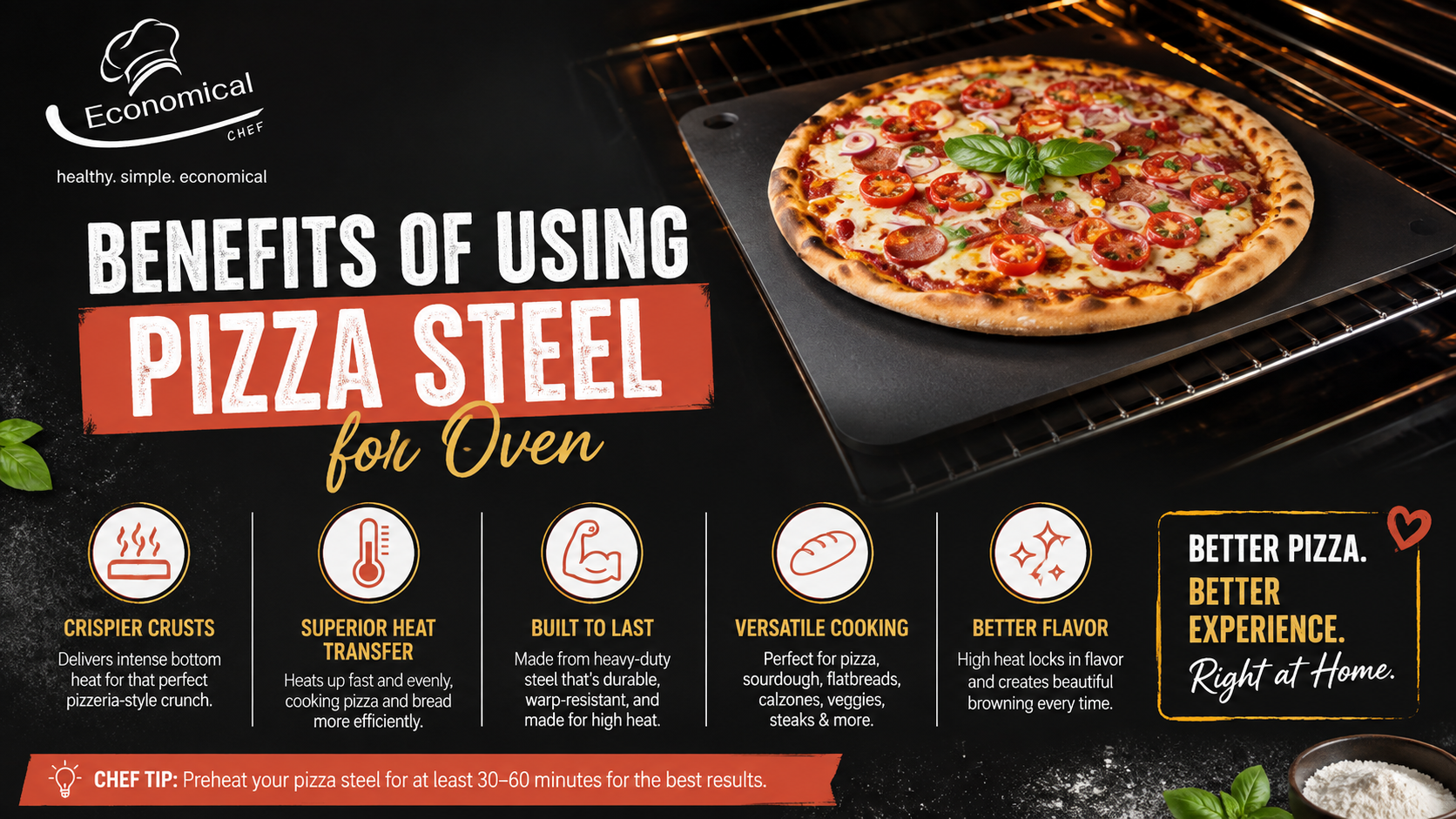
The main advantage of steel is its excellent heat conductivity. Compared with ceramic pizza stones, steel transfers heat to the dough more quickly, which can help produce a darker, crispier underside. This makes it particularly useful for thin-crust pizza, New York-style pizza, and homemade pizza where a crisp bottom is the priority.
However, don’t expect the steel to work immediately after placing it in the oven. Proper preheating is essential. Professional pizza makers recommend thoroughly heating the steel before baking; depending on the setup, around 30–60 minutes is commonly recommended.
4. Material, Durability, and Maintenance
For long-term use, I prefer a solid, durable steel construction with reasonably smooth edges. Carbon or raw steel is common and can develop a seasoned surface over time, so don’t expect it to remain perfectly pristine.
Maintenance is relatively simple: allow the steel to cool, remove food residue, wipe or rinse as appropriate, and dry it completely to prevent rust. Follow the manufacturer’s care instructions, particularly if the steel arrives pre-seasoned or has a special finish.
5. Weight and Versatility
Finally, consider how often you’ll move and store it. A heavy steel offers excellent thermal mass, but lifting one in and out of a hot oven can be awkward. If you plan to leave it in the oven, weight matters less; if you store it after every use, a lighter model is more practical.
I also recommend considering versatility. A good baking steel for bread and pizza can provide a strong, heat-retaining surface for flatbreads and other baked foods, making it more useful than a pizza-only accessory.
Chef’s tip: If crispy crust is your priority, prioritize proper thickness, a good oven fit, strong heat transfer, and easy handling over unnecessary accessories. Those factors will have a much bigger impact on everyday cooking results.
List of the 9 Best Pizza Steel for Oven in 2026


9. Doppio LIVING 16-Inch Pizza Steel – Pre-Seasoned 1/4-Inch Carbon Steel for Oven & Grill
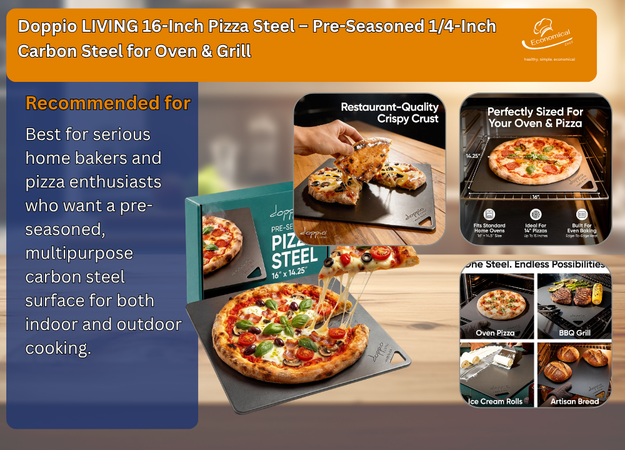
The doppio LIVING 16-inch Pizza Steel is a well-rounded pre-seasoned baking steel built for cooks who want strong heat retention without dealing with the initial seasoning process. Measuring 16 × 14.25 inches and 1/4 inch thick, it provides a generous rectangular cooking area while remaining more manageable than some oversized steel plates. Made from A36 carbon steel in the USA, its solid construction is designed for repeated high-temperature baking, and the finger holes make moving the steel easier when it is cool.
From a chef’s perspective, this model’s main strength is versatility. The substantial carbon steel surface can absorb and distribute heat evenly, making it well suited to producing a crispy pizza crust with a properly preheated oven. It also works beyond pizza, with the manufacturer listing sourdough, rustic bread, calzones, flatbreads, grills, and BBQ cooking. That gives it an advantage over single-purpose pizza pans. Compared with thinner steel options, the 1/4-inch construction should provide better thermal stability, while the pre-seasoned flaxseed oil finish makes it more convenient to use from the start. The trade-off is weight and the need for careful hand washing and drying, which is typical of carbon steel cookware.
For cooks seeking a durable pizza steel for home oven use with broader cooking applications, this is a strong contender. Its Made-in-USA construction, pre-seasoned surface, generous dimensions, and finger holes are the standout features.
Pros
✅ 1/4-inch A36 carbon steel offers substantial heat retention
✅ Pre-seasoned and ready to use
✅ Generous 16 × 14.25-inch rectangular surface
✅ Useful for pizza, sourdough, calzones, flatbreads, grills, and BBQs
✅ Finger holes make handling easier
Cons
❌ Heavy construction can be awkward to move when hot
❌ Requires hand washing and thorough drying
❌ Large dimensions may not fit smaller ovens comfortably
Real-World Usage: I would use this for artisan pizza, sourdough loaves, calzones, and flatbreads when I want strong, even bottom heat. Its rectangular shape also makes it useful for preparing larger items than a typical round pizza pan.
8. Hisencn 13-Inch Round Pizza Steel – 1/4-Inch Baking Steel with Complete Pizza Kit
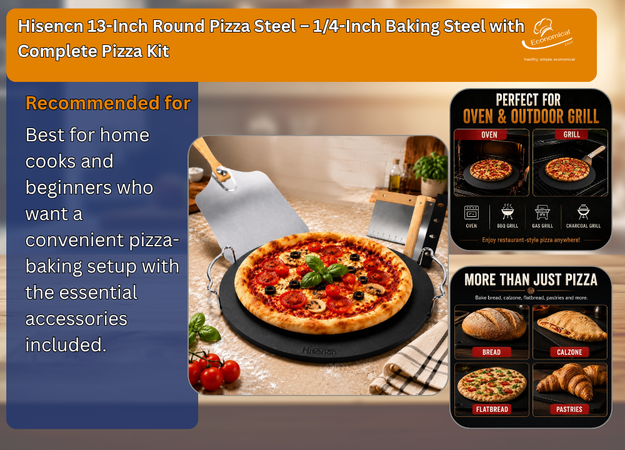
The Hisencn 13-inch Round Pizza Steel is designed as an all-in-one solution for cooks who want more than just a baking surface. The product information describes a 1/4-inch steel construction with a ceramic coating, giving it a smooth, textured surface intended to reduce sticking and simplify cleanup. Its round 13-inch format works well for standard homemade pizzas, while the included aluminum peel, rocker cutter, dough scraper, and metal rack make the package particularly convenient for beginners.
From a chef’s perspective, the standout feature is the combination of the cooking surface and accessories. The steel construction is designed to provide strong heat transfer for a crisp pizza crust, while the coated surface is intended to make releasing dough easier than with some traditional bare steels. It can also be used for bread, tortillas, cookies, waffles, and reheating, making it more versatile than a pizza-only tool. Compared with the larger rectangular steels in this roundup, the 13-inch round design is easier to position and store but naturally limits the maximum pizza size. The included rack is also useful for serving or keeping the hot surface elevated after cooking.
One point worth noting is that the listing’s specifications identify the material as ceramic while the product description emphasizes steel with a ceramic coating, so buyers should verify the exact construction before purchasing. Overall, this is an appealing choice for cooks who value convenience, accessories, and easy maintenance alongside pizza performance.
Pros
✅ 1/4-inch steel construction provides useful heat retention
✅ Ceramic-coated surface is designed for easier release
✅ Includes peel, cutter, dough scraper, and metal rack
✅ Suitable for pizza, bread, waffles, tortillas, and more
✅ Compact 13-inch round design is easy to store
Cons
❌ Smaller cooking area than larger rectangular models
❌ Coated construction requires following the manufacturer’s care instructions
❌ Material description should be verified before purchase
Real-World Usage: I would use this for standard-size pizzas, flatbreads, bread, and reheating leftovers. The included peel and cutter make it particularly practical for family pizza nights where convenience matters.
7. THERMICHEF 16-Inch Pizza Steel – 1/4-Inch Heavy-Duty Baking Steel for Oven
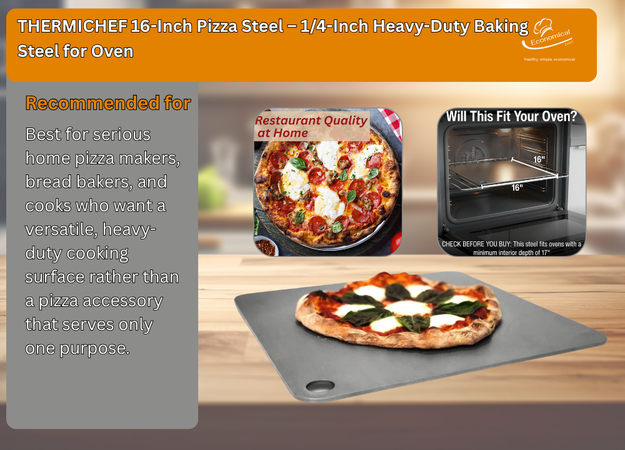
The THERMICHEF 16-inch Pizza Steel is a substantial pizza steel for oven designed for cooks who want strong bottom heat and a crispier homemade pizza without relying on a ceramic stone. Its 16 × 16-inch square surface provides plenty of room for pizzas up to about 15 inches, while the 1/4-inch low-carbon steel offers a useful balance between heat retention and handling. At 17.6 pounds, it is certainly heavy, but that weight also gives it the thermal mass I look for when baking repeatedly.
From a chef’s perspective, its biggest advantage is versatility. Preheated properly, the steel provides excellent heat transfer for crispy pizza crust, while the same surface can handle sourdough, flatbreads, vegetables, and other foods. I also like that it can be used on grills and stovetops, giving it more practical applications than a pizza-only baking surface. The shot-blasted, unseasoned finish requires initial seasoning, but afterward it develops a natural patina with use. Compared with thinner baking steels, this model should retain heat better between pizzas, although its weight makes frequent handling less convenient. The square footprint is also worth checking against your oven dimensions before buying.
For cooks wanting a durable, multipurpose baking steel for pizza and bread, the THERMICHEF stands out for its solid construction, generous cooking area, and made-in-USA manufacturing. Its main drawback is simply that it requires careful preheating and proper maintenance to get the best results.
Pros
✅ 1/4-inch thickness provides a strong balance of heat retention and usability
✅ Large 16 × 16-inch surface suits large homemade pizzas
✅ Versatile for pizza, sourdough, flatbreads, grilling, and stovetop cooking
✅ Low-carbon steel develops a natural seasoned surface
✅ Durable construction designed for repeated high-heat use
Cons
❌ 17.6-pound weight can make handling awkward
❌ Requires seasoning before first use
❌ Large square dimensions may not suit smaller ovens
Real-World Usage: I would use this for thin-crust pizza, sourdough loaves, flatbreads, and back-to-back pizza sessions where maintaining strong heat matters. It is particularly appealing for cooks who also want a durable steel surface for grilling or stovetop cooking.
6. Primica Pizza Steel XL – 16 x 13.4-Inch Carbon Steel for Oven & Grill
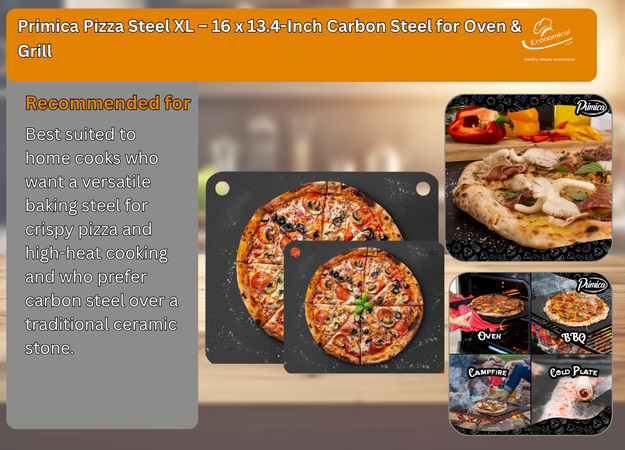
The Primica Pizza Steel XL is a solid carbon steel baking surface designed to bring stronger bottom heat to a standard oven or grill. Measuring 16 × 13.4 inches with a 1/4-inch thickness, it offers a useful balance between cooking area, heat retention, and manageable handling. The steel construction is particularly suited to cooks who want more aggressive heat transfer than a traditional ceramic pizza stone can provide. Its sleek black finish also gives it a straightforward, professional appearance.
From a chef’s perspective, the standout feature is its combination of high heat conductivity and versatility. Once thoroughly preheated, the steel can deliver intense heat to the dough, making it a good choice for crispy homemade pizza and blistered crusts. The relatively generous surface also accommodates larger pizzas while remaining practical for most full-size ovens. Compared with lighter baking plates or thinner steels, the 1/4-inch construction provides useful thermal mass for maintaining heat when pizza is loaded. I also like its oven-and-grill compatibility, as the same surface can be used for flatbreads and other high-heat cooking applications. Hand washing is recommended, so it does require some basic care after use.
The Primica stands out as a practical alternative to a pizza stone for cooks who prioritize fast heat transfer and versatility. Its main consideration is making sure the dimensions fit your oven and allowing enough preheating time for the steel to reach its best cooking temperature.
Pros
✅ 1/4-inch carbon steel provides strong heat retention and transfer
✅ Large XL surface is suitable for substantial homemade pizzas
✅ Works in both ovens and grills
✅ Useful for more than pizza, including flatbreads and other high-heat cooking
✅ Solid construction designed for repeated use
Cons
❌ Requires thorough preheating for best results
❌ Hand washing adds a little maintenance after cooking
❌ Large footprint may not suit compact ovens
Real-World Usage: I would use the Primica for thin-crust pizza, flatbreads, and grill cooking where strong direct heat is important. Its XL format is particularly useful when making larger pizzas or when you want one durable cooking surface that can move between the oven and grill.
5. Chef Pomodoro 16-Inch Pizza Steel – Pre-Seasoned Baking Steel for Oven
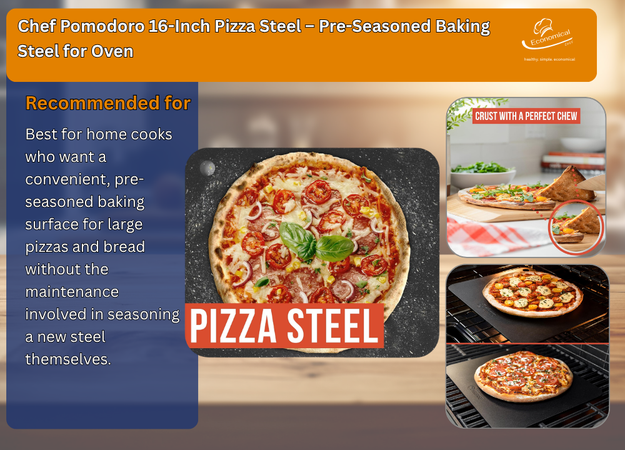
The Chef Pomodoro 16-inch Pizza Steel is a practical choice for cooks who want a ready-to-use baking steel for homemade pizza without the extra step of seasoning it themselves. The 16 × 13.25-inch rectangular surface provides plenty of room for a large pizza while fitting more naturally into many standard ovens than an oversized square model. Its pre-seasoned steel construction is also more convenient than unseasoned alternatives, particularly for cooks who want to start baking right away.
What stands out to me as a chef is the combination of durability, versatility, and easier handling. The steel can withstand high oven temperatures without the cracking concerns associated with ceramic pizza stones, while the finger hole provides a useful grip when positioning or removing the hot surface. That small design detail can make a noticeable difference in everyday kitchen use. The steel is also suitable for sourdough bread, pastries, and other baked foods, giving it more value than a pizza-only surface. Compared with some heavier baking steels, its rectangular format and lifting hole make it a little more practical to handle, although the manufacturer still recommends hand washing rather than treating it like ordinary dishwasher-safe cookware.
For home cooks who want a pizza steel for oven that arrives pre-seasoned and offers straightforward everyday use, this Chef Pomodoro model is a well-rounded option. Its main advantage over many comparable products is convenience: you get the heat-retaining benefits of steel without having to complete the initial seasoning process.
Pros
✅ Pre-seasoned and ready to use
✅ Large surface accommodates bigger pizzas
✅ Finger hole makes lifting and positioning easier
✅ Durable alternative to ceramic pizza stones
✅ Suitable for pizza, sourdough, pastries, and other baking
Cons
❌ Hand washing is required
❌ Rectangular dimensions may not suit compact ovens
❌ Requires careful handling when extremely hot
Real-World Usage: I would use this for large homemade pizzas, sourdough loaves, and flatbreads when I want a sturdy, reusable baking surface. The pre-seasoned finish and finger hole are especially useful when convenience and handling matter as much as cooking performance.
4. Hans Grill Pizza Steel PRO – 13 x 13-Inch 1/4-Inch Baking Steel with Pizza Peel
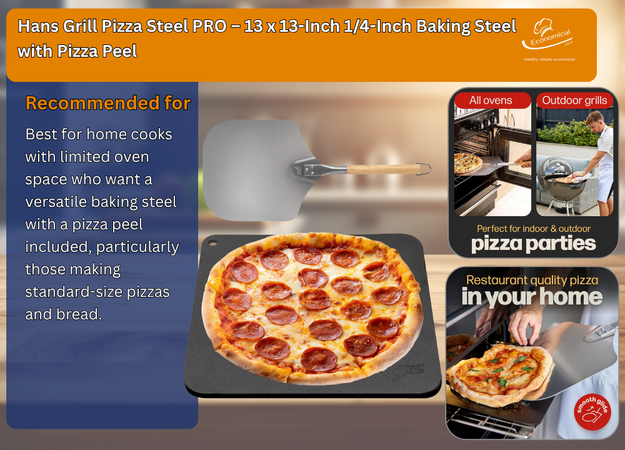
The Hans Grill Pizza Steel PRO takes a slightly different approach from many baking steels in this roundup by combining the 1/4-inch steel cooking surface with a beechwood-handle pizza peel. Its 13 × 13-inch square footprint is compact enough for many standard ovens and BBQs, while still providing enough surface area for everyday homemade pizzas. The 1/4-inch thickness is a sensible middle ground, offering substantial heat retention without making the steel unnecessarily bulky.
From a chef’s perspective, the real strength here is practicality. A properly preheated steel can transfer heat efficiently into the dough, helping develop a crispy pizza bottom while keeping the cooking surface relatively compact. The included wooden-handle peel also makes transferring pizzas in and out of the oven much easier than using a separate improvised tool. I particularly like that the same steel can be used for sourdough bread and BBQ cooking, giving it more versatility than a pizza-only accessory. Compared with larger 16-inch models, the 13-inch format is easier to position and handle, although you sacrifice some cooking area for larger pizzas.
The smooth surface is another useful feature for everyday cooks because food residue can be wiped away with warm water. Just remember that steel still needs proper drying and care to minimize rust. Overall, this is a practical baking steel for pizza and bread for cooks who value a manageable size and useful accessories.
Pros
✅ 1/4-inch thickness balances heat retention and preheating time
✅ Compact 13 × 13-inch format fits many ovens and BBQs
✅ Includes a beechwood-handle pizza peel
✅ Suitable for pizza, sourdough, and grilling
✅ Smooth surface is relatively easy to clean
Cons
❌ Smaller cooking area than XL pizza steels
❌ Requires careful drying and steel maintenance
❌ Hand washing is recommended
Real-World Usage: I would use this for everyday pizza nights, sourdough baking, and BBQ flatbreads. Its compact dimensions make it especially convenient when moving a hot steel in and out of the oven, while the included peel simplifies loading and removing dough.
3. OLEEK 16 x 13.4-Inch Pizza Steel – Multi-Purpose Baking Steel for Oven
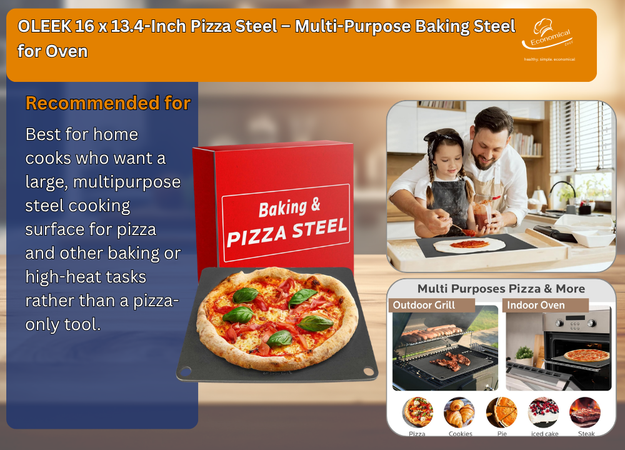
The OLEEK Pizza Steel is a generously sized baking steel for oven designed for cooks who want a broad cooking surface for homemade pizza and other high-heat applications. Its 16 × 13.4-inch format gives you plenty of room for larger pizzas while remaining more compact than some oversized square steels. The steel construction is intended to heat efficiently and distribute heat across the cooking surface, helping produce a more evenly browned and crispy pizza bottom.
What I find most useful from a chef’s perspective is its versatility. Beyond pizza, the manufacturer positions this steel for bread, pastries, and even searing steaks, so it can function as a multipurpose cooking surface rather than sitting unused between pizza nights. Its metal construction also offers an advantage over ceramic alternatives when it comes to durability and resistance to cracking from thermal shock. Compared with thicker premium steels, however, performance will depend heavily on how thoroughly it is preheated, and the product information provided does not specify the steel thickness. That makes oven preparation particularly important for getting consistent results. The hand-wash care requirement is straightforward, but like other steel cooking surfaces, it should be dried thoroughly after cleaning to help prevent corrosion.
For cooks looking for a pizza steel for large homemade pizzas with broader kitchen applications, the OLEEK is an appealing option. Its spacious surface and multipurpose design are its strongest points, although buyers should verify the dimensions and available oven space before ordering.
Pros
✅ Spacious 16 × 13.4-inch cooking surface
✅ Designed for pizza, bread, pastries, and searing
✅ Strong heat-transfer characteristics of steel
✅ Durable alternative to ceramic pizza stones
✅ Useful for both everyday baking and high-heat cooking
Cons
❌ Steel thickness is not specified in the supplied product details
❌ Large footprint may not suit smaller ovens
❌ Requires hand washing and thorough drying
Real-World Usage: I would use this for large homemade pizzas, flatbreads, bread, and occasional high-heat searing. The generous rectangular footprint is particularly useful when cooking for a family or preparing larger portions.
2. GoodCook AirPerfect 15.75-Inch Perforated Carbon Steel Pizza Pan
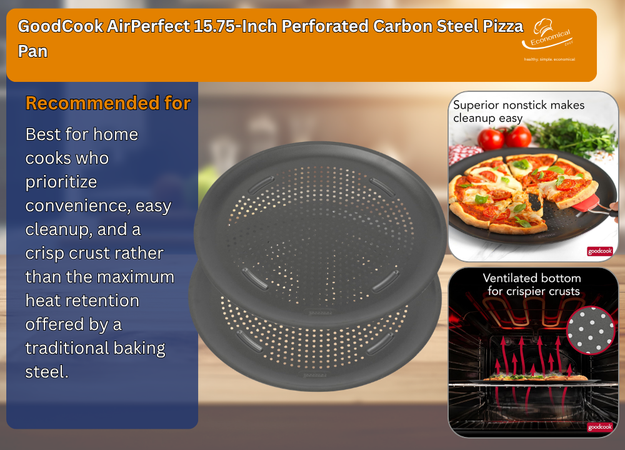
The GoodCook AirPerfect is a different option from the solid baking steels featured elsewhere in this roundup. Instead of using a thick steel plate for intense thermal mass, this perforated carbon steel pizza pan is designed to improve airflow underneath the dough. The 15.75-inch round surface is generously sized for homemade or frozen pizzas, while the insulated construction and nonstick coating make it particularly approachable for everyday cooks.
From a chef’s perspective, the standout feature is the perforated design. The openings allow moisture to escape from beneath the crust, which can help create a crispier pizza crust without requiring the extensive preheating associated with a heavy pizza steel. The built-in cutting guides are another practical touch, especially for families who want evenly sized slices. I also appreciate the small feet underneath, which help keep the hot pan elevated when placed on a countertop. Compared with the solid baking steel for pizza options in this list, however, this pan does not offer the same thermal mass or heat transfer, so I would not choose it when maximum bottom heat is the priority.
The nonstick surface also makes food release and cleanup easier than with bare steel. However, cooks should follow the manufacturer’s care and temperature recommendations to protect the coating over time. Overall, this is better viewed as a convenient pizza baking pan than a traditional high-performance pizza steel.
Pros
✅ Perforations help release moisture for a crispier crust
✅ Large 15.75-inch cooking surface
✅ Nonstick coating makes release and cleanup easier
✅ Cutting guides simplify portioning
✅ Feet help protect countertops from the hot pan
Cons
❌ Does not provide the thermal mass of a solid pizza steel
❌ Perforations may not suit very wet or heavily topped pizzas
❌ Requires care to protect the nonstick coating
Real-World Usage: I would use this for everyday homemade pizza, frozen pizzas, and reheating slices when I want a crisp base without handling a heavy steel plate. It is especially practical for casual family pizza nights.
1. Duvecfoi 13-Inch Pizza Steel – 1/4-Inch Carbon Steel Baking Surface for Oven & Grill
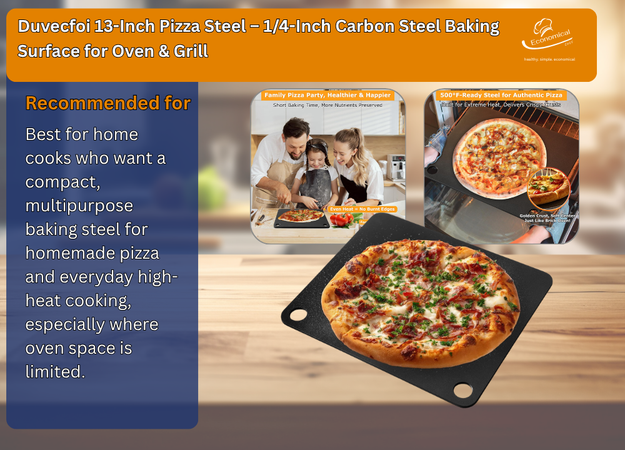
The Duvecfoi 13 × 13-inch Pizza Steel is a compact baking steel for oven and grill built around a 1/4-inch carbon steel plate. That thickness gives it useful thermal mass while keeping the overall footprint manageable for many home kitchens. The square design provides enough room for a standard homemade pizza or several smaller items, making it a practical choice for cooks who want a dedicated high-heat surface without the bulk of some larger models.
From a chef’s perspective, the strongest feature is its versatility. Carbon steel conducts heat efficiently and, when thoroughly preheated, can help produce a crisp pizza bottom with the stronger searing effect many cooks want from a pizza stone alternative. It can also move beyond pizza duty: the manufacturer lists applications including sourdough, focaccia, vegetables, steaks, stovetop cooking, and grilling. That makes it more useful than a single-purpose pizza accessory. Compared with larger 16-inch steels, the 13-inch format is easier to fit and handle, although it naturally provides less cooking space. The steel may develop discoloration or seasoning marks from repeated high-heat use, which is normal for carbon steel and can be managed with appropriate care.
For home cooks looking for a straightforward pizza baking steel with multiple uses, this Duvecfoi model offers a sensible combination of size, thickness, and functionality. Its compact design is particularly appealing for kitchens where storage and oven space are important considerations.
Pros
✅ 1/4-inch carbon steel provides useful heat retention
✅ Compact 13 × 13-inch size suits many home ovens
✅ Works for pizza, bread, vegetables, steaks, and grilling
✅ Suitable for oven, grill, and stovetop cooking
✅ Carbon steel can develop a seasoned surface with use
Cons
❌ Smaller cooking area than XL baking steels
❌ Requires hand washing and proper drying
❌ High-heat use can cause visible discoloration over time
Real-World Usage: I would use this for standard-size pizzas, focaccia, sourdough, and grill cooking. Its smaller footprint makes it easier to manage than oversized steels, while the 1/4-inch thickness provides enough thermal mass for a nicely browned, crisp base.
FAQs
1. Is a pizza steel better than a pizza stone?
For cooks who prioritize a crispy pizza bottom, a steel can be an excellent alternative to a traditional pizza stone. Steel generally transfers heat more efficiently than ceramic, allowing the surface to deliver strong heat directly into the dough. It is also less susceptible to cracking from thermal shock. However, pizza stones can still be preferable for cooks who want a lighter cooking surface or a different style of heat absorption.
2. What thickness of pizza steel is best for a home oven?
For most home cooks, 1/4-inch steel is a practical choice. It provides a useful balance of heat retention, cooking performance, weight, and preheating time. Several products in this roundup use this thickness because it offers enough thermal mass for pizza while remaining manageable. Thicker steels can retain more heat for back-to-back pizzas, but they are heavier and can take longer to heat thoroughly.
3. How long should I preheat a baking steel before making pizza?
Give the steel plenty of time to become fully heated before adding the dough. As a general starting point, 30 to 60 minutes of preheating in a hot oven is reasonable, although the ideal time depends on the steel’s thickness, your oven, and the baking temperature. Putting pizza on a steel that has not reached a high temperature can result in a less developed crust and weaker browning.
4. Can a pizza steel be used for bread and other foods?
Yes. One of the biggest advantages of a multipurpose baking steel is that it can be used for more than pizza. Several products in this roundup can also be used for sourdough, artisan bread, calzones, flatbreads, and other high-heat baking applications. Some models are also designed for grills or BBQs, making them useful as a versatile cooking surface rather than a pizza-only tool.
5. How do I clean and maintain a pizza steel?
Always follow the manufacturer’s care instructions, but most bare or seasoned steels should be hand washed, dried thoroughly, and protected from prolonged moisture. Avoid soaking carbon steel unless the manufacturer specifically allows it. Some models arrive pre-seasoned, while others require seasoning before their first use. With repeated cooking, a carbon steel surface can develop a darker patina, which is normal and can help improve its cooking characteristics over time.
Conclusion
The best pizza steel for your kitchen ultimately depends on your oven size, preferred pizza style, and how often you plan to use it. For most home cooks, a 1/4-inch steel offers a practical balance of heat retention, cooking performance, and handling. Larger models are better for bigger pizzas and batch cooking, while compact options are easier to manage. Features such as pre-seasoning, finger holes, included accessories, and compatibility with grills can also make everyday use more convenient.
From a chef’s perspective, the biggest advantage of these steels is their ability to deliver strong bottom heat for a crispier homemade pizza crust while also supporting bread, flatbreads, calzones, and other high-heat cooking. Whichever model you choose, make sure it fits your oven properly and give it enough time to preheat thoroughly. A well-chosen baking steel can be a durable, versatile addition to any serious home kitchen.
3 thoughts on “9 Best Pizza Steel for Oven in 2026 – Top Baking Steels for Crispy Homemade Pizza”