A cast iron skillet can become one of the most dependable pieces of cookware in your kitchen, but it performs best when you give it the right care. The good news is that maintaining cast iron is simpler than many first-time users expect. With a consistent routine of cleaning, drying, and occasional seasoning, a skillet can develop a durable cooking surface while remaining protected against rust. The University of Maine Cooperative Extension’s cast iron care guide explains that proper seasoning creates a protective coating that helps with food release and rust resistance.
Whether you own a traditional pre-seasoned skillet or one of the cast iron skillets with lids featured in our roundup, the basic maintenance principles are similar. As a chef, I follow one simple rule: clean the pan without leaving moisture behind, then protect the surface with a very thin layer of oil.
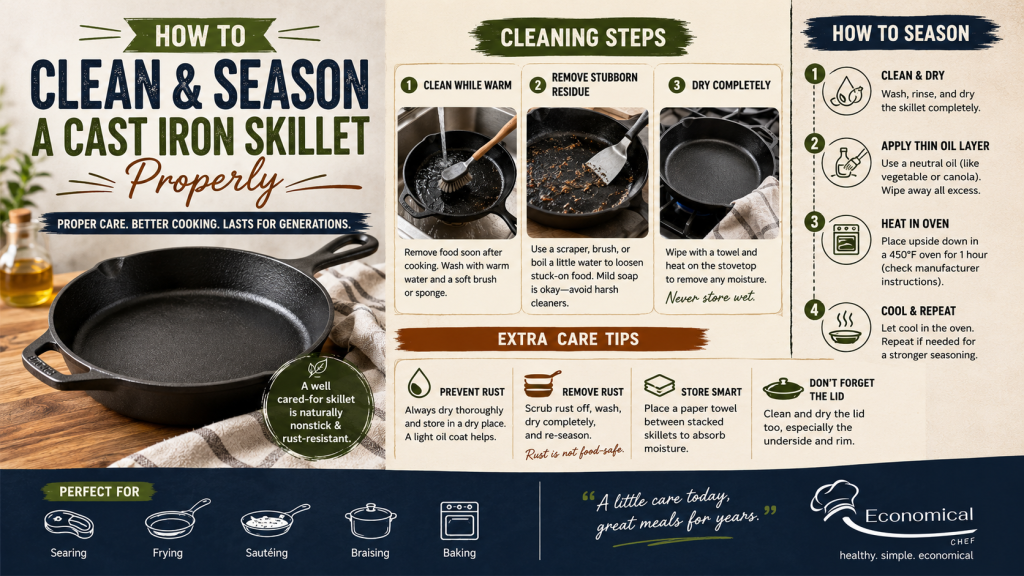
What Does “Seasoning” a Cast Iron Skillet Mean?
Seasoning does not mean adding spices to your cookware. It refers to heating a thin layer of cooking oil on the cast iron so it forms a protective coating over the cooking surface. This layer helps reduce sticking and protects the iron from moisture and rust.
Many modern skillets arrive pre-seasoned, so you can start cooking sooner. However, seasoning gradually wears with use and cleaning, so occasional re-seasoning is still part of good cast iron maintenance. Following the University of Illinois Extension’s guide to cast-iron cookware, it is noted that a pre-seasoned pan may eventually need to be seasoned again, particularly when the surface becomes dry or discolored or food starts sticking more than usual.
How to Clean a Cast Iron Skillet After Cooking
1. Clean It While It Is Still Warm
Don’t leave food sitting in the skillet for hours. Once the pan has cooled enough to handle safely, remove leftover food and excess grease. A well-seasoned pan often needs little more than a quick wipe followed by warm water and gentle scrubbing.
From our own cooking experiences as chef, we recommend cleaning cast iron soon after cooking while it is still warm, as this can make food residue easier to remove.
2. Remove Stuck-On Food Gently
For stubborn residue, use a pan scraper, stiff brush, nonabrasive scrubber, or soft sponge. Another useful chef’s trick is to add a little water and bring it to a gentle boil. The heat can loosen stubborn food, making it easier to remove without aggressively attacking the seasoning.
A small amount of mild soap can also be used when needed. From our cooking experience, backed by the academic source, we recommend hand-washing cast iron with mild or diluted soap and a soft sponge or cloth.
Avoid soaking traditional cast iron for extended periods and never put it in the dishwasher. Prolonged exposure to water can encourage rust and damage the seasoning.
3. Dry the Skillet Completely
This is one step I never skip. Water left on cast iron is an invitation for rust.
After rinsing, wipe the pan thoroughly with a clean towel. For additional protection, place it over low heat on the stovetop for a few minutes to evaporate any remaining moisture. We specifically recommend thoroughly drying cast iron and notes that the pan can be dried on the stovetop or in the oven.
Never put a traditional cast iron skillet away while it is still wet.
How to Re-Season a Cast Iron Skillet
When the cooking surface looks dull, feels dry, or starts becoming noticeably sticky, it may be time to re-season.
- Wash the skillet with warm water and mild soap to remove residue.
- Dry it completely using a towel and gentle heat if necessary.
- Apply a very thin layer of neutral cooking oil such as vegetable or canola oil to the cooking surface and, if desired, the exterior.
- Wipe away excess oil. The surface should look lightly coated, not greasy or wet.
- Place the skillet upside down in a suitable oven and heat according to the cookware manufacturer’s instructions.
- Allow it to cool safely before removing it.
- Repeat the process if necessary to build a stronger seasoning layer.
The University of Maine Cooperative Extension’s seasoning instructions recommend a thin, even layer of neutral oil and heating the pan upside down at around 450°F for one hour. However, always check your specific cookware manufacturer’s instructions because recommended temperatures can vary.
There is no need to pour a large amount of oil into the skillet. In fact, too much oil can leave a sticky surface. The goal is a thin, even coating.
How to Prevent Rust and Extend the Life of Your Pan
Proper storage is just as important as cleaning. Keep the skillet completely dry and store it somewhere with low humidity. If you stack cast iron cookware, consider placing a paper towel or cloth between pieces to absorb moisture and protect the surfaces.
If you notice rust, don’t simply continue cooking with it. The USDA Food Safety and Inspection Service guidance on rusty utensils states that rust is not considered food-safe and should be removed from a cast-iron skillet before use. After removing the rust, clean the skillet thoroughly, dry it completely, and restore the seasoning.
What About Cast Iron Skillets with Lids?
Remember that the lid needs care too. A traditional cast iron lid should be cleaned and dried just like the skillet itself. Pay particular attention to the rim and underside, where moisture can remain after washing.
If your skillet has a glass or enameled lid, follow the manufacturer’s cleaning and temperature instructions rather than treating it exactly like bare cast iron. Glass components, in particular, may have different thermal limits than the cast iron body.
Common Cast Iron Care Mistakes to Avoid
A few simple mistakes can shorten the life of your cookware:
- Leaving the pan wet: Always dry cast iron completely.
- Using excessive oil: Too much oil can create a sticky or uneven surface.
- Soaking the pan: Extended exposure to water increases the risk of rust.
- Using harsh abrasive cleaners: Aggressive scrubbing can remove seasoning.
- Ignoring rust: Remove visible rust and restore the protective seasoning before cooking again.
- Forgetting the lid: Moisture trapped around the lid rim can also contribute to rust.
Chef’s Tip
Don’t overthink cast iron maintenance. Clean it, dry it completely, apply a whisper-thin layer of oil when needed, and re-season when the surface starts losing its performance. That simple routine can keep a quality cast iron skillet ready for searing, frying, sautéing, braising, and everyday cooking for years to come.
If you’re still deciding which cookware to buy, see our guide to Best Cast Iron Skillets with Lids in 2026 for practical chef-focused recommendations.
References
The cleaning and seasoning guidance above is supported by academic and government’s resources below:
1 thought on “How to Clean and Season a Cast Iron Skillet Properly, Practical Advices from Chef”