Copper water bottles have become popular among people who appreciate traditional drinkware and the distinctive look of handcrafted copper. But one common question deserves a clear answer: Can you put lemon water in a copper bottle? From a practical kitchen perspective, the answer is no — not in an unlined copper bottle. Lemon juice is acidic, and acidic liquids can react with copper, increasing the potential for copper to leach into the beverage. The FDA Food Code specifically warns that copper surfaces can leach copper when they come into contact with acidic foods and beverages.
That doesn’t mean you need to avoid copper water bottles altogether. A well-made copper bottle can be perfectly suited to its intended purpose when used appropriately. The key is understanding what belongs in a copper vessel and what doesn’t. In this guide, I’ll explain why lemon water and other acidic drinks are a poor match for an unlined copper bottle, what you can safely use instead, and how to protect your bottle for long-term everyday use.
Why Shouldn’t You Put Lemon Water in a Copper Bottle?
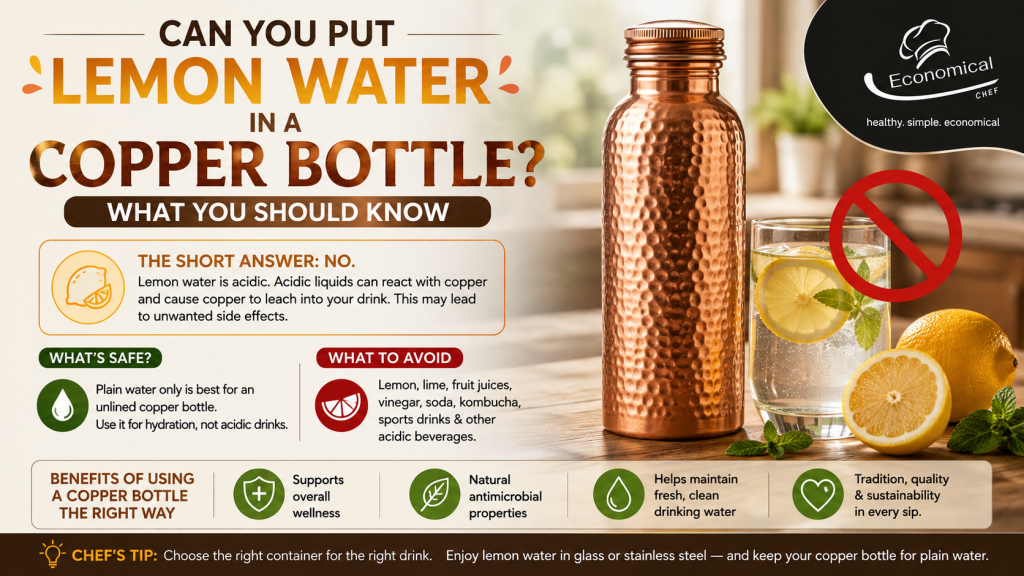
The main issue is acidity. Lemons contain citric acid, which gives lemon juice its characteristic tart flavor. When an acidic liquid comes into prolonged contact with bare copper, the acidity can encourage copper to dissolve from the surface into the liquid.
This isn’t simply a matter of taste or preserving the appearance of your bottle. Copper is an essential mineral, but too much copper can cause gastrointestinal symptoms such as nausea, abdominal pain, vomiting, and diarrhea. The NIH Office of Dietary Supplements notes that excessive copper exposure can also cause more serious health problems with prolonged high exposure.
The National Academies also notes that water characteristics such as increased acidity can increase copper leaching.
For that reason, I recommend using an unlined copper water bottle primarily for plain water, rather than treating it like a general-purpose beverage container.
What Happens When Lemon Water Sits in Copper?
The length of contact matters. A brief accidental contact isn’t the same as deliberately storing lemon water in a copper bottle for hours.
The longer an acidic beverage remains in contact with bare copper, the greater the opportunity for copper to leach into the liquid. Temperature and the chemistry of the beverage can also influence metal leaching. Research summarized by the National Academies identifies increased acidity and higher temperature among factors that can increase copper release into water.
From a chef’s perspective, this is why I would not prepare lemon water in the morning and leave it sitting in an unlined copper bottle until afternoon. There are simply better containers for acidic beverages.
Can You Put Lemon Water in a Lined Copper Bottle?
This depends entirely on what the lining is and whether the manufacturer specifically states that the bottle is designed for acidic beverages.
Some copper bottles have an interior coating or lining intended to prevent the beverage from directly contacting copper. However, you shouldn’t assume that every lined bottle is suitable for lemon water. Check the manufacturer’s instructions and intended-use information before using it for acidic drinks.
The FDA explains that materials used in food-contact applications are subject to safety requirements based on their intended conditions of use.
If the manufacturer says the bottle is designed only for water, follow that guidance even if it has an interior coating.
What About Other Acidic Drinks?
Lemon water isn’t the only beverage you should be cautious about. For an unlined copper water bottle, I would avoid storing:
- Lemon or lime water
- Orange juice
- Grapefruit juice
- Fruit juices
- Vinegar-based drinks
- Kombucha
- Carbonated beverages
- Sports drinks containing acidic ingredients
- Wine and other acidic alcoholic beverages
The FDA Food Code specifically identifies acidic foods and beverages as a concern because copper can leach when copper surfaces contact them.
The same principle applies to copper cookware and serving vessels: copper is excellent for certain culinary applications, but it isn’t universally compatible with every food or beverage.
What Can You Put in a Copper Water Bottle?
For a traditional, unlined pure copper water bottle, plain drinking water is the simplest choice.
I recommend:
Plain Water
This is the most straightforward option and the one that best matches the traditional purpose of an unlined copper bottle.
Room-Temperature Water
There’s no practical reason to use a copper bottle as a substitute for an insulated bottle. If you want ice-cold water for hours, a properly designed insulated stainless steel bottle is usually a better tool.
Fresh Drinking Water for Short-Term Daily Use
Fill the bottle with clean drinking water and use it as intended. Afterward, empty and clean it according to the manufacturer’s instructions rather than allowing old water to remain inside indefinitely.
For more practical guidance, see our article on How to Use a Copper Water Bottle Properly.
Is Lemon Water Better Than Plain Water?
Lemon water can be a refreshing way to make water more appealing, but there’s no need to use a copper bottle to prepare it.
If I were preparing lemon water in a professional kitchen, I’d reach for a glass, stainless steel, or other container specifically suitable for acidic beverages. These materials give you more flexibility and make it easier to add lemon, lime, berries, herbs, or other ingredients.
You can still keep your copper bottle for plain water and use a separate bottle or pitcher for infused beverages. This is a much more practical approach than trying to make one container serve every purpose.
Does Lemon Water Increase Copper Absorption?
It’s important not to confuse two separate issues: copper as an essential nutrient and copper leaching from a container.
Copper is necessary for normal human health and is involved in energy production, connective tissue formation, nervous-system function, and immune function. Adults need about 900 micrograms of copper per day, according to the NIH.
However, that doesn’t mean deliberately increasing copper exposure through acidic beverages is beneficial. The National Academies notes that drinking water should not be relied upon as an important source of copper, while excessive copper exposure can present health concerns.
So I wouldn’t use lemon water in a copper bottle because you believe the acidity will provide additional health benefits. There isn’t a good practical reason to take that risk.
Can You Put Lemon in a Copper Bottle for a Few Minutes?
I still wouldn’t recommend deliberately doing so with an unlined copper bottle.
The safest habit is simple: reserve the bottle for plain water. If you accidentally pour lemon water into it, don’t panic. Empty the bottle, rinse it thoroughly with clean water, and follow the manufacturer’s cleaning instructions before using it again.
The important distinction is between accidental brief contact and deliberately storing acidic beverages in copper for extended periods.
How to Care for a Copper Water Bottle
Proper maintenance is just as important as choosing the right beverage.
1. Empty It Regularly
Don’t leave old water sitting inside the bottle indefinitely.
2. Rinse After Use
A simple rinse can help remove residue before it dries inside the vessel.
3. Hand Wash
Follow the manufacturer’s cleaning instructions and avoid abrasive materials that can scratch the copper.
4. Dry Thoroughly
Allow the bottle to dry completely before storing it.
5. Expect Some Patina
Pure copper naturally changes appearance over time. A darker or less shiny surface doesn’t necessarily mean the bottle is damaged.
For a more detailed cleaning routine, consider creating a dedicated cleaning guide for your copper drinkware collection.
What Should You Use for Lemon Water Instead?
If lemon water is part of your daily routine, I’d choose a glass or stainless steel water bottle specifically designed for beverages containing citrus.
Glass is particularly useful when you want to see the lemon, herbs, berries, or other ingredients inside the bottle. Stainless steel is a better choice when durability and portability are priorities.
If you’re deciding between different copper and stainless steel options, our guide on Copper vs Stainless Steel Water Bottles can help you compare the two materials.
The Bottom Line: Keep Lemon Water Out of Unlined Copper Bottles
So, can you put lemon water in a copper bottle? If the bottle has an unlined copper interior, my recommendation is no. Lemon juice is acidic, and prolonged contact with bare copper can increase copper leaching. The FDA Food Code specifically recognizes this concern with acidic foods and beverages.
As a chef, I prefer matching the container to the job: use an unlined copper bottle for plain drinking water and choose glass or stainless steel for lemon water and other acidic beverages. It’s a simple habit that lets you enjoy the traditional appeal of copper drinkware without using it outside its practical limits. For more information about copper and drinking water, see our guide Is Drinking Water from Copper Safe? What Science Says.
References
- U.S. Food and Drug Administration (FDA) — FDA Food Code 2022
- U.S. National Institutes of Health (NIH) — NIH Office of Dietary Supplements — Copper Fact Sheet for Consumers
- NIH Office of Dietary Supplements — NIH Copper — Health Professional Fact Sheet
- National Academies of Sciences — National Academies — Copper in Drinking Water
- National Research Council / NCBI Bookshelf — Copper in Drinking Water: Health Effects of Excess Copper
1 thought on “Can You Put Lemon Water in a Copper Bottle? What You Should Know”