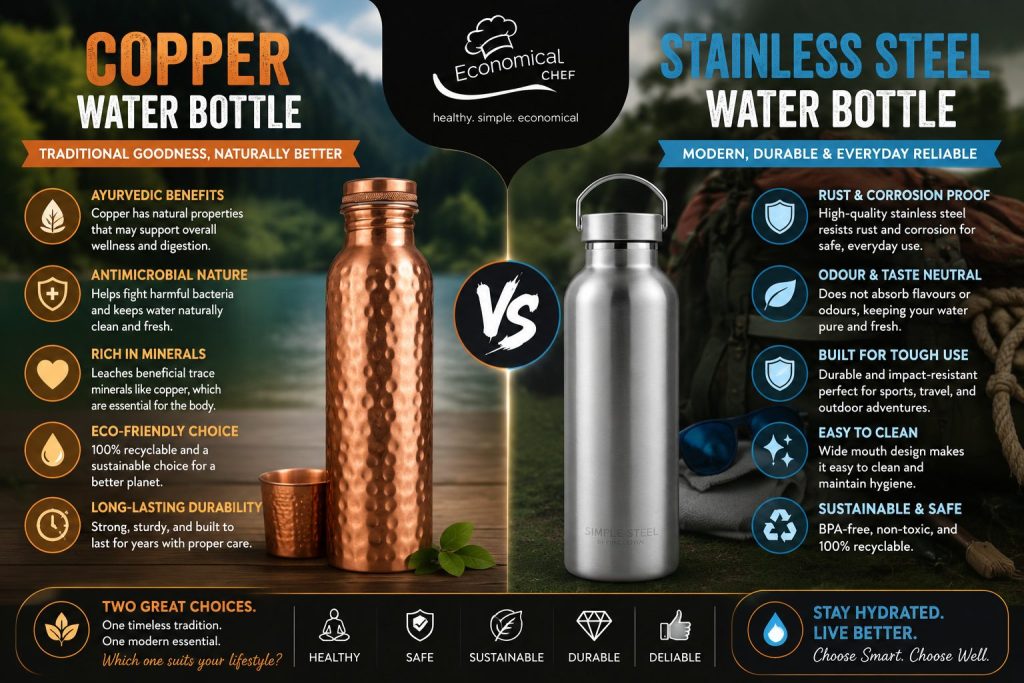
Choosing a water bottle isn’t just about style anymore — it’s about what you’re putting into your body every day. Copper bottles are trending for their “health benefits,” while stainless steel is often recommended by experts.
So which one is actually healthier? Let’s break it down like a chef would: practical use, real science, and long-term safety.
What Is a Copper Water Bottle?
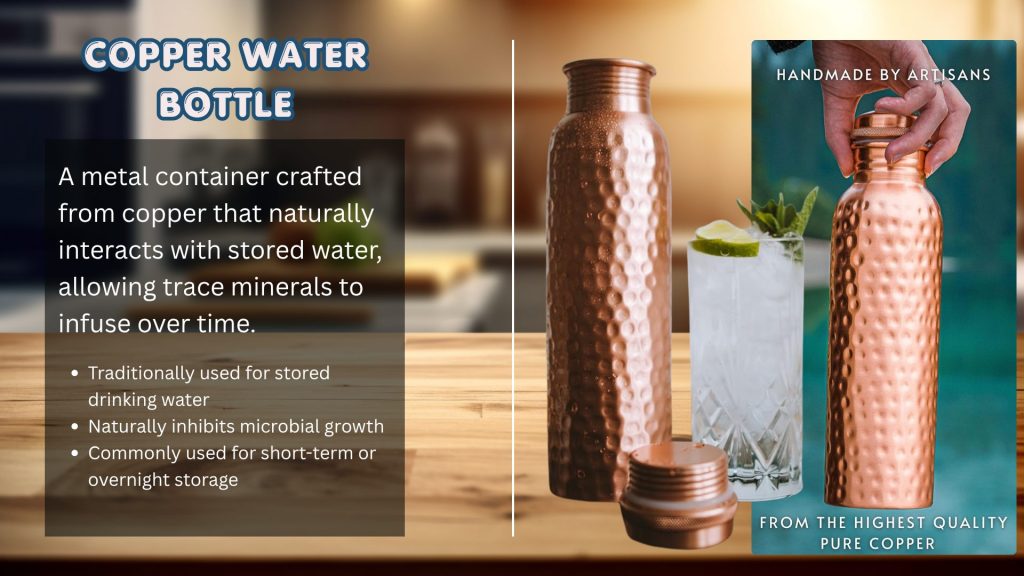
A copper water bottle is made from pure copper metal, designed to store water so small amounts of copper leach into it.
- Rooted in Ayurvedic tradition
- Known for natural antibacterial properties
- Often used by storing water overnight
Research shows copper can kill harmful bacteria in water when stored long enough (Healthline)
What Is a Stainless Steel Water Bottle?
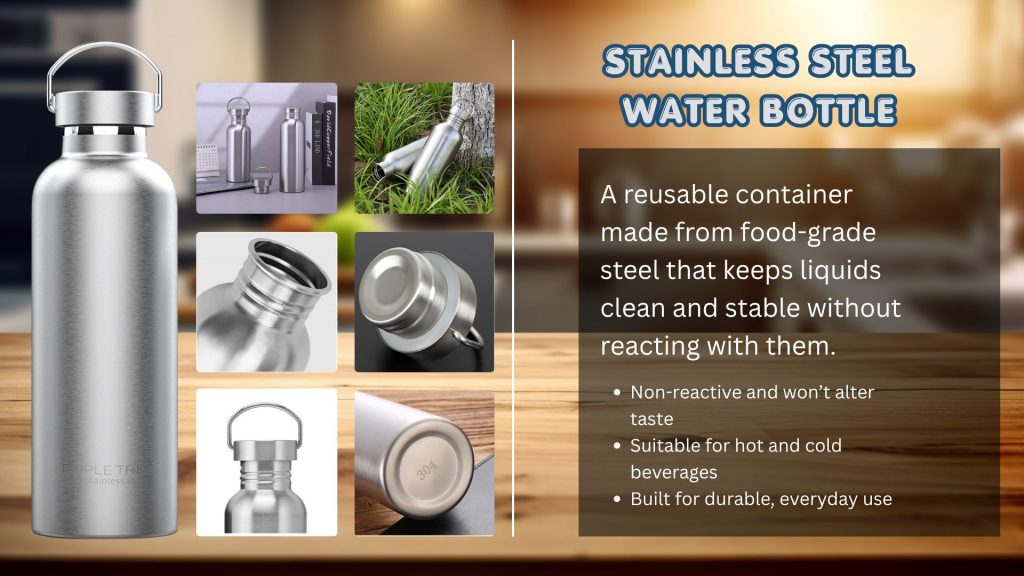
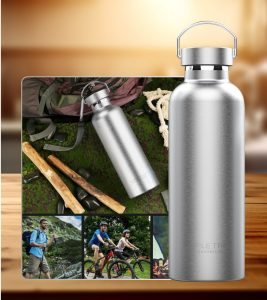
A stainless steel water bottle is made from food-grade steel (usually 304 or 18/8).
- Non-reactive and stable
- Does not leach chemicals into water
- Common in insulated bottles for daily use
Experts often recommend stainless steel because it’s durable, inert, and low-risk for contamination (New York Post)
Copper vs Stainless Steel Water Bottles: Quick Comparison
| Feature | Copper Water Bottle
|
Stainless Steel Water Bottle
|
|---|---|---|
| Material Type | Reactive metal | Non-reactive alloy |
| Health Impact | Adds trace copper | No chemical leaching |
| Antibacterial | Yes (with long storage) | Moderate (depends on cleaning) |
| Safety Risk | Overexposure possible | Very low risk |
| Taste | Can have metallic taste | Neutral taste |
| Maintenance | Requires regular polishing | Easy to clean |
| Daily Use | Best in moderation | Safe for all-day use |
| Versatility | Water only | Water + other beverages |
What This Comparison Really Means (Chef Insight)
Here’s the reality:
- Copper bottles = occasional wellness tool
- Stainless steel = everyday hydration tool
They serve different roles — and this is where most people get confused.
Health Benefits: What’s Actually True?
Copper Bottles
What science supports:
- Antibacterial properties (can reduce bacteria in stored water)
What’s often exaggerated:
- Detox, anti-aging, weight loss claims (limited evidence)
👉 Important: Your body might already gets enough copper from food. Yet, if you think you need extra, then it’s best to go for it. Visit our Chef’s Best Collection of Copper Water Bottles!
Stainless Steel Bottles
What science supports:
- No chemical leaching
- Lower risk of contamination compared to plastic
- Safe for repeated daily use
👉 In simple terms: Stainless steel doesn’t try to “add benefits” — it just keeps your water clean and safe. Check our Chef’s Best Stainless Steel Bottle Collection!
Safety: The Most Important Factor
Copper Risks
- Too much copper can cause nausea, stomach issues, or even liver damage.
- Not suitable for:
- Children
- People with certain medical conditions
- Acidic drinks increase copper leaching (Apollo 24|7)
👉 Bottom line: moderation is key.
Stainless Steel Safety
- Considered one of the safest materials for drinking water
- No known toxicity when using food-grade steel
- Doesn’t react with acidic or hot drinks
👉 This is why most chefs and professionals prefer it for daily use.
Taste & Daily Usability
- Copper: Slight metallic taste. Not everyone likes it, but some people like the different taste it brings in.
- Stainless Steel: Neutral, clean taste.
From a kitchen perspective: If it affects taste, it affects how much you drink — and hydration always wins over trends. It based on the preferences, anyway. If you like new taste, go for copper. If you like neutral taste, go for stainless teel.
Maintenance & Practical Use
Copper Bottle
- Needs regular cleaning to prevent tarnish. Here’s our Chef’s tips on how to properly use your copper water bottle.
- Must avoid acidic liquids
- Should not store water too long
Stainless Steel Bottle
- Dishwasher-friendly (many models)
- Handles hot and cold liquids
- Minimal maintenance
👉 For busy kitchens or daily routines, stainless steel is far more practical. But copper brings new tastes to consumers.
Pros and Cons Summary
Copper Water Bottle
Pros
- Natural antibacterial effect
- Traditional and aesthetic
- May help reduce bacteria in stored water
Cons
- Risk of overexposure
- Requires careful use
- Limited scientific health benefits
- Not ideal for daily all-day hydration
Stainless Steel Water Bottle
Pros
- Safe for everyday use
- No chemical leaching
- Durable and long-lasting
- Easy to maintain
Cons
- No added “health” minerals
- Slightly higher upfront cost (for insulated models)
Which One Is Healthier?
Choose Copper if:
- You want occasional use (not all-day drinking)
- You follow traditional practices
- You use it correctly and in moderation
Choose Stainless Steel if:
- You want the safest everyday option
- You drink water throughout the day
- You value low maintenance and durability
Chef’s Final Verdict
If we’re talking strictly about health and safety:
👉 Stainless steel is the clear winner for daily use
- Stable
- Safe
- No risk of overexposure
- Works for every situation
👉 Copper is better seen as a supplementary tool, not your primary bottle.
Pro Tip from the Kitchen
If you want the best of both worlds:
- Use copper occasionally (morning water after storage)
- Use stainless steel the rest of the day
That’s a balanced, practical approach — without risking your health.