A copper water bottle can be a beautiful and practical piece of drinkware, but it needs the right care to stay clean and in good condition. Unlike stainless steel, copper naturally changes appearance over time as it develops patina. That doesn’t necessarily mean the bottle is dirty or damaged. The key to good copper bottle cleaning is removing residue without unnecessarily scratching or degrading the metal. For everyday care, I recommend a simple routine of rinsing, gentle hand washing, thorough drying, and occasional deeper cleaning when needed. Manufacturers can have different care requirements, so always check the instructions supplied with your particular bottle.
From a professional chef’s perspective, cleaning is also about using the right amount of effort. You don’t need aggressive chemicals or heavy scrubbing every time you use your bottle. In fact, harsh cleaners and abrasive tools can do more harm than good. This guide explains how to clean a copper water bottle, when lemon and salt may be appropriate, what products to avoid, and how often your bottle should be cleaned.
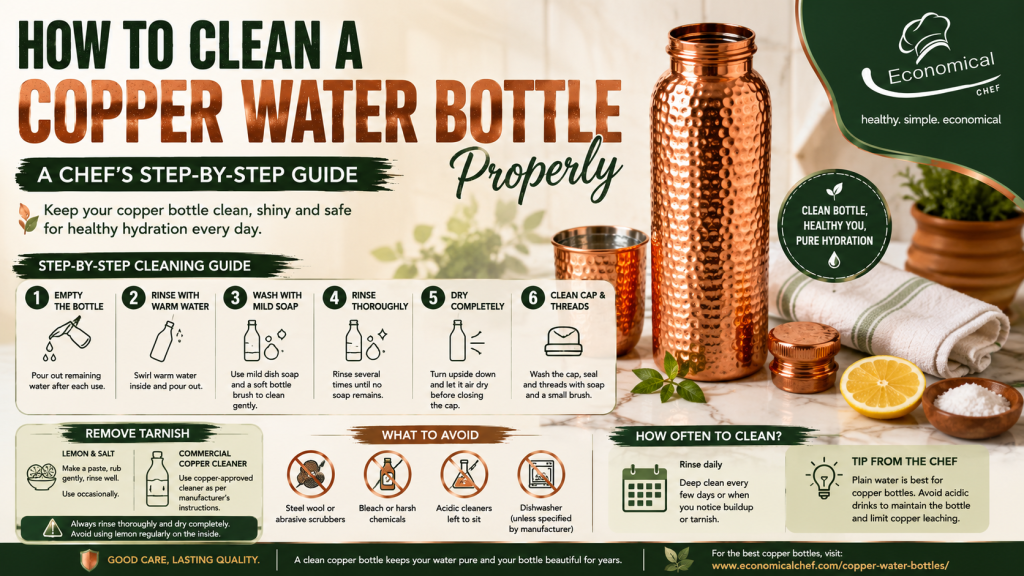
Why Does a Copper Water Bottle Need Regular Cleaning?
Copper has antimicrobial properties, but that doesn’t make a copper bottle self-cleaning. Residue, minerals, dust, and moisture can still accumulate inside and around the cap, threads, and spout.
The FDA’s general food-safety guidance emphasizes regular cleaning of food-contact surfaces, while manufacturers of copper cookware similarly recommend cleaning copper items between uses.
Regular cleaning also helps you distinguish between normal copper patina and actual residue. A darker copper surface isn’t automatically a sign that the bottle needs aggressive scrubbing.
How to Clean a Copper Water Bottle: Step-by-Step
For routine copper bottle maintenance, this is the method I recommend first.
Step 1: Empty the Bottle
Pour out any remaining water immediately after use. Don’t allow old water to sit inside the bottle unnecessarily.
If you’ve been using the bottle for plain water, a quick rinse is often all that’s needed between more thorough cleanings.
Step 2: Rinse With Warm Water
Fill the bottle with warm water, swirl it gently, and empty it.
Repeat if necessary. This removes loose residue and mineral deposits before you begin washing.
Avoid using extremely hot water unless the manufacturer specifically recommends it.
Step 3: Wash With Mild Soap
Add a small amount of mild dish soap and warm water. Gently clean the interior with a soft bottle brush or non-abrasive sponge that fits comfortably inside.
Pay particular attention to:
- The bottom of the bottle
- The shoulder area
- The neck
- The cap
- Interior threads
- Any rubber or silicone seal
From a chef’s perspective, the goal is gentle mechanical cleaning, not aggressive scrubbing.
Step 4: Rinse Thoroughly
This step is easy to overlook.
Rinse several times with clean water until there is no trace of soap. You don’t want detergent residue remaining inside a vessel used for drinking water.
Step 5: Dry Completely
Turn the bottle upside down and allow excess water to drain.
Then dry the exterior with a soft cloth. If possible, leave the bottle open until the interior is completely dry before putting the cap back on.
Thorough drying is one of the simplest ways to improve everyday copper water bottle maintenance.
How Often Should You Clean a Copper Water Bottle?
There isn’t one universal schedule because usage varies.
For a bottle used daily for plain water, I recommend:
- After each use: Empty and rinse the bottle.
- Every few uses: Wash the interior with warm water and mild soap, particularly if you notice residue or an unusual smell.
- Deep cleaning: Clean more thoroughly whenever you notice mineral buildup, discoloration from residue, or deposits around the cap and threads.
If you’re using the bottle frequently, don’t wait until the inside visibly looks dirty. A simple routine is easier and more hygienic than trying to remove heavy buildup later.
Can You Use Lemon and Salt to Clean a Copper Bottle?
Lemon and salt are traditional methods for cleaning copper, and the acidic lemon juice can help dissolve light tarnish while salt provides mild mechanical action.
However, there is an important distinction between cleaning copper cookware or an exterior surface and cleaning the interior of a drinking vessel.
I would be cautious about routinely applying lemon and salt to the inside of an unlined copper water bottle. Acidic substances can react with copper and increase copper leaching. The U.S. Food and Drug Administration’s Food Code specifically warns that copper can leach when copper and copper-alloy surfaces contact acidic foods.
If your bottle manufacturer specifically recommends lemon and salt for cleaning the interior, follow its instructions and rinse the bottle extremely thoroughly afterward. Otherwise, I prefer mild soap and water for routine interior cleaning.
This is also why I don’t recommend leaving lemon juice or lemon water sitting inside an unlined copper bottle.
For more information, see our article Can You Put Lemon Water in a Copper Bottle? What You Should Know.
What About Commercial Copper Cleaners?
A commercial copper cleaner can be useful when you want to restore the shine of a heavily tarnished exterior. If your copper has heavy tarnish, follow our practical step‑by‑step guide to removing tarnish from copper.
However, don’t automatically assume that a copper polish is appropriate for the inside of a drinking bottle.
Before using one, check:
- Whether it is intended for food-contact copper.
- Whether the manufacturer of your bottle permits its use.
- Whether it is suitable for the interior as well as the exterior.
- Whether it requires rinsing or other post-cleaning treatment.
How to Clean the Cap and Threads
The cap is often overlooked during copper bottle cleaning, yet it can collect moisture and residue.
Remove the cap and clean it separately using warm water and mild dish soap.
For screw-top caps:
Use a soft brush to clean:
- The threads
- Underside of the cap
- Sealing surface
- Any grooves where water can collect
For silicone seals:
If the cap contains a removable silicone gasket, remove it only if the manufacturer says it can be removed safely.
Wash it separately, rinse thoroughly, and allow it to dry before reinstalling.
For caps with a built-in lining:
Don’t use abrasive tools or aggressive copper cleaners unless the manufacturer specifically approves them.
The cap’s construction can differ significantly from the bottle body, so treating every component as bare copper isn’t always appropriate.
What Cleaning Products Should You Avoid?
This is where I recommend taking a conservative approach.
- Avoid Steel Wool: Steel wool can scratch copper and leave the surface looking uneven.
- Avoid Aggressive Abrasive Scrubbers: Heavy-duty scouring pads can remove or damage the copper surface, especially on polished bottles.
- Avoid Bleach Unless the Manufacturer Specifically Allows It: Bleach and other strong chemicals aren’t necessary for normal copper bottle cleaning and may be inappropriate for the material or finish.
- Avoid Oven Cleaners: These are designed for heavy-duty kitchen surfaces, not drinking vessels.
- Avoid Leaving Acidic Cleaners on Copper: Acidic substances can react with copper. If an acidic cleaning method is specifically recommended by the manufacturer, use it exactly as directed and rinse thoroughly afterward.
Can You Put a Copper Water Bottle in the Dishwasher?
I recommend hand washing unless the bottle’s manufacturer specifically states that it is dishwasher safe.
Copper products can have different finishes, coatings, soldered or welded components, and caps. Dishwasher detergents and high heat can also be unnecessarily aggressive for a decorative copper finish.
As a general cookware-care principle, we recommends hand washing many of its products to preserve their appearance and warns that harsh detergents can damage certain surfaces.
For an artisan copper water bottle, hand washing is the safer default.
What If My Copper Bottle Has a Dark Interior?
A dark interior isn’t automatically a sign that the bottle is unsafe or dirty.
Copper naturally develops patina, and the appearance can change with use. Some manufacturers specifically tell customers that patina is normal and does not necessarily affect the product’s function.
However, if the interior has:
- Sticky residue
- Unusual deposits
- Flaking material
- Peeling coating
- Green or powdery buildup
- An unexplained chemical smell
…stop using the bottle until you’ve determined what the material is and how the manufacturer recommends dealing with it.
If the bottle is lined, any peeling or damaged lining deserves particular attention because the interior construction is part of the product’s food-contact surface.
Can Copper Clean Itself Because It Is Antimicrobial?
No.
Copper has recognized antimicrobial properties, and research has shown that copper can reduce certain microorganisms under specific conditions. But that doesn’t mean a copper bottle is self-cleaning.
Cleaning remains necessary to remove physical residue, mineral deposits, and other contaminants.
This distinction is important: antimicrobial activity is not the same as cleanliness.
The same principle applies to antimicrobial copper surfaces used in healthcare and other settings. Copper’s antimicrobial properties don’t eliminate the need for routine cleaning and hygiene practices.
Should You Clean a Copper Bottle Before First Use?
Yes.
Even a brand-new bottle should be washed before you start using it.
I recommend:
- Remove all packaging.
- Wash the bottle with warm water and mild dish soap.
- Clean the cap and threads.
- Rinse thoroughly.
- Dry completely.
- Follow any additional first-use instructions from the manufacturer.
The U.S. Food and Drug Administration (FDA)’s food-contact framework recognizes that containers and other materials that contact food or beverages must be suitable for their intended conditions of use.
What Should You Put in a Copper Water Bottle After Cleaning?
For an unlined copper bottle, plain drinking water is the simplest choice.
I don’t recommend using the bottle as a general-purpose container for:
- Lemon water
- Lime water
- Fruit juice
- Vinegar-based drinks
- Carbonated beverages
- Other strongly acidic beverages
Acidic liquids can increase copper leaching. The FDA Food Code specifically identifies acidic foods as a concern when they contact copper and copper-alloy surfaces.
If you regularly drink lemon water, consider glass or a suitable stainless steel bottle instead.
Copper Bottle Cleaning: Common Mistakes to Avoid
As a chef, these are the mistakes I’d most want to prevent:
Mistake 1: Scrubbing Too Hard
Copper doesn’t need to be attacked with a scouring pad to become clean.
Mistake 2: Trying to Remove Every Trace of Patina
Patina is a natural change in copper’s appearance. Don’t confuse aging with contamination.
Mistake 3: Leaving the Bottle Wet
Moisture trapped inside the bottle or cap can contribute to unpleasant odors and residue.
Mistake 4: Using a Strong Copper Polish Inside Without Checking
A product suitable for an exterior decorative surface isn’t automatically suitable for a drinking-water contact surface.
Mistake 5: Using Lemon Cleaner and Leaving It to Sit
Acidic substances react with copper. If an acidic cleaning method is manufacturer-approved, follow the instructions carefully and rinse thoroughly.
Mistake 6: Ignoring the Cap
The bottle body may look spotless while the cap threads or seal contain residue.
Mistake 7: Assuming Copper Is Self-Cleaning
Antimicrobial properties don’t replace normal washing.
Should You Polish Your Copper Water Bottle?
That’s largely a matter of preference.
If you enjoy the natural aged appearance of copper, you can simply clean the bottle regularly and allow the patina to develop.
If you prefer a bright, polished appearance, periodic polishing can restore the exterior shine.
I personally wouldn’t make polishing a daily chore. In a working kitchen, clean and functional beats perfectly polished every time.
A copper bottle that develops some natural character can still be perfectly attractive and useful.
Final Conclusion
The best approach to how to clean a copper water bottle is surprisingly simple: rinse it regularly, wash it gently with mild soap, clean the cap and threads, rinse thoroughly, and dry it completely. Traditional methods such as lemon and salt can clean light tarnish from copper, but I would use extra caution with the interior of an unlined drinking vessel because acidic substances can react with copper. The FDA specifically recognizes the potential for copper to leach when copper surfaces contact acidic foods.
If you’re choosing a bottle for everyday use, our guide to the Best Copper Water Bottles can help you compare different designs and constructions. And if you’re still learning how to use one properly, see How to Use a Copper Water Bottle Properly. With a simple cleaning routine and the right beverage choices, a quality copper bottle can remain a useful and attractive piece of drinkware for years.
References
- U.S. Food and Drug Administration — 2022 FDA Food Code: Guidance concerning copper and copper-alloy surfaces and contact with acidic foods. (U.S. Food and Drug Administration)
- U.S. Food and Drug Administration — Food Contact Substances: Information about materials and substances that come into contact with food and beverages. (U.S. Food and Drug Administration)
- NIH Office of Dietary Supplements — Copper Fact Sheet: Information on copper’s role in the body and potential health effects from excessive exposure. (Office of Dietary Supplements)
- National Academies / NCBI — Copper in Drinking Water: Scientific information on copper leaching and factors that can affect copper concentrations in water. (ncbi.nlm.nih.gov)
2 thoughts on “How to Clean a Copper Water Bottle Properly: A Chef’s Step-by-Step Guide”