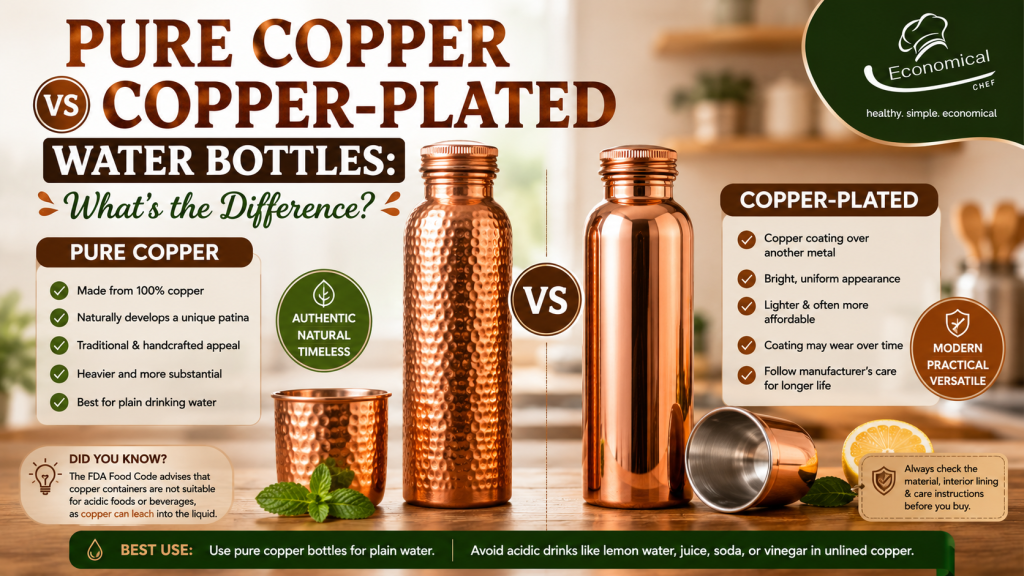
Copper water bottles are popular for their traditional appearance, handcrafted character, and distinctive material. But there is an important difference between a bottle made from copper and one that simply has a copper-colored or copper-plated exterior. Understanding pure copper vs copper-plated water bottles can help you choose a bottle based on construction, durability, maintenance, and intended use rather than marketing claims.
As a professional chef, I look beyond the finish. When choosing kitchen and drinkware products, I want to know what the product is actually made from, whether the interior is lined, how the bottle is constructed, and what beverages the manufacturer recommends storing inside. In this guide, we’ll compare pure copper and copper-plated bottles and explain what to check before buying.
What Is a Pure Copper Water Bottle?
A pure copper water bottle is made primarily from copper rather than simply having a thin copper coating over another metal. Product descriptions may use terms such as pure copper, 100% copper, or solid copper, but it’s still important to check the manufacturer’s material specifications before purchasing.
Pure copper has a naturally warm reddish-orange appearance and can develop a darker patina over time. Hand-hammered bottles often have a more traditional, artisan appearance, while smooth models tend to look cleaner and more contemporary.
Copper itself is an essential mineral. According to the NIH Office of Dietary Supplements, the body uses copper for functions including energy production, connective tissue formation, nervous-system function, and immune-system maintenance. However, that doesn’t mean consuming more copper is automatically better. Excessive copper exposure can cause gastrointestinal symptoms and, at high chronic levels, liver damage.
For that reason, I would choose a pure copper water bottle because of its material, craftsmanship, and traditional design—not because of exaggerated claims about what copper water can do for your health.
What Is a Copper-Plated Water Bottle?
A copper-plated water bottle is made from another material and then covered with a layer of copper. The base material might be stainless steel, aluminum, or another metal, depending on the manufacturer.
The copper layer can provide the appearance of traditional copper drinkware, but the underlying material remains an important part of the product’s construction and performance.
This is why the term “copper water bottle” by itself isn’t enough information when you’re shopping. A bottle can look completely copper-colored while having a stainless steel or other metal interior.
If the product description doesn’t clearly identify the base material, interior construction, and type of coating, I would investigate further before buying.
Pure Copper vs Copper-Plated Water Bottles
The biggest difference is straightforward: pure copper uses copper as the primary construction material, while copper-plated bottles use another material underneath a copper coating.
| Feature | Pure Copper | Copper-Plated |
|---|---|---|
| Main construction | Copper | Another material with copper coating |
| Appearance | Natural copper finish | Copper appearance |
| Patina | Usually develops naturally | Depends on the plating and finish |
| Weight | Often relatively substantial | Depends on base material |
| Durability | Good with proper care | Depends on base material and plating |
| Maintenance | Requires copper-specific care | Requires care to protect the coating |
| Traditional appeal | High | Varies |
| Interior | May be bare copper or lined | Often different from exterior |
| Best suited to | Buyers seeking authentic copper construction | Buyers seeking copper appearance with another base material |
Neither option is automatically the right choice for everyone. The better option depends on how you plan to use the bottle and what characteristics matter most to you.
Is Pure Copper More Durable?
Pure copper can provide excellent long-term durability when properly cared for, but copper is softer than some common bottle materials. A solid copper bottle can develop dents, scratches, and surface marks if dropped or handled roughly.
For many buyers, these changes are part of the appeal. A hand-hammered copper bottle can develop a distinctive appearance over time rather than looking exactly the same as when it was new.
Copper-plated bottles can also be durable, particularly when the underlying material is strong. However, the condition of the copper coating becomes another consideration. Aggressive cleaning or scratching can damage the plating and expose the underlying material.
From a chef’s perspective, I would therefore evaluate construction quality rather than simply judging a bottle by its finish.
Does Pure Copper Make Water Healthier?
This is where it’s important to separate the material’s properties from health marketing.
Copper is necessary for normal human health, but the body requires it in relatively small amounts. The NIH Office of Dietary Supplements lists 900 micrograms per day as the recommended amount for adults and 10,000 micrograms per day as the adult upper limit from all sources.
A copper bottle should therefore not be considered a copper supplement.
The amount of copper that enters water can depend on factors including the water’s chemistry, contact time, temperature, and the condition of the copper surface. The National Research Council’s scientific review of Copper in Drinking Water notes that increased acidity and temperature can increase copper leaching.
So I would be cautious about product claims suggesting that a pure copper bottle will automatically detoxify the body, cure health conditions, or provide specific medical benefits.
If you’re interested in the safety question in greater detail, see our guide on Is Drinking Water from Copper Safe? What Science Says.
What About the Interior: Lined vs Unlined?
This is one of the most important specifications to check before buying any copper drinkware.
A pure copper water bottle may have a bare copper interior, while another bottle may have an internal lining designed to separate the beverage from the copper. A copper-plated bottle may have a completely different interior material again.
Don’t assume that a product described as “100% copper” automatically means the interior is bare copper. Check the manufacturer’s specifications carefully.
Likewise, don’t assume that an interior lining makes a bottle suitable for every beverage. Always follow the manufacturer’s instructions regarding what liquids can safely be stored inside.
For everyday use, I recommend choosing a bottle whose intended beverage use is clearly stated rather than guessing from its appearance.
Can You Store Lemon Water in a Pure Copper Bottle?
This is one of the most important practical differences to understand.
I would not use an unlined copper bottle for lemon water or other acidic beverages. The FDA Food Code limits the use of copper and copper alloys in contact with foods below pH 6, specifically mentioning examples such as vinegar, fruit juice, and wine. The FDA explains that acidic foods can cause copper to leach into the food. (U.S. Food and Drug Administration)
The National Research Council similarly explains that increased acidity can increase copper leaching into water.
For that reason, I recommend using an unlined copper bottle primarily for plain drinking water and choosing glass or a suitable stainless steel bottle for lemon water, fruit-infused water, juice, or other acidic drinks.
For a more detailed explanation, see our guide: Can You Put Lemon Water in a Copper Bottle? What You Should Know.
How Can You Tell If a Copper Bottle Is Pure Copper?
Color alone isn’t a reliable way to determine what a bottle is made from. A copper-plated bottle can look very similar to a solid copper bottle, particularly when new.
Before buying, check the following:
1. Read the Material Specification
Look for clear descriptions such as pure copper, 100% copper, or solid copper. Terms such as “copper finish” or “copper-colored” don’t mean the bottle is made from copper.
2. Check the Interior
Product photographs and specifications may indicate whether the interior is copper, stainless steel, or another material.
3. Look at the Construction
Details such as hand-hammering, seams, welding, thickness, and manufacturing methods can help you understand how the bottle is constructed.
4. Don’t Confuse Appearance With Material
A stainless steel bottle with a copper-colored finish isn’t the same thing as a pure copper vessel.
5. Look for Clear Manufacturer Information
I prefer manufacturers that clearly state the bottle’s materials, interior construction, and intended use instead of relying primarily on broad wellness claims.
Which Type Is Easier to Maintain?
Neither option is completely maintenance-free.
Pure copper naturally changes appearance over time and may develop a darker patina. Some people appreciate this aged appearance, while others prefer to polish their bottle regularly.
Copper-plated bottles require care to protect the coating. Scratches and aggressive cleaning can potentially damage the copper layer, so abrasive cleaners and scouring pads should generally be avoided unless the manufacturer specifically recommends them.
For either type, my practical maintenance routine is simple:
- Hand wash unless the manufacturer specifically states that dishwasher use is acceptable.
- Rinse thoroughly after use.
- Dry the bottle completely.
- Avoid abrasive scrubbers.
- Follow the manufacturer’s cleaning instructions.
- Don’t store acidic beverages in an unlined copper interior.
For more everyday care advice, see our guide on How to Use a Copper Water Bottle Properly.
Which Should You Buy?
Choose Pure Copper If You Want Authenticity
A pure copper bottle makes sense if you value:
- Authentic copper construction
- Traditional craftsmanship
- Hand-hammered designs
- Natural patina
- A distinctive kitchen or dining accessory
- A dedicated bottle for plain drinking water
If you appreciate artisan drinkware and don’t mind regular maintenance, a handcrafted copper water bottle can be an attractive long-term choice.
Choose Copper-Plated If You Prefer Another Base Material
A copper-plated bottle may make more sense if you want:
- The appearance of copper
- A particular underlying material
- A modern manufactured design
- Different weight or handling characteristics
- A bottle whose manufacturer specifically recommends its construction for your intended beverages
The important point is to identify the base material and interior construction before buying rather than assuming that every copper-colored bottle is made from solid copper.
Are Pure Copper Water Bottles Worth It?
For the right buyer, yes — but I would judge one primarily on material quality, construction, craftsmanship, and intended use, rather than on promises of extraordinary health benefits.
A well-made copper bottle can be a durable and attractive piece of drinkware when properly maintained. However, it requires more attention than many stainless steel alternatives, particularly when it comes to cleaning, patina, and beverage compatibility.
As a chef, I’d choose pure copper when I specifically want traditional copper drinkware for plain water. If I needed one bottle for water, lemon water, juice, sports drinks, and other beverages, I’d choose a container specifically designed for that broader range of liquids.
Final Verdict
The key difference between pure copper and copper-plated water bottles is what’s underneath the finish. A pure copper bottle uses copper as its primary construction material, while a copper-plated bottle has another material underneath a copper coating. That distinction affects how the bottle looks, ages, feels, and should be maintained.
Before buying, check the material specification, interior construction, beverage compatibility, cap quality, and cleaning requirements. Most importantly, don’t choose a copper bottle solely because of unsupported health claims. Copper is an essential nutrient, but excessive exposure can be harmful. The NIH Office of Dietary Supplements provides evidence-based information on copper requirements and potential risks from excessive intake.
If you want a pure copper water bottle for plain water, prioritize transparent material specifications and good craftsmanship. If you want a lower-maintenance bottle with greater beverage versatility, compare copper-plated and stainless steel options before making your final decision.
References
- U.S. Food and Drug Administration — FDA Food Code 2022 — Guidance on copper and copper-alloy surfaces coming into contact with acidic foods and beverages.
- NIH Office of Dietary Supplements — Copper Fact Sheet for Consumers — Recommended copper intake, nutritional functions, and potential risks of excessive exposure.
- NIH Office of Dietary Supplements — Copper Fact Sheet for Health Professionals — Detailed scientific information about copper metabolism, health effects, and toxicity.
- National Academies — Dietary Reference Intakes for Copper — Scientific background on copper requirements and the tolerable upper intake level.
1 thought on “Pure Copper vs. Copper-Plated Water Bottles: What’s the Difference?”