The answer depends on several factors, including the refrigerator’s size, cooling technology, insulation, temperature setting, and surrounding room temperature. Some compact models use relatively little electricity, while larger glass-door beverage coolers may consume considerably more. Understanding how energy consumption is measured can help you choose an efficient model and avoid unnecessary electricity use.
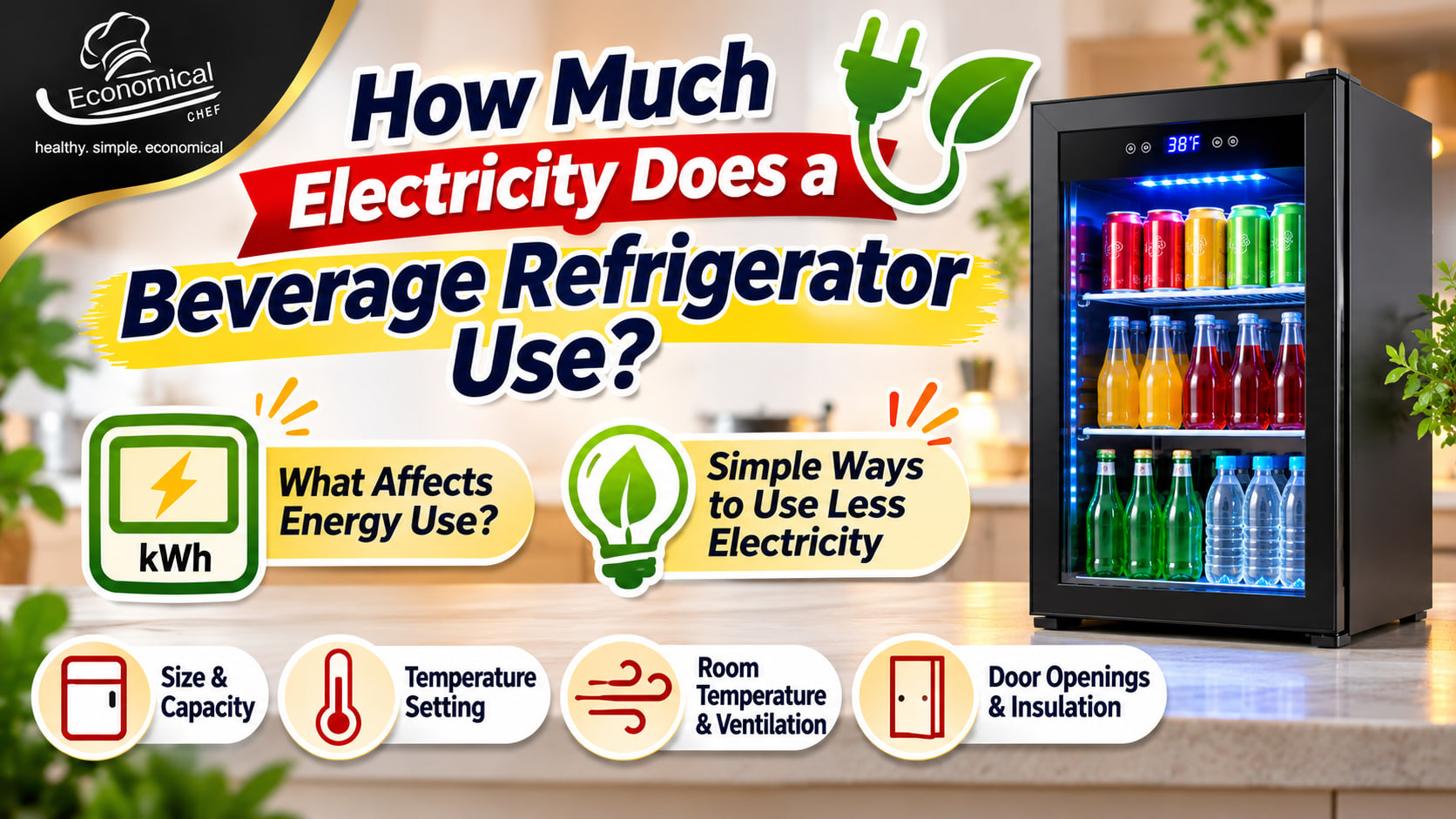
How Much Electricity Does a Beverage Refrigerator Use?
Beverage refrigerators do not all use the same amount of electricity. A small undercounter cooler generally requires less energy than a large, freestanding model designed to hold dozens of cans and bottles. Compressor efficiency, door insulation, ventilation, and how frequently the door is opened also affect consumption.
The most useful figure to check is the appliance’s annual energy consumption, measured in kilowatt-hours (kWh). If the manufacturer or product label provides this information, you can estimate how much electricity the refrigerator will use over a year.
For example, a beverage refrigerator rated at 150 kWh per year uses approximately:
- 12.5 kWh per month
- 0.41 kWh per day
- 150 kWh per year
These figures are estimates based on the stated annual rating. Actual consumption can vary depending on operating conditions.
ENERGY STAR explains that beverage coolers, also called wine coolers or beverage centers, are available in compact, freestanding, and built-in designs. Its certified coolers can be up to 20% more energy-efficient than models meeting the applicable federal minimum efficiency standard. You can learn more through the ENERGY STAR refrigerator and cooler guide.
How to Calculate a Beverage Refrigerator’s Electricity Use
If you cannot find an annual energy-use figure, you can estimate consumption using the refrigerator’s wattage.
Use this basic formula:
Watts × Operating Hours ÷ 1,000 = Kilowatt-hours (kWh)
For example, suppose a beverage refrigerator has a rated power of 100 watts. If it operated at that power continuously for 24 hours, the calculation would be:
100 × 24 ÷ 1,000 = 2.4 kWh per day.
However, this is a theoretical estimate, not necessarily its actual daily consumption. Most compressor beverage refrigerators cycle on and off to maintain the selected temperature. They do not normally operate at full rated power every minute of the day.
For a more realistic estimate, use the annual energy figure on the product label or measure consumption with a suitable plug-in electricity meter. Virginia Cooperative Extension also provides a helpful explanation of how to estimate appliance energy consumption in case you want to kill more of your curisity.
What Factors Affect Electricity Consumption?
Several practical factors influence how much electricity your beverage refrigerator uses.
1. Refrigerator Size and Storage Capacity
Larger beverage refrigerators generally need more cooling capacity, especially when they have extensive glass doors or hold a large number of drinks. A compact countertop model may be sufficient for a few cans, while a larger unit is more suitable for entertaining or storing a wider selection of beverages.
Choose a capacity that matches your actual needs. Buying a refrigerator that is much larger than necessary can mean using more energy than you need to.
2. Temperature Settings
The colder you set the refrigerator, the harder its cooling system may need to work. If you mainly store soft drinks, bottled water, or beer, avoid choosing an unnecessarily low temperature.
Follow the manufacturer’s recommended temperature range for the beverages you store. Consistent temperature control is more practical than frequently adjusting the thermostat.
3. Room Temperature and Ventilation
A beverage refrigerator placed in a hot kitchen, enclosed cabinet, or poorly ventilated corner may consume more electricity because its cooling system has to remove additional heat.
Always follow the manufacturer’s clearance requirements. Freestanding models need adequate airflow around their ventilation areas, while built-in models should be designed and rated for installation inside cabinetry.
4. Door Openings and Insulation
Opening the door frequently allows warm air to enter, making the refrigerator work harder to restore its internal temperature. Poor door seals can have a similar effect.
A well-insulated cabinet and properly fitted door gasket help maintain stable cooling. For everyday convenience, organize drinks so you can find what you need without leaving the door open for too long.
Practical Ways to Reduce Beverage Refrigerator Electricity Use
You do not need to stop using your beverage refrigerator to keep electricity consumption under control. A few simple habits can make a difference:
- Choose an appropriate size: Avoid buying more storage capacity than your household needs.
- Set a sensible temperature: Use the recommended setting rather than making the refrigerator colder than necessary.
- Allow proper ventilation: Keep the required space around vents and cooling components.
- Keep the door closed: Organize beverages so you can reach them quickly.
- Check the door seal: Replace a damaged or loose gasket when necessary.
- Clean and maintain the unit: Follow the manufacturer’s instructions for cleaning vents, condenser areas, and other accessible components.
When shopping, compare annual kWh ratings rather than relying on wattage alone. ENERGY STAR certification is another useful indicator when comparing eligible beverage coolers.
Is a Beverage Refrigerator Expensive to Run?
Not necessarily. The operating cost depends on annual electricity consumption and your local electricity rate.
To estimate the cost, use:
Annual kWh × Electricity Rate per kWh = Estimated Annual Cost
For example, if a beverage refrigerator uses 150 kWh per year and your electricity rate is $0.15 per kWh, its estimated annual running cost would be $22.50.
Your actual bill will depend on your utility rate and how the appliance is used. The calculation is a useful way to compare models before purchasing.
Final Thoughts
A beverage refrigerator can be a practical way to keep drinks organized and chilled, but its electricity consumption varies by size, design, efficiency, and operating conditions. Before buying, compare the annual energy-use rating, choose a capacity that suits your household, and make sure the unit has enough ventilation.
If you are still comparing options, explore our guide to the best beverage refrigerators to find models with useful storage features and practical cooling performance. You may also find our guides to portable beer coolers and beverage tubs helpful if you only need extra drink storage for gatherings or occasional use.