Choosing a beverage refrigerator is not just about capacity, design, or where it will fit in your kitchen. Temperature control also matters, especially if you enjoy keeping different drinks chilled and ready to serve. One of the first decisions you’ll face is whether to buy a single-zone or dual-zone beverage refrigerator.
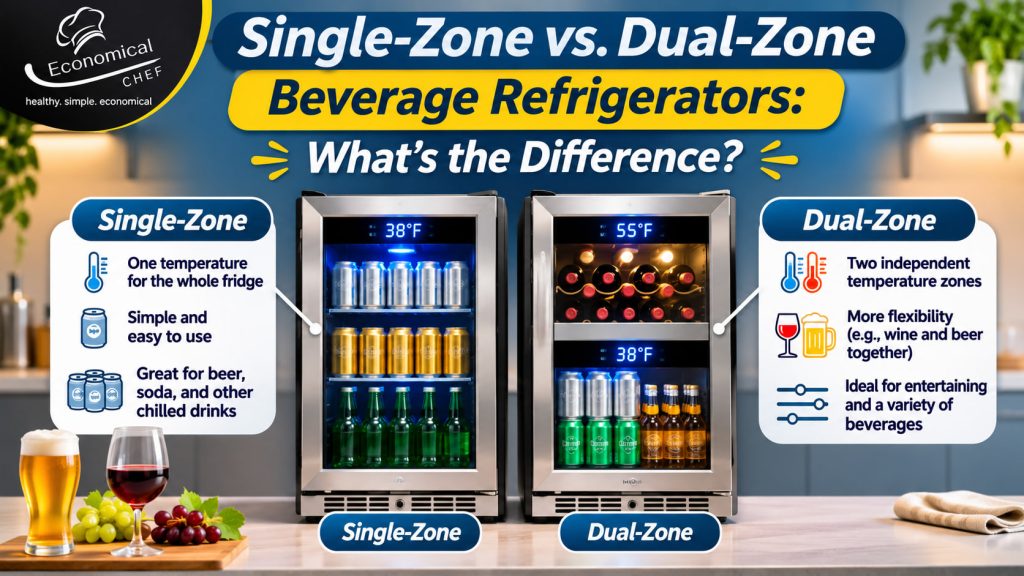
The difference is straightforward: a single-zone refrigerator uses one main temperature setting for the entire cabinet, while a dual-zone model provides two separately controlled temperature areas. Each has practical advantages, depending on what you store and how you serve it.
If you’re comparing beverage refrigerators for your home, bar, or entertainment area, here’s how these two designs work and which one may suit your needs.
What Is a Single-Zone Beverage Refrigerator?
A single-zone beverage refrigerator has one temperature setting for its entire storage compartment. You select the desired temperature, and the appliance cools the cabinet around that setting.
This design works particularly well when you mainly store one category of drinks, such as canned beer, soda, sparkling water, or bottled beverages. Instead of managing separate temperature settings, you have one straightforward cooling environment.
Advantages of a single-zone model:
- Simple temperature control: One setting makes operation easy.
- Practical storage: The entire cabinet can be used for beverages that need similar cooling conditions.
- Straightforward organization: You can arrange cans and bottles without dividing storage into separate temperature areas.
- Good for everyday use: It suits households that regularly serve similar types of chilled drinks.
Potential drawbacks: A single temperature may not be ideal for every beverage. For example, beer and soft drinks are generally served chilled, while different wines may benefit from different serving temperatures. You may need to compromise if you store several beverage types together.
From a chef’s perspective, a single-zone model is often the sensible choice for a household that mainly wants cold drinks ready for everyday meals, gatherings, and entertaining.
What Is a Dual-Zone Beverage Refrigerator?
A dual-zone beverage refrigerator has two temperature-controlled sections, allowing you to set different temperatures for each area. Depending on the model, the zones may be separated by a physical divider or arranged as upper and lower compartments.
This gives you more flexibility when storing different types of beverages. For example, you could keep beer and soft drinks in the colder section while using the other section for wine at a warmer serving temperature.
Advantages of a dual-zone model:
- Separate temperature settings: Each zone can be adjusted independently.
- More beverage flexibility: Store drinks that benefit from different serving temperatures.
- Convenient entertaining: Keep several types of beverages ready to serve without constantly adjusting one shared setting.
- Better organization: Separate drinks by type, serving temperature, or intended use.
Potential drawbacks: Dual-zone refrigerators are often more expensive and may have less usable space in each section because the total capacity is divided between two zones. You also need to consider how much room each compartment provides for your preferred bottles and cans.
One important detail: not every dual-zone refrigerator has the same temperature range or zone configuration. Check the manufacturer’s specifications to confirm that both sections can reach the temperatures you need.
Single-Zone vs. Dual-Zone: Key Differences
| Feature | Single-Zone | Dual-Zone |
|---|---|---|
| Temperature control | One setting for the cabinet | Two separate settings |
| Storage arrangement | One main cooling area | Two temperature-controlled areas |
| Best for | Similar types of beverages | Different beverage types |
| Organization | Flexible shared storage | Separate storage by temperature |
| Operation | Simpler | More temperature settings to manage |
| Capacity | Entire cabinet at one temperature | Capacity divided between zones |
| Ideal users | Everyday households | Wine enthusiasts and frequent hosts |
Which Temperature Is Best for Different Beverages?
The right temperature depends on the beverage and whether you’re storing it or preparing it for serving.
For example, the GCCA’s Commodity Storage & Handling Manual lists approximately 38–40°F (3.3–4.4°C) as storage guidance for certain packaged and draft beers. Wine has different requirements. A peer-reviewed article published in the journal Temperature explains that wine storage and serving temperatures serve different purposes. It discusses approximately 13°C (55°F) as a suitable general wine-storage temperature, while serving temperatures vary by wine style.
These distinctions explain why separate temperature zones can be useful.
| Beverage | Practical Temperature Consideration |
|---|---|
| Beer | Often stored chilled, with guidance varying by beer type |
| Soda and sparkling water | Generally preferred cold |
| White wine | Usually served chilled |
| Red wine | Generally served warmer than white wine |
| Sparkling wine | Typically served well chilled |
These are general considerations rather than universal settings. Always check the beverage manufacturer’s recommendations, particularly for specialty beers and wines intended for longer-term storage.
For more detail, see Purdue University’s Wine Storage Guidelines and the peer-reviewed research article Left Out in the Cold: Serving Wines Chilled.
Which Beverage Refrigerator Should You Choose?
The best choice depends on your drinking habits, available space, and how much temperature flexibility you need.
Choose a single-zone beverage refrigerator if:
- You mainly store beer, soda, water, or similar drinks.
- You prefer simple temperature controls.
- You want the entire cabinet available at one consistent setting.
- You don’t regularly serve beverages that require different temperatures.
Choose a dual-zone beverage refrigerator if:
- You regularly keep both wine and beer.
- You want to store red and white wines at different serving temperatures.
- You entertain guests and serve a variety of beverages.
- You value separate temperature controls more than having one large storage compartment.
My practical recommendation is to avoid paying for two temperature zones unless you have a clear use for them. If your refrigerator will mostly hold cans of beer, soda, and bottled water, a single-zone model should be sufficient. If you regularly serve wine alongside other chilled beverages, dual-zone flexibility can make your setup more convenient.
Final Thoughts
The main difference between single-zone and dual-zone beverage refrigerators is temperature flexibility. Single-zone models offer straightforward cooling for similar beverages, while dual-zone refrigerators let you keep two categories of drinks at different temperatures in the same appliance.
Before buying, consider what you drink most often, the storage capacity you need, and the temperature ranges supported by the model. If you’re still comparing options, explore our guide to the best beverage refrigerators or beverage refrigerator vs portable mini fridge to find a model that fits your kitchen, entertaining habits, and everyday needs.