Whether you’re slicing vegetables for a quick stir-fry or carving a perfectly roasted chicken, the cutting board you choose can make a noticeable difference in your cooking experience. Among the most popular options today are bamboo cutting boards and acacia wood cutting boards. Both are attractive, durable, and more eco-friendly than plastic alternatives, but they perform differently in everyday kitchen tasks.
As a chef, I’ve used both extensively in home and professional kitchens. While each has its strengths, the better choice depends on how you cook, how often you use your board, and how much maintenance you’re willing to do. Here’s a practical comparison to help you decide.
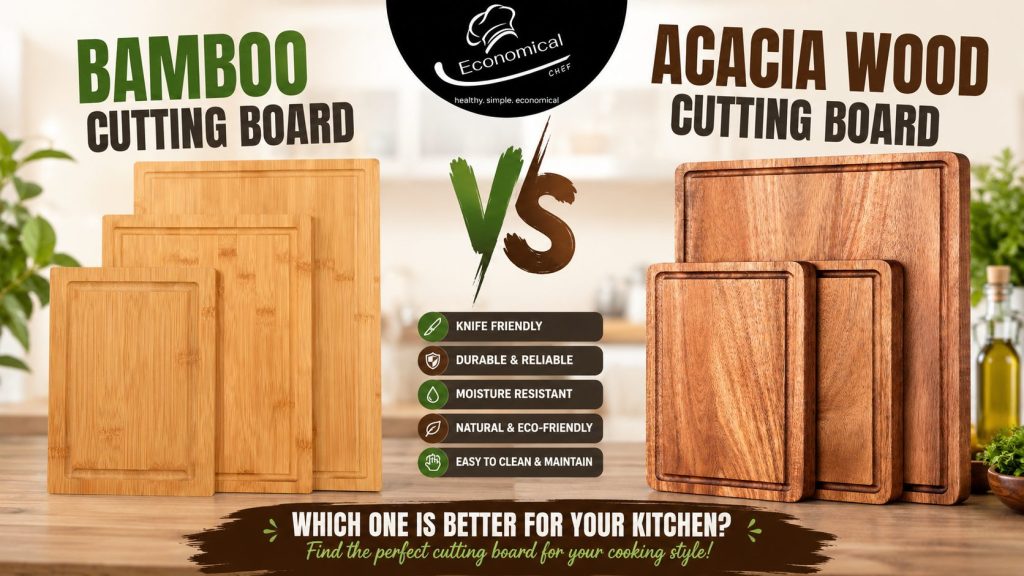
Bamboo Cutting Board vs. Acacia Wood Cutting Board: Quick Comparison
| Feature | Bamboo Cutting Board
|
Acacia Wood Cutting Board
|
|---|---|---|
| Hardness | Very hard | Moderately hard |
| Knife Friendliness | Fair | Excellent |
| Durability | Excellent | Excellent |
| Moisture Resistance | Very good | Outstanding |
| Weight | Lightweight | Heavier and more stable |
| Maintenance | Low | Moderate |
| Appearance | Simple, modern | Rich natural grain |
| Best For | Everyday meal prep | Serious home cooks and chefs |
Material and Construction
Although bamboo is often grouped with hardwoods, it is actually a type of grass. Manufacturers compress bamboo fibers under high pressure to create dense, durable cutting boards. This process produces a lightweight board that resists moisture and everyday wear.
Acacia, on the other hand, is a genuine hardwood known for its rich colors and beautiful grain patterns. Each board has a unique appearance, making it both a practical kitchen tool and an attractive serving piece.
From a chef’s perspective, acacia simply feels more premium, while bamboo offers excellent value for daily use.
Knife Friendliness
One of the biggest differences between these two materials is how they affect your knives.
Bamboo is harder than many hardwoods. While this contributes to its durability, the dense surface can dull knife edges more quickly with frequent use. If you invest in high-quality chef’s knives, you’ll likely notice that they require sharpening more often on bamboo boards.
Acacia wood is slightly softer, allowing the blade to sink just enough into the surface. This reduces edge wear while still providing a stable cutting surface.
Winner: Acacia wood.
Durability and Scratch Resistance
Both materials hold up well under regular kitchen use.
Bamboo resists scratches and dents remarkably well because of its hardness. It can withstand years of chopping vegetables, fruits, and boneless meats without looking heavily worn.
Acacia is also highly durable but may develop small knife marks over time. Fortunately, these marks rarely affect performance and often blend naturally into the wood’s grain.
In my kitchen, both last for years when properly maintained.
Winner: Tie.
Moisture Resistance
Moisture is one of the biggest enemies of wooden cutting boards.
Bamboo naturally resists water absorption, making it less likely to warp if cleaned promptly.
Acacia contains natural oils that provide excellent moisture resistance. This makes it especially suitable for cutting juicy fruits, vegetables, and meats. It is also less likely to crack when properly conditioned with food-safe mineral oil.
If you’re looking for long-term resistance against moisture, acacia has a slight advantage.
Winner: Acacia wood.
Weight and Stability
A lightweight cutting board is easier to carry and store, but it may slide around during heavy chopping.
Bamboo boards are generally lighter, making them ideal for smaller kitchens or anyone who frequently moves their board between the sink, counter, and dining table.
Acacia boards are heavier and sit firmly on the countertop. This added stability makes food preparation safer and more comfortable, especially when using large chef’s knives.
For serious cooking sessions, I prefer the extra stability of acacia.
Winner: Acacia wood.
Maintenance and Care
Neither material is dishwasher-safe.
Both bamboo and acacia boards should be washed by hand using warm water and mild dish soap. Dry them immediately after cleaning to prevent excess moisture from soaking into the material.
Bamboo typically requires less frequent oiling, making it slightly easier to maintain.
Acacia benefits from regular conditioning with food-grade mineral oil to preserve its appearance and prevent drying.
If you prefer minimal maintenance, bamboo is the easier option.
Winner: Bamboo.
Appearance
If aesthetics matter, acacia is difficult to beat.
Its rich golden, brown, and dark contrasting grain gives every board a distinctive appearance that looks beautiful on the countertop or dining table. Many people also use acacia boards as serving platters for cheese, bread, or charcuterie.
Bamboo offers a clean, minimalist appearance that works well in modern kitchens but lacks the character of natural hardwood grain.
Winner: Acacia wood.
Which One Offers Better Value?
For budget-conscious home cooks, bamboo cutting boards deliver outstanding value. They’re affordable, durable, lightweight, and require relatively little maintenance.
If you’re willing to spend a little more, acacia provides a more enjoyable cooking experience. It’s gentler on knives, offers excellent stability, and adds a premium look to your kitchen.
The higher initial investment often pays off through years of reliable performance.
Final Verdict
Both bamboo and acacia cutting boards are excellent choices, and neither is a bad investment. If you want an affordable, durable, and easy-to-maintain cutting board for everyday meal preparation, bamboo is a smart option that performs well in most kitchens.
However, if you value knife preservation, countertop stability, moisture resistance, and a premium appearance, an acacia wood cutting board is the better long-term choice. From my experience as a chef, it’s the board I reach for most often because it strikes the best balance between performance, durability, and beauty.
If you’re ready to upgrade your kitchen, you may also enjoy our guides to the best acacia wood cutting boards and the best bamboo cutting boards, where we review top-rated options to help you find the right board for your cooking style.