Choosing the right water dispenser can make everyday hydration more convenient, whether you’re outfitting a busy family kitchen, home office, or workplace. Two of the most popular options are bottom-loading and top-loading water dispensers. While both provide clean drinking water, they differ significantly in convenience, maintenance, appearance, and overall user experience.
As a professional chef, I value appliances that simplify daily routines without compromising reliability. After using different types of water dispensers in both home and commercial settings, I’ve found that the best choice depends on your priorities. In this article, we’ll compare bottom loading vs top loading water dispensers to help you decide which style best fits your needs.
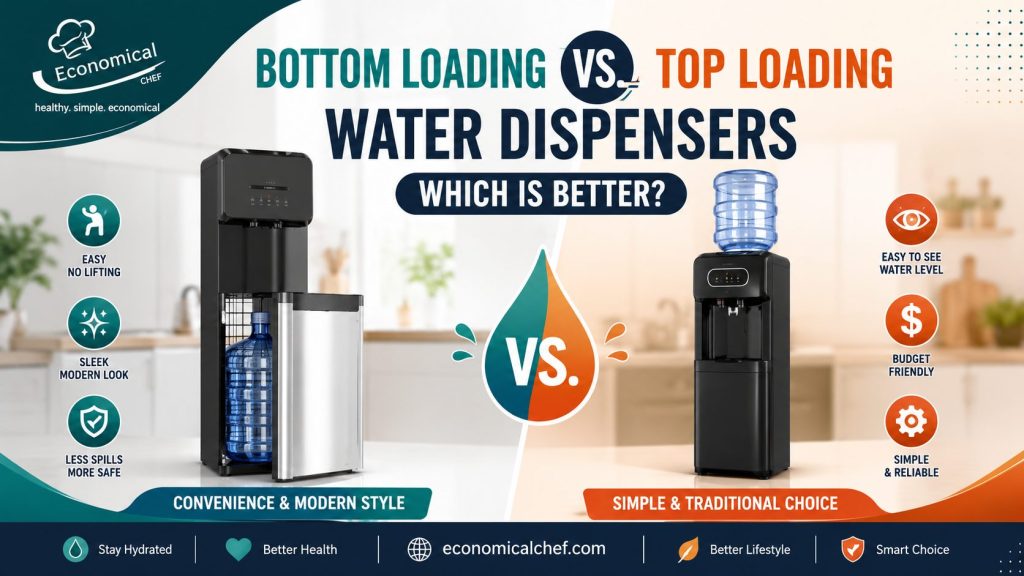
Quick Comparison: Bottom Loading vs Top Loading Water Dispensers
| Feature | 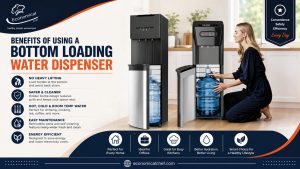
|
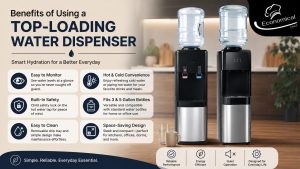
|
|---|---|---|
| Bottle Replacement | ⭐⭐⭐⭐⭐ Easy | ⭐⭐ Requires heavy lifting |
| Water Level Visibility | Hidden bottle | Easy to see |
| Appearance | Modern and clean | Traditional |
| Spill Prevention | Better | Moderate |
| Maintenance | Similar | Similar |
| Best For | Homes, offices, families | Budget-conscious users |
| Bottle Sizes | Usually 3 & 5 gallons | Usually 3 & 5 gallons |
Winner: Bottom loading offers greater convenience, while top loading provides easier visual monitoring of the water level.
How Each Type Works
A bottom loading water dispenser stores the water bottle inside a lower cabinet. A built-in pump draws water upward into the dispensing system, eliminating the need to lift heavy bottles above shoulder height.
A top loading water dispenser places the bottle upside down on top of the unit. Gravity feeds water into the internal reservoir, making the remaining water level visible at all times.
Both systems are compatible with standard bottled water and are available with hot, cold, or room-temperature dispensing options.
Benefits of a Bottom Loading Water Dispenser
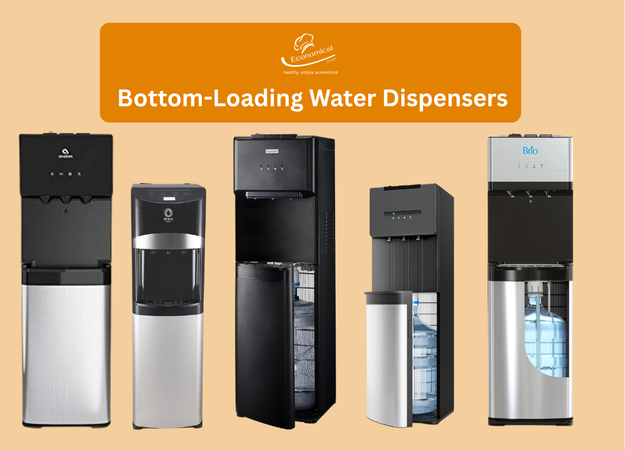
For many households, a bottom load water cooler offers the best combination of convenience and modern design.
1. Easier Bottle Changes
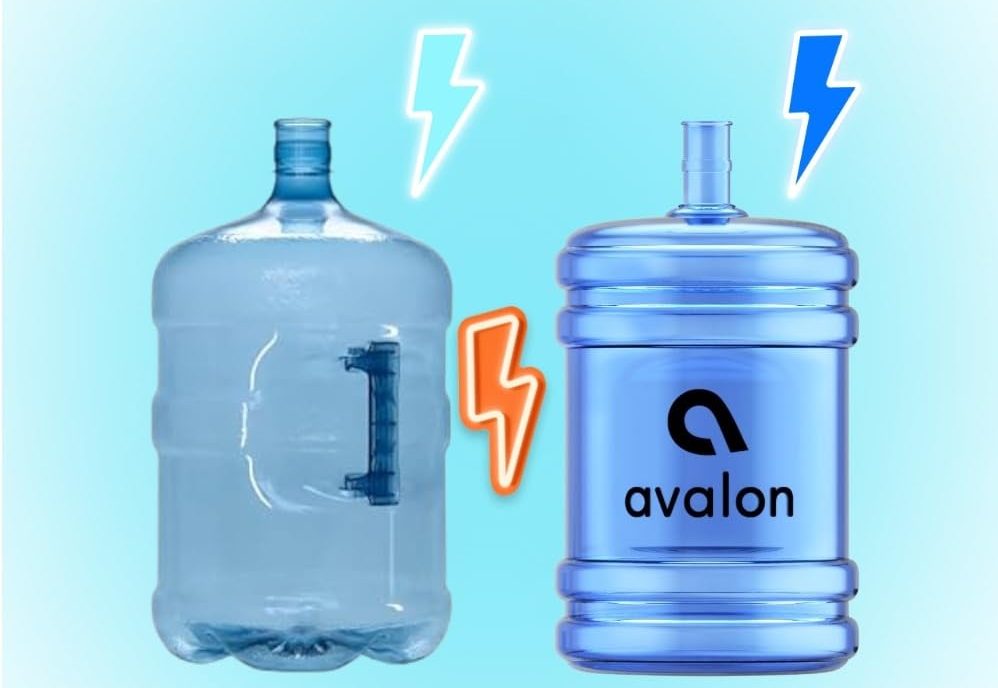
Replacing a 5-gallon water bottle can be physically demanding. A bottom-loading model allows you to slide the bottle into the cabinet instead of lifting it overhead, making it a practical option for seniors, families, or anyone who wants to reduce strain.
2. Cleaner Appearance
Because the bottle is concealed inside the cabinet, the dispenser has a more streamlined, contemporary look that blends well with modern kitchens and offices.
3. Reduced Risk of Spills
Since the bottle stays upright during installation, there is less chance of accidental spills when changing bottles.
4. Premium Features
Many water dispensers for home now include:
- Self-cleaning UV systems
- Empty bottle indicators
- LED displays
- Night lights
- Child safety locks
- Three temperature settings
These convenience features are more commonly found on bottom-loading models. If you already owned one, our chef also put together A Step-by-Step Guide on How to Clearn a Bottom-Loading Water Dispenser for you.
Benefits of a Top Loading Water Dispenser
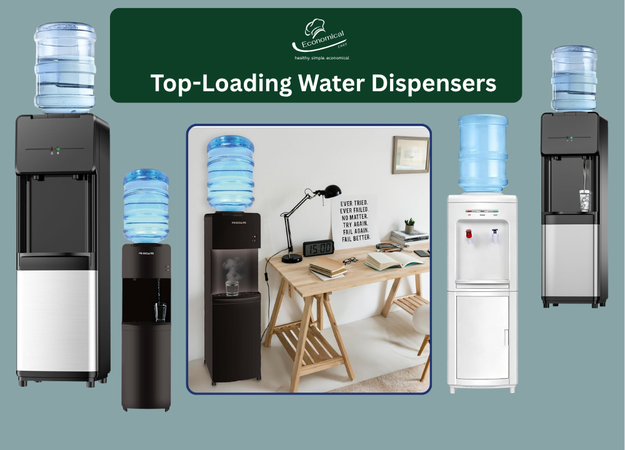
Despite its traditional design, a top-loading dispenser still offers several advantages.
1. Easier to Monitor Water Levels
One of the biggest benefits is being able to see exactly how much water remains, making it easier to know when a replacement bottle is needed.
2. Simpler Internal Design
Because water flows by gravity instead of an internal pump, top-loading models generally have fewer moving parts.
3. Often More Affordable
Many entry-level top-loading dispensers offer dependable performance with fewer premium features, making them suitable for buyers who simply want reliable hot and cold water.
Which Is Easier to Maintain?
Neither style requires significantly more maintenance than the other.
Regardless of which type you choose, you should:
- Clean the drip tray regularly.
- Sanitize the water system every few months.
- Wipe the dispensing nozzles.
- Follow the manufacturer’s maintenance instructions.
If your dispenser includes a self-cleaning water dispenser feature, routine maintenance becomes even easier, but manual cleaning is still recommended periodically.
Which Is Better for Families?
For households with children, a bottom loading water dispenser is usually the better choice.
Many models include:
- Child safety locks
- Hidden bottle storage
- Empty bottle alerts
- Quiet operation
- Modern safety features
The lower bottle position also reduces the risk of accidents when replacing heavy water bottles.
Which Is Better for Offices?
For offices, the decision depends on how the dispenser will be used.
Choose a bottom loading water dispenser if you want:
- A professional appearance
- Easier bottle replacement
- Quieter operation
- Premium convenience features
Choose a top-loading dispenser if:
- Multiple people monitor water usage
- Simplicity is more important than aesthetics
- Budget is the primary consideration
Energy Efficiency
Energy consumption depends more on the individual model than the loading style. Many premium bottom load water coolers are ENERGY STAR® certified and include energy-saving modes that help reduce electricity use without sacrificing performance.
When shopping, compare energy certifications and efficiency features rather than assuming one loading style is inherently more efficient.
Which One Should You Buy?
If convenience, appearance, and ease of use are your priorities, a bottom loading water dispenser is the better investment. It eliminates heavy lifting, minimizes spills, and often includes premium features that make daily use more enjoyable.
A top loading water dispenser remains a practical option for buyers who prefer a simpler design and like being able to monitor the water level without opening a cabinet.
From a professional chef’s perspective, I recommend a bottom-loading model for most households because it saves time, reduces physical effort, and keeps the kitchen looking organized—especially in busy homes where the dispenser is used throughout the day.
Frequently Asked Questions
Are bottom loading water dispensers more reliable?
Both styles can be highly reliable when properly maintained. Build quality, regular cleaning, and following the manufacturer’s maintenance recommendations have a greater impact on longevity than the loading style itself.
Do bottom loading dispensers use more electricity?
Not necessarily. Electricity consumption varies by model. Choosing an ENERGY STAR® certified dispenser can help reduce operating costs regardless of whether it is a bottom-loading or top-loading unit.
Which type is easier to clean?
Both require similar routine maintenance. However, many bottom-loading models include self-cleaning UV systems or removable components that simplify regular upkeep.
Can both use 3- and 5-gallon bottles?
Yes. Most modern water dispensers are compatible with standard 3- and 5-gallon bottles, but it’s always best to confirm compatibility in the product specifications before purchasing.
Final Thoughts
Both bottom loading and top loading water dispensers can provide years of dependable service, but they cater to different needs. If you value convenience, cleaner aesthetics, and modern features, a bottom loading water dispenser is the clear winner. If simplicity and easy bottle-level monitoring are your top priorities, a top-loading model remains a dependable choice.