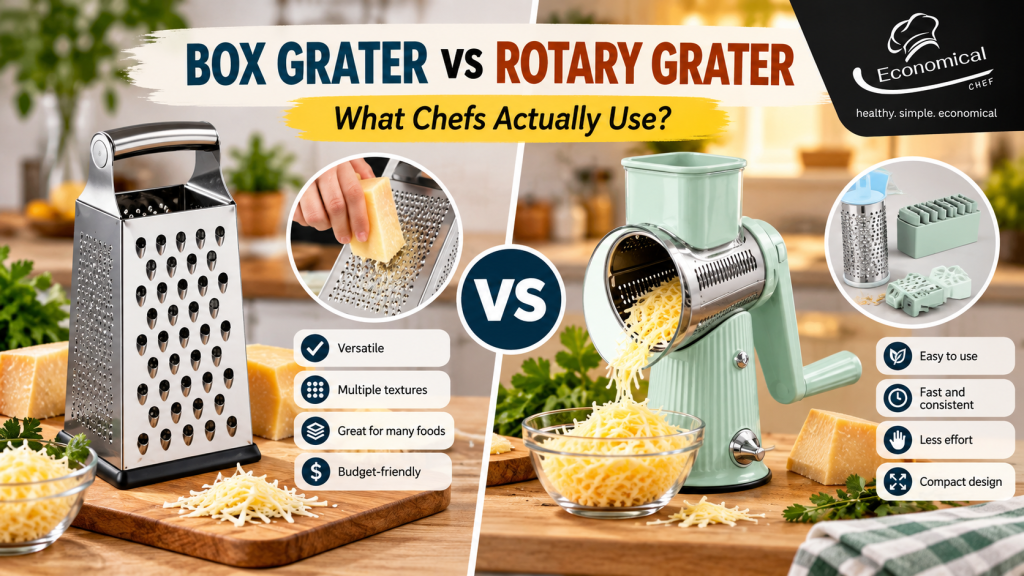
Walk into any professional kitchen, and you’ll almost always find both a box grater and a rotary grater. The reason is simple: they serve different purposes.
From a chef’s perspective, this isn’t about which one is “better” — it’s about which one fits the job you’re doing right now.
Let’s break it down properly so you can choose the right tool for your kitchen.
What Is a Box Grater?
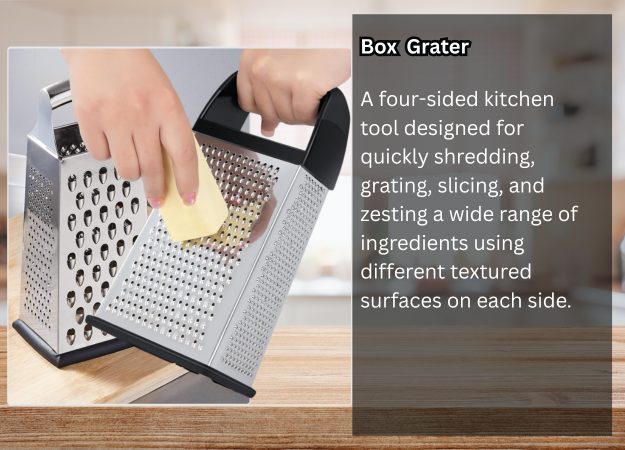
A box grater is the classic four-sided grater found in almost every kitchen.
Each side serves a different function:
- Coarse shredding (cheese, vegetables)
- Medium shredding
- Fine grating (Parmesan, spices)
- Slicing
This versatility makes it one of the most widely used kitchen tools, capable of handling everything from cheese to vegetables and citrus zest.
What Is a Rotary Grater?
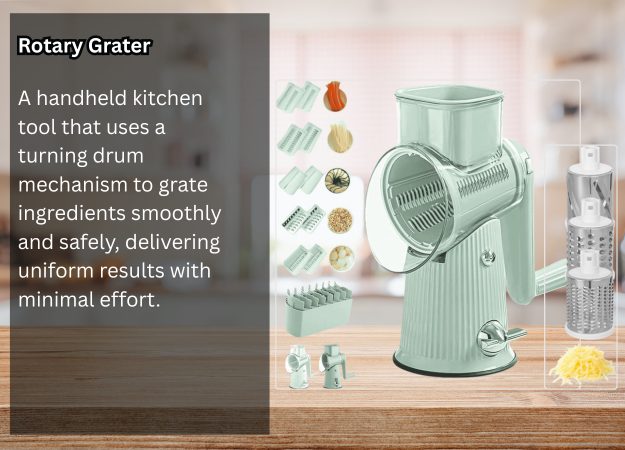
A rotary grater is a hand-cranked tool with a rotating drum that grates cheese quickly and evenly.
- Cheese is enclosed inside
- You turn a handle to grate
- Produces consistent, fluffy shreds
It’s especially popular for hard cheeses like Parmesan and repetitive grating tasks.
Box Grater vs Rotary Grater: Quick Comparison Table
| Feature | Box Grater | Rotary Grater |
|---|---|---|
| Operation | Manual (up-down motion) | Manual (hand crank) |
| Effort | Moderate (can be tiring) | Low (less strain) |
| Speed | Moderate | Faster for repeated use |
| Best For | Multi-purpose prep | Cheese-focused tasks |
| Versatility | Very high | Limited |
| Safety | Lower (exposed blades) | Higher (enclosed drum) |
| Consistency | Depends on user | Very consistent |
| Cleaning | Easy (single piece) | More parts to clean |
| Storage | Bulky but simple | Compact but multi-part |
| Price | Very affordable | Slightly higher |
What This Comparison Really Means (Chef Insight)
Here’s the real-world truth from professional kitchens:
- Box graters are, similar to microplane zesters, the all-rounder
- Rotary graters are the specialist
Most chefs don’t replace one with the other — they use both strategically.
Key Differences Explained
1. Versatility (Box Grater Wins)
A box grater is one of the most versatile tools in your kitchen.
You can:
- Shred cheese
- Grate carrots for baking
- Zest citrus
- Slice vegetables
👉 In fact, many chefs rely on box graters for daily prep because they can handle multiple ingredients in one tool.
2. Speed & Efficiency (Rotary Wins)
When it comes to grating cheese quickly:
- Rotary graters are significantly faster for repeated tasks
- They reduce prep time and effort
👉 In professional kitchens, rotary graters are often used to improve workflow and efficiency during prep.
3. Consistency (Rotary Wins)
- Box grater results vary depending on pressure and technique
- Rotary graters produce uniform, fluffy shreds every time
👉 This matters for:
- Even melting on pizza
- Better texture in pasta dishes
4. Safety (Rotary Wins)
- Box graters expose your fingers to sharp edges
- Rotary graters keep hands away from blades
👉 In busy kitchens, reducing injury risk is a big reason chefs prefer rotary for repetitive tasks.
5. Effort & Fatigue (Rotary Wins)
- Box graters require repetitive motion
- Rotary graters reduce strain with a simple crank
👉 Over time, this makes a difference — especially in high-volume cooking.
6. Cleaning & Convenience (Box Grater Wins)
- Box grater = one piece, quick rinse
- Rotary = multiple parts, more effort
👉 For quick tasks, chefs often grab a box grater just to avoid extra cleanup.
Pros and Cons Summary
Box Grater
Pros
- Extremely versatile
- Cheap and durable
- Easy to clean
- No setup required
Cons
- Can be tiring for large amounts
- Higher risk of knuckle injuries
- Less consistent results
Rotary Grater
Pros
- Faster for cheese prep
- Safer design
- Consistent results
- Less physical effort
Cons
- Limited uses
- More parts to clean
- Slightly higher cost
What Chefs Actually Use
Here’s the honest answer:
👉 Most chefs use BOTH.
- Box grater → for versatility and quick prep
- Rotary grater → for cheese-heavy tasks and efficiency
Even professional kitchens often combine both tools to balance speed and flexibility.
Which One Should You Choose?
Choose a B ox Grater if:
- You want one tool for multiple tasks
- You cook small to medium portions
- You value simplicity and low cost
Choose a Rotary Grater if:
- You grate cheese frequently
- You want faster prep with less effort
- You care about consistency and safety
Chef’s Final Verdict
If you had to pick just one:
- Box grater = better for most kitchens (because it does everything)
- Rotary grater = better for cheese lovers and efficiency
👉 Best setup?
- Use a box grater as your foundation tool
- Add a rotary grater when cheese becomes a daily task
That’s exactly how most chefs approach it.