A garlic press is a convenient kitchen tool, but cleaning it can be frustrating when garlic pulp and papery skins become trapped in the small pressing holes. The good news is that you usually don’t need special cleaners or complicated techniques. From a chef’s perspective, the most effective habit is simple: clean your garlic press immediately after use, while the residue is still soft. Once garlic dries inside the holes, removing it becomes considerably more difficult.
Because a garlic press is a food-contact utensil, proper cleaning matters. The USDA food safety guidance recommends washing kitchen utensils with warm, soapy water, while the FDA Food Code emphasizes keeping food-contact surfaces clean and free from accumulated food residue.
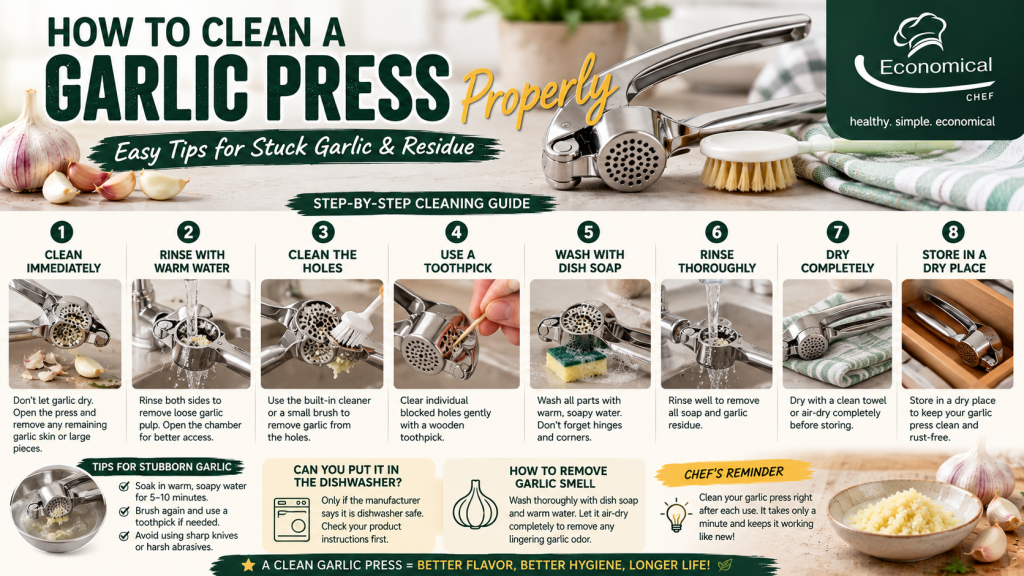
What You Need to Clean a Garlic Press
For everyday cleaning, keep it simple:
- Warm water
- Dish soap
- Small cleaning brush or old toothbrush
- Soft sponge
- Wooden toothpick or built-in cleaner
- Clean towel or drying rack
If your model is dishwasher safe, you can also use the dishwasher according to the manufacturer’s instructions.
How to Clean a Garlic Press Properly
1. Clean It Immediately After Use
Don’t leave the press sitting beside the sink while you finish cooking. Fresh garlic pulp rinses away much more easily than dried residue.
After pressing your final clove, open the handles and remove any remaining garlic skin or large pieces. A quick rinse at this point can prevent most stubborn buildup.
2. Rinse the Press With Warm Water
Run the garlic press under warm water to remove loose garlic pulp. Open the chamber as far as possible so water can reach both the pressing plate and interior.
If your model has a removable basket or swing-out chamber, take advantage of it. Better access makes cleaning faster and reduces the chance of leaving food residue behind.
3. Clean the Garlic Press Holes
The tiny holes are usually the hardest part to clean.
If your press has a built-in cleaning mechanism, use it according to the manufacturer’s instructions. Otherwise, use a small cleaning brush to work across the pressing plate and remove trapped garlic.
For one or two particularly stubborn pieces, a wooden toothpick can help clear an individual hole. I don’t recommend using a kitchen knife for this job — it is unnecessary and can damage the tool or cause an injury.
4. Wash With Dish Soap
Once the visible garlic has been removed, wash the entire press with warm water and dish soap. Pay particular attention to:
- Pressing holes
- Inside the garlic chamber
- Hinges and joints
- Removable baskets
- Handle connections
The FDA Food Code emphasizes that food-contact surfaces should be clean and free of food residue, making these less-visible areas worth checking.
5. Rinse and Dry Thoroughly
Rinse the press thoroughly to remove soap, then allow it to air-dry or dry it with a clean towel.
Don’t immediately close a wet garlic press and put it into a drawer. Drying the tool completely is a simple habit that helps keep it ready for the next use.
How to Remove Dried Garlic Stuck in a Press
If you’ve forgotten to clean the press and the garlic has already hardened, don’t start scraping aggressively. Soak it first.
Place the affected area in warm, soapy water for several minutes. Once the dried garlic softens, rinse it and use a small brush to loosen the remaining pieces. A wooden toothpick or the manufacturer’s cleaning tool can then clear individual blocked holes.
This approach is much easier than trying to chip hardened garlic away with a sharp utensil.
Can You Put a Garlic Press in the Dishwasher?
Only if the manufacturer says it is dishwasher safe.
Many modern stainless steel and zinc-alloy garlic presses are designed for dishwasher cleaning, but materials and finishes vary between models. Always check the product’s care instructions before putting it in the dishwasher.
Even when a press is dishwasher safe, I often prefer to give it a quick rinse immediately after use. This prevents garlic from drying inside the holes and makes the dishwasher’s job easier.
When reviewing garlic presses, I pay close attention to removable chambers, built-in cleaners, accessible pressing plates, and dishwasher-safe construction because these features can make a noticeable difference in everyday use. Good Housekeeping also considers ease of cleaning when evaluating garlic presses.
How to Remove Garlic Smell From a Garlic Press
If your garlic press still smells after cleaning, the first thing to check is hidden residue. Garlic pulp can remain around the pressing plate, hinge, or inside small crevices.
Wash the tool again with warm, soapy water and use a small brush around these areas. Rinse thoroughly and allow it to dry completely.
You don’t need to mask the smell with strongly scented cleaners. Removing the remaining garlic residue is the better approach.
Chef’s Tips for Easier Garlic Press Cleaning
From my experience in the kitchen, these habits make the biggest difference:
- Clean immediately: Don’t allow garlic pulp to dry.
- Don’t ignore the holes: The pressing plate often traps the most residue.
- Use a brush: It’s safer and more effective than aggressive scraping.
- Check the hinge: Garlic can collect in moving parts.
- Follow dishwasher instructions: Never assume a press is dishwasher safe.
- Dry before storing: Avoid putting a wet tool directly into a drawer.
Learn how to use a garlic press properly with this chef’s guide to faster prep, fine minced garlic, easier handling, and cleanup
Final Chef’s Take
The best way to clean a garlic press is to clean it immediately after use. Warm, soapy water handles most fresh residue, while a small brush or built-in cleaner can take care of garlic trapped in the pressing holes. If the garlic has already dried, soaking the press first makes removal much easier.
If you’re buying a new model, don’t consider pressing performance alone. A removable chamber, built-in cleaner, accessible holes, and dishwasher-safe design can make a garlic press much more practical over the long term.
For specific recommendations, see our guide on the Best Garlic Presses for Kitchen in 2026, where we compare models based on durability, pressing performance, comfort, and cleaning convenience.