A glass water filter pitcher is one of the easiest ways to enjoy cleaner, better-tasting drinking water while avoiding the odors and staining that plastic pitchers can develop over time. However, even the best glass water filter pitcher needs regular cleaning. Mineral deposits, food residue from your hands, mold, and bacteria can build up if the pitcher isn’t maintained properly, reducing both water quality and filter performance.
As a chef, I always emphasize that clean equipment produces better results. Just as you wouldn’t prepare food with dirty cookware, you shouldn’t rely on a neglected water filter pitcher for your daily drinking water. Fortunately, cleaning one is quick and only takes a few minutes each week.
How Often Should You Clean a Glass Water Filter Pitcher?
For most households, follow this simple schedule:
- Glass pitcher: Wash every week.
- Lid: Clean weekly since it comes into contact with your hands.
- Filter reservoir: Wash every one to two weeks.
- Deep clean: Perform once a month or whenever you replace the filter.
Many manufacturers also recommend cleaning the pitcher each time you install a new filter to help maintain optimal performance. Regular maintenance helps prevent biofilm and keeps your filtered water tasting fresh. Visit US EPA for Operation and Maintenance Resources for Small Drinking Water Systems.
Step-by-Step Guide: How to Clean a Glass Water Filter Pitcher Properly
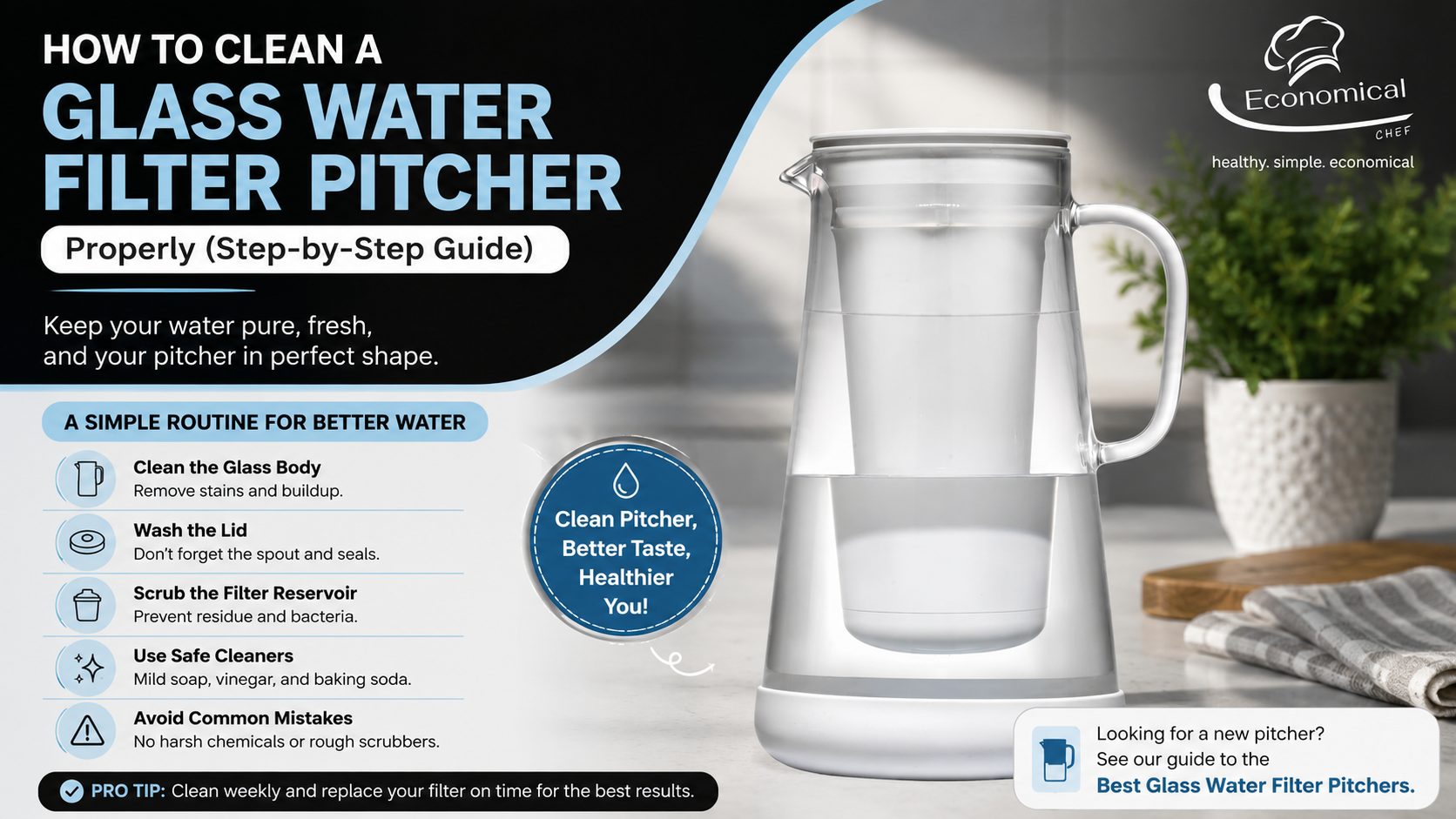
Looking for a new pitcher? See our guide to the Best Glass Water Filter Pitchers.
Step 1: Remove the Filter
Before cleaning, remove the water filter cartridge.
Never use soap or detergents directly on the filter unless the manufacturer specifically instructs you to do so. Most carbon filters should only be rinsed according to the manufacturer’s directions.
If you’re due for a replacement, install a new cartridge after cleaning the pitcher.
Step 2: Wash the Glass Body
The glass body is the easiest component to clean.
- Empty any remaining water.
- Wash with warm (not boiling) water and a few drops of mild dish soap.
- Use a soft sponge or bottle brush to clean the inside.
- Rinse thoroughly until no soap residue remains.
Avoid sudden temperature changes. Pouring boiling water into a cool glass pitcher may cause thermal shock and crack the glass.
For Hard Water Stains
If you notice white mineral deposits:
- Fill the pitcher with equal parts white vinegar and warm water.
- Let it soak for 15–20 minutes.
- Scrub gently with a soft sponge.
- Rinse several times with clean water.
This removes mineral buildup without scratching the glass.
Step 3: Clean the Lid
The lid often collects fingerprints, dust, and moisture.
Wash it using:
- Warm water
- Mild dish soap
- A soft cloth or sponge
Pay special attention to:
- Pour spouts
- Hinges
- Rubber seals (if equipped)
These areas commonly trap moisture that can encourage mold growth.
Step 4: Clean the Filter Reservoir
The filter reservoir deserves special attention because untreated tap water sits here before filtration.
Wash it with:
- Warm water
- Mild soap
- A soft bottle brush
Reach into the corners and underneath the filter opening where residue can collect.
After washing, rinse thoroughly to remove every trace of soap.
What Cleaning Products Are Safe?
Stick with gentle cleaners designed for food-contact surfaces.
Safe options include:
- Mild dish soap
- White vinegar for mineral deposits
- Baking soda for stubborn odors
- Soft microfiber cloths
- Non-abrasive sponges
These effectively clean the pitcher without damaging the glass or plastic components.
What Should You Avoid?
Avoid using:
- Bleach (unless specifically recommended by the manufacturer)
- Abrasive scouring pads
- Steel wool
- Harsh chemical cleaners
- Dishwasher cleaning unless your pitcher is labeled dishwasher-safe
These products may scratch the glass, damage plastic parts, or shorten the life of seals and components.
Common Cleaning Mistakes
Even careful owners sometimes make mistakes that affect water quality.
Leaving Water Sitting Too Long
Filtered water should be consumed within a reasonable time and stored properly in the refrigerator. Stagnant water encourages bacterial growth.
Forgetting the Lid
Many people clean only the glass body while ignoring the lid, where oils and bacteria from hands often accumulate.
Not Rinsing Soap Completely
Soap residue can leave an unpleasant taste in your drinking water.
Using Rough Scrubbers
Glass is durable, but abrasive pads can leave tiny scratches that become harder to keep clean over time.
Ignoring Manufacturer Instructions
Every pitcher design is slightly different. Always follow the cleaning and maintenance recommendations provided by your manufacturer.
Pro Tips for Keeping Your Pitcher Fresh
To keep your pitcher performing at its best:
- Empty standing water before long periods of non-use.
- Store filtered water in the refrigerator whenever possible.
- Replace filters on schedule.
- Wash your hands before handling the filter.
- Allow washed components to dry completely before reassembly when practical.
These simple habits help maintain better-tasting water while extending the life of your pitcher.
Final Thoughts
Learning how to clean a glass water filter pitcher is one of the easiest ways to ensure cleaner, fresher-tasting drinking water every day. A few minutes of routine maintenance can prevent odors, reduce mineral buildup, and help your filter work as intended.
If you’re shopping for a new model or looking to upgrade your current one, be sure to check out our guide to the Best Glass Water Filter Pitchers, where we compare the top options for durability, filtration performance, and overall value.