Getting the most juice from your produce is not only about buying a powerful machine. As a chef, I’ve found that how you prepare and feed ingredients into a cold press juicer can make a noticeable difference in juice yield, texture, and how much pulp is left behind. A well-used masticating juicer can handle everything from leafy greens and celery to carrots, apples, cucumbers, and other fruits and vegetables, but each ingredient benefits from slightly different preparation.
If you feel your slow juicer is leaving too much moisture in the pulp or producing less juice than expected, don’t immediately assume the machine is the problem. The following practical cold press juicing tips can help you improve extraction, reduce waste, and get more from the produce you already buy.
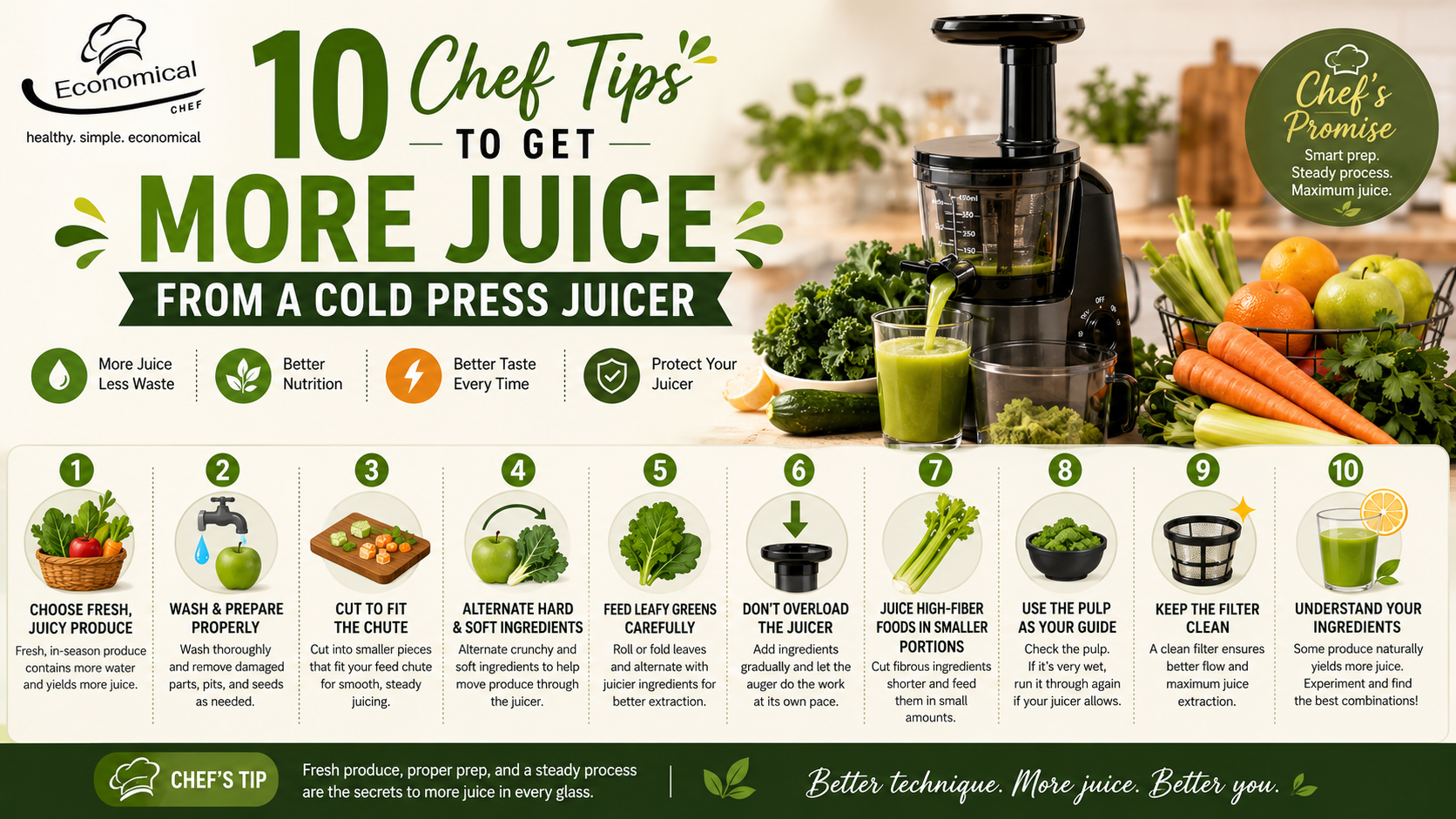
Here’s the 10 Chef Tips to Get More Juice From a Cold Press Juicer
1. Choose Fresh, Juice-Friendly Produce
Start with produce that is fresh and naturally juicy. Firm, fresh fruits and vegetables generally contain more usable moisture than produce that has been sitting in the refrigerator for too long.
For example, cucumbers, oranges, apples, watermelon, celery, and ripe pears can produce plenty of liquid, while very dry or old produce may leave behind drier pulp but less juice overall.
As a chef, I also recommend buying produce based on what you actually plan to juice rather than choosing ingredients simply because they are popular. Fresh ingredients and proper preparation will usually make a bigger difference than adding more produce to the machine.
2. Wash and Prepare Produce Properly
Before juicing, wash your fruits and vegetables thoroughly under running water. The FDA recommends washing fresh produce before cutting or preparing it and specifically advises against using soap, detergent, or commercial produce washes.
Remove damaged or rotten sections and cut away tough, inedible parts when appropriate. You should also remove large pits and seeds according to the juicer manufacturer’s instructions.
Good preparation isn’t just about food safety—it also helps prevent unnecessary strain on the machine and makes feeding produce more consistent.
3. Cut Produce to Fit the Feed Chute
Don’t force large pieces into a slow juicer simply because they fit inside the opening. Cut fruits and vegetables into appropriately sized pieces based on your machine’s instructions.
Long, fibrous ingredients such as celery can be cut into shorter sections. Hard vegetables such as carrots may also benefit from being divided into smaller pieces.
The goal is to let the auger grab and process the ingredients steadily rather than forcing everything through at once. This is one of the simplest ways to get more juice from a cold press juicer while making the machine easier to operate.
4. Alternate Hard and Soft Ingredients
One of my favorite techniques when using a masticating juicer is to alternate different types of produce.
Instead of feeding a large quantity of leafy greens or fibrous vegetables continuously, follow them with a juicier or firmer ingredient. For example, you might alternate leafy greens with cucumber or celery with apple.
This can help move softer material through the juicing chamber and may reduce the amount of pulp that remains around the auger and filter.
5. Feed Leafy Greens Carefully
Leafy greens can be more challenging than juicy fruits because they contain plenty of fiber but relatively little free liquid.
If you’re wondering about the best way to juice leafy greens in a masticating juicer, roll or fold larger leaves into manageable portions before feeding them. Avoid pushing a large handful into the chute all at once.
For tougher greens, alternating them with a more water-rich ingredient can also help move the material through the machine.
6. Don’t Overload the Juicer
Slow juicers are designed to process ingredients gradually. Feeding too much produce at once can overwhelm the auger, especially when you’re working with fibrous vegetables or dense ingredients.
Add produce steadily and allow the machine time to process each portion before adding more.
This may feel slower, but rushing the process can actually make juicing less efficient. If the machine begins struggling, use the reverse function if your model provides one and follow the manufacturer’s instructions rather than forcing more ingredients through.
7. Juice High-Fiber Ingredients in Smaller Portions
Celery, ginger, pineapple, kale stems, and other fibrous ingredients can wrap around components or contribute to pulp buildup if you feed too much at once.
Cut long fibers into shorter pieces and introduce them gradually. If your machine has a particularly narrow feed chute or a smaller auger, smaller pieces may be even more important.
This is particularly useful if your goal is to increase juice yield while reducing waste rather than simply processing ingredients as quickly as possible.
8. Use the Pulp as Your Guide
Don’t judge extraction only by how much juice comes out. Take a look at the pulp.
If the pulp is very wet, the machine may not be extracting as efficiently as it could—or the particular ingredient may naturally contain less extractable liquid. You can also try running suitable pulp through the machine again, provided the manufacturer’s instructions allow it.
However, I wouldn’t chase perfectly dry pulp with every ingredient. Some fruits and vegetables naturally retain more moisture, so pulp consistency can vary considerably.
9. Keep the Filter Clean
A partially clogged filter can restrict juice flow and affect the machine’s performance. Fine pulp from leafy greens, berries, and fibrous produce can accumulate in the filter openings.
If you’re juicing several batches, inspect the filter periodically and clean it according to the manufacturer’s instructions.
This is also why cold press juicer cleaning is more than just a maintenance task. A clean filter helps the machine perform consistently from one juicing session to the next. For a detailed cleaning routine, see our guide on how to clean a cold press juicer properly.
10. Don’t Expect Every Ingredient to Produce the Same Yield
Perhaps the most important chef’s tip is to understand your ingredients.
Cucumber and citrus fruit can release a lot of liquid, while leafy greens and fibrous vegetables naturally produce less. Apples, carrots, celery, and other produce also vary depending on freshness, variety, size, and moisture content.
Instead of expecting the same juice yield from every ingredient, learn which combinations work well together. Experiment with recipes and adjust the ratio of juicy produce to fibrous ingredients until you find a balance you enjoy.
Final Thoughts
If you want to get more juice from a cold press juicer, focus on technique before assuming you need a different machine. Fresh produce, proper cutting, steady feeding, alternating ingredients, and keeping the filter clean can all contribute to a smoother and more efficient juicing routine.
Most importantly, don’t rush the process. A slow juicer is designed for gradual extraction, so give it time to work. If you’re still choosing a machine, look for a model that matches the produce you juice most often and is easy to clean and operate. Our guide to the best cold press juicers for your kitchen can help you compare the practical features that matter most for everyday home juicing.