A beverage refrigerator is a convenient addition to a home bar, kitchen, entertainment room, or office. However, simply filling it with cans and bottles doesn’t always make the best use of its storage space. Poorly arranged drinks can block shelves, make certain beverages difficult to reach, and restrict airflow inside the cooler.
Whether you have a compact beverage fridge or a larger glass-door beverage refrigerator, a little organization can make a noticeable difference. From a chef’s perspective, the goal is to arrange drinks by size, type, and frequency of use while keeping the refrigerator clean, accessible, and properly ventilated. Here are seven practical ways to organize your beverage refrigerator for maximum storage recommended by our chef team. Let’s get start!
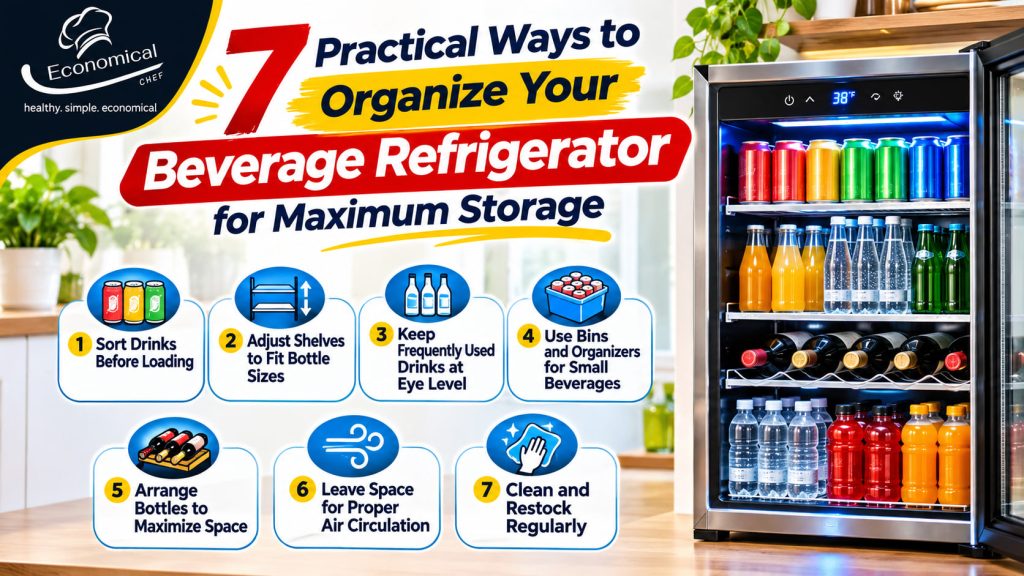
7 Practical Ways to Organize Your Beverage Refrigerator for Maximum Storage
1. Sort Drinks Before Loading the Refrigerator
Start by grouping your beverages before placing them inside. Mixing cans, tall bottles, wine bottles, and large containers without a plan can waste valuable shelf space.
Create separate groups for:
- Canned drinks: Soda, sparkling water, energy drinks, and canned juice.
- Bottled beverages: Water, beer, iced tea, and bottled soft drinks.
- Wine and specialty drinks: Wine, champagne, and other bottles requiring suitable storage positions.
- Frequently used drinks: Everyday beverages that should be easy to reach.
Sorting drinks first helps you determine which shelves and compartments are best suited to each category.
2. Adjust Shelves to Fit Different Bottle Sizes
Adjustable shelves are among the most useful features of a beverage refrigerator. Instead of leaving every shelf at the same height, customize the spacing according to the drinks you store.
Use shorter shelf spaces for standard soda cans and small bottles. Reserve taller compartments for wine bottles, glass water bottles, and other beverages that need additional clearance.
If your refrigerator has removable shelves, you may be able to create a larger storage section for oversized bottles. However, check the manufacturer’s instructions before removing or repositioning shelves, as some models have fixed shelf positions or specific weight limits.
3. Store Frequently Used Drinks at Eye Level
Think about how you use your beverage refrigerator throughout the day. Drinks you reach for most often should be placed where they are easy to see and retrieve.
For example, keep everyday water bottles, sodas, and sparkling water on the middle shelves. Place less frequently used beverages toward the bottom or upper sections, depending on the refrigerator’s layout.
This simple arrangement reduces unnecessary searching and helps prevent other bottles or cans from being moved every time you want a drink.
4. Use Bins and Organizers for Small Beverages
Small cans and bottles can become difficult to manage when they are loosely arranged. If your beverage refrigerator has compatible shelves, consider using slim storage bins or dividers to keep similar drinks together.
You can organize beverages by flavor, brand, or type. For example, keep different sparkling water flavors in separate sections or group energy drinks together.
Before adding organizers, measure the available shelf space. Avoid bulky accessories that reduce usable capacity or interfere with the door closing properly.
5. Arrange Bottles Carefully to Maximize Space
Bottle placement can make a significant difference, especially in refrigerators designed for both cans and wine.
Here are a few practical tips:
- Place standard cans in neat rows rather than stacking them randomly.
- Keep tall bottles in sections with sufficient vertical clearance.
- Use designated wine racks when available.
- Store opened bottles upright when appropriate and securely closed.
- Avoid placing heavy bottles where they could roll or fall when the door opens.
For wine, follow the storage recommendations for the particular wine and refrigerator. If your beverage cooler has dedicated horizontal wine racks, use them as intended rather than forcing bottles into unsuitable compartments.
6. Leave Enough Space for Proper Air Circulation
One common mistake is filling every available space with drinks. Although this may appear to maximize storage, overcrowding can interfere with cooling performance.
The FDA advises against overpacking refrigerators because cold air needs room to circulate around stored items. This principle is also useful when organizing a beverage refrigerator.
Avoid blocking internal air vents, fans, or cooling outlets with large bottles and storage bins. Leave the clearance recommended in your appliance manual, and don’t force additional drinks into spaces that are too small.
Also, remember that a beverage refrigerator is not necessarily designed to store every type of perishable food. If you plan to keep milk, fresh juice, or other temperature-sensitive products inside, verify that the appliance can maintain the required temperature.
7. Clean and Restock Your Beverage Refrigerator Regularly
An organized beverage refrigerator is easier to maintain when you clean and restock it consistently.
Every few weeks, or whenever necessary:
- Remove the drinks and inspect the shelves.
- Wipe spills and sticky residue with a suitable cleaning solution.
- Clean removable shelves according to the manufacturer’s instructions.
- Check bottles and cans for leaks, damage, or expired products.
- Return beverages to their designated sections.
- Move older drinks toward the front so they are used first.
For refrigerators storing perishable drinks, temperature monitoring is particularly important. The FDA recommends keeping refrigerated perishable foods at 40°F (4°C) or below and using an appliance thermometer to check the actual temperature.
Final Thoughts
Organizing a beverage refrigerator is about more than fitting as many cans and bottles as possible. The best arrangement makes drinks easy to find, uses adjustable shelves effectively, protects bottles from falling, and allows sufficient airflow for consistent cooling.
Start by grouping beverages, adjusting shelf heights, and placing frequently used drinks within easy reach. Add suitable organizers only when they improve access without wasting space. With regular cleaning and a simple restocking routine, even a compact beverage refrigerator can become a more efficient and convenient part of your home.
If you’re considering upgrading your drink storage, explore our guide to the best beverage refrigerators to compare different sizes, configurations, and practical features.
References
-
FDA – Refrigerator Thermometers: Cold Facts About Food Safety — explains refrigerator temperature monitoring and why cold-air circulation matters.
-
FDA – Are You Storing Food Safely? — covers proper refrigeration, avoiding overcrowding, and storage practices.
-
University of Illinois Extension – Refrigerator Storage — provides practical guidance on airflow, temperature monitoring, and refrigerator cleaning.