Grating cheese should be one of the easiest steps in your kitchen workflow. Yet, as the visual guide above clearly shows, it often turns into a frustrating mess—clogged graters, mushy cheese, or uneven crumbles instead of clean shreds.
From a professional kitchen perspective, when cheese doesn’t grate properly, it’s usually not the tool alone—it’s a combination of temperature, texture, and technique. The infographic highlights the most common problems and, more importantly, how to fix them. Let’s break it down in a practical, chef-focused way.
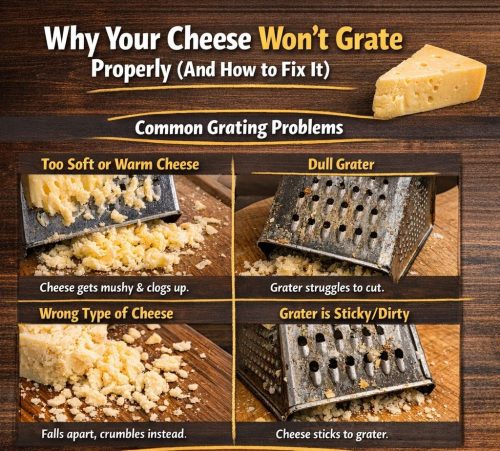
Common Grating Problems (And What’s Really Going Wrong)
1. Too Soft or Warm Cheese
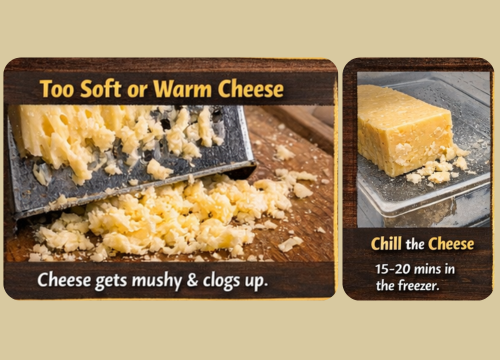
As shown in the image, soft cheese tends to smear across the grater instead of forming clean shreds. It clumps together and quickly clogs the holes.
What’s Happening:
Cheese contains fat, and when it warms up—even slightly—that fat softens. Instead of cutting cleanly, the cheese compresses and sticks.
The Fix:
Chill the cheese before grating.
- Place it in the freezer for 15–20 minutes, just like the image suggests.
- You’re not freezing it solid—just firming it up enough to hold structure.
Chef’s Insight: This is one of the simplest tricks that instantly improves results, especially in hot kitchens or humid environments.
2. A Dull Grater
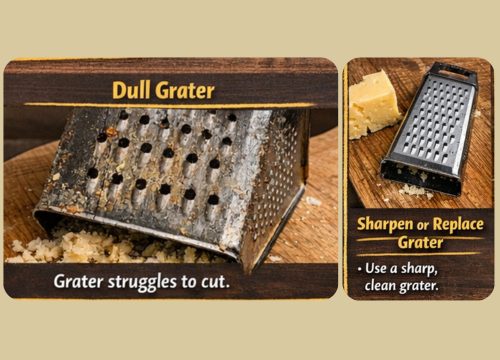
As you see in the image, a worn-out grater is struggling to cut through cheese. This is more common than people realize.
What’s Happening:
Graters don’t stay sharp forever. Over time, the edges that slice through cheese become rounded, forcing you to apply more pressure—which leads to tearing instead of shredding.
The Fix:
Use a sharp, well-maintained grater.
- Replace old graters when they lose efficiency
- Alternatively, switch to a fresher surface (many box graters have multiple sides)
Chef’s Insight: A sharp grater should feel effortless. If you’re pushing hard, the tool—not the cheese—is the problem.
3. Using the Wrong Type of Cheese
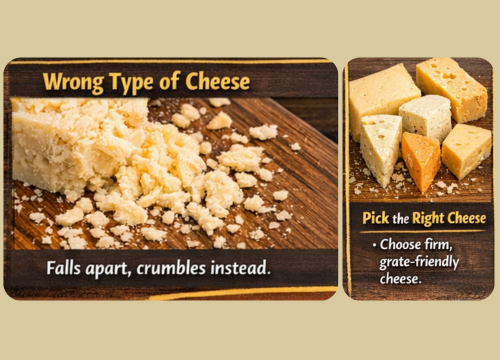
In the image, this issue is represented by cheese that crumbles and falls apart instead of forming shreds.
What’s Happening:
Not all cheeses are meant to be grated. Some are too soft, too dry, or too crumbly.
- Soft cheeses → smear
- Aged, dry cheeses → crumble
The Fix:
Choose firm, grate-friendly cheeses.
Best options:
Hard cheeses like parmesan can still be grated—but require a finer grating surface (like a microplane or maybe a Y-peeler).
Chef’s Insight: Match the cheese to the tool and the dish. That’s how you get consistent results every time.
4. Dirty or Sticky Grater
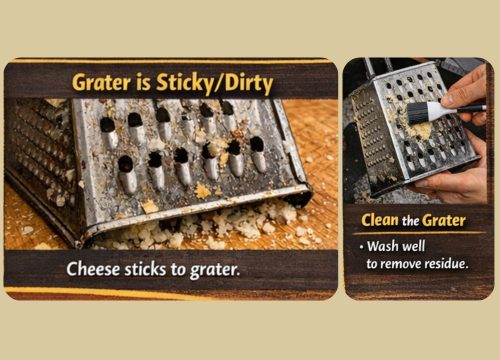
As shown in the image, it clearly shows cheese sticking to a grater coated with residue. This is a small issue that creates big frustration.
What’s Happening:
Old cheese residue builds up and creates friction. Fresh cheese sticks to it instead of sliding cleanly through the blades.
The Fix:
Keep your grater clean and dry.
- Wash thoroughly after each use
- Dry completely before storing
- Avoid letting cheese harden on the surface
Chef’s Insight: A clean tool isn’t just about hygiene—it directly affects performance.
Final Thoughts
When cheese won’t grate properly, it’s rarely just bad luck—it’s usually a fixable issue. As the infographic demonstrates, the solution often comes down to a few simple adjustments: temperature, tool condition, and cheese selection.
From a working chef’s perspective, we see these small details make a big difference. Clean cuts melt better, distribute evenly, and elevate the final dish—whether it’s a quick pasta or a carefully plated meal.
Once you apply these fixes, grating cheese becomes effortless again—and more importantly, consistent. Cheers!