A bottom loading water dispenser is one of the most convenient appliances you can add to your home or office. It eliminates the need to lift heavy water bottles, offers quick access to hot and cold water, and often includes modern features like self-cleaning systems, child safety locks, and empty bottle indicators. However, even the best dispenser won’t perform well if it’s used or maintained incorrectly.
As a professional chef, I’ve learned that proper care is just as important as choosing quality equipment. Whether it’s a coffee machine, refrigerator, or bottom load water cooler, regular maintenance helps ensure better performance, improved hygiene, and a longer lifespan. Here are 10 common mistakes people make with bottom-loading water dispensers — and how to avoid them, from the Economical Chef.
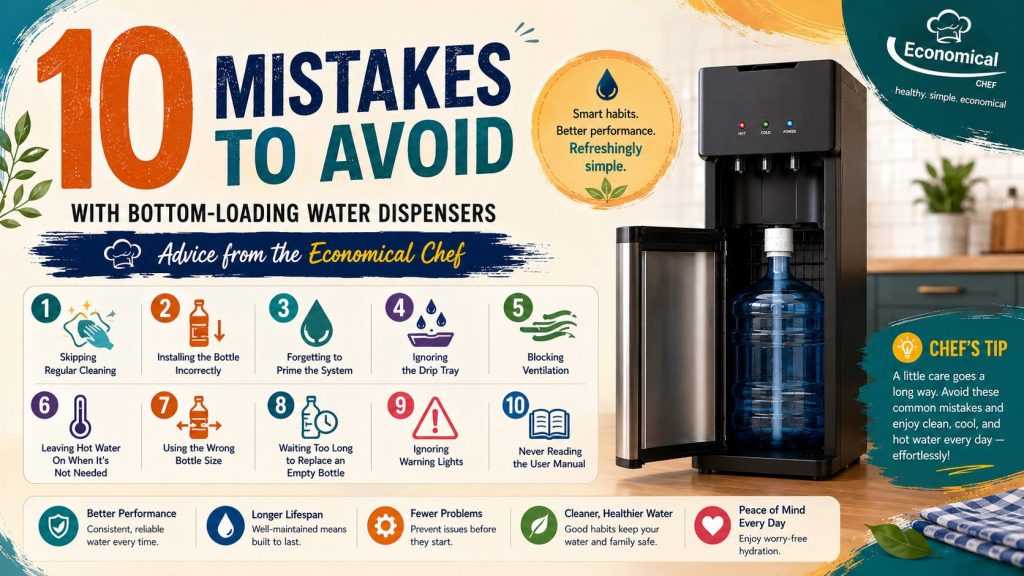
List of the 10 Bottom Loading Water Dispenser Mistakes to Avoid
1. Skipping Regular Cleaning
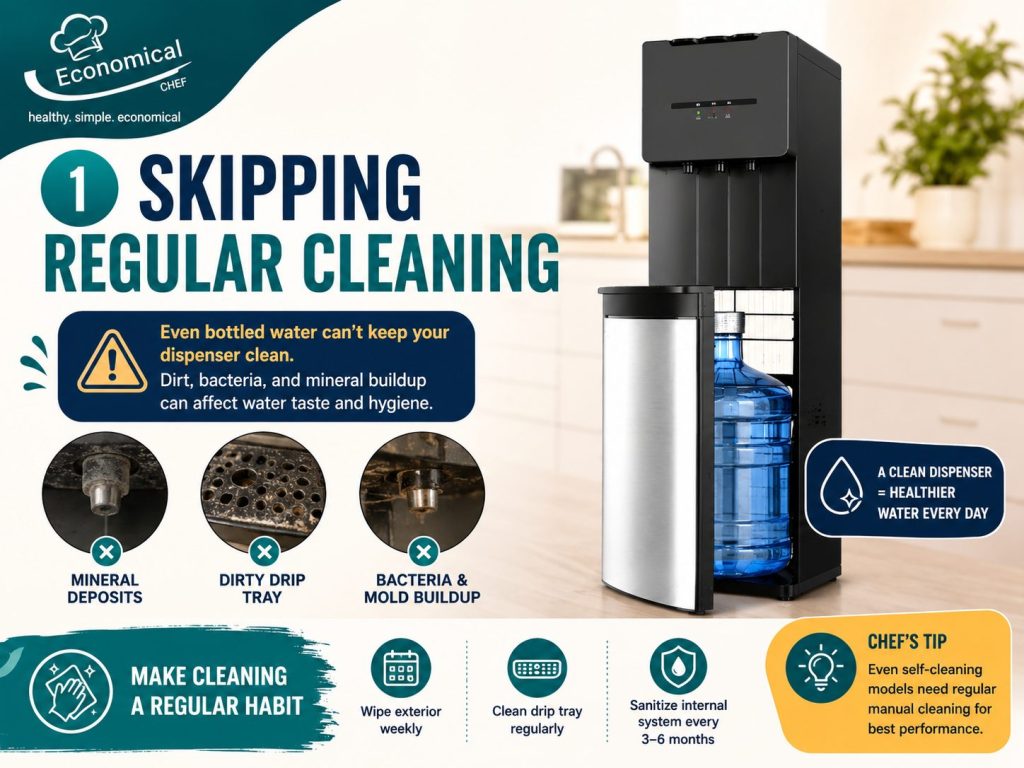
One of the biggest mistakes is assuming bottled water keeps the dispenser clean. In reality, moisture, dust, mineral deposits, and bacteria can build up inside the machine over time.
To keep your water dispenser for home in excellent condition:
- Wipe the exterior weekly.
- Clean the drip tray regularly.
- Sanitize the internal water system every 3–6 months (or as recommended by the manufacturer).
Chef’s Tip: Even a self-cleaning water dispenser still benefits from periodic manual cleaning. For more proper cleaning visit our Chef’s Step-by-Step Cleaning Guide!
2. Installing the Water Bottle Incorrectly
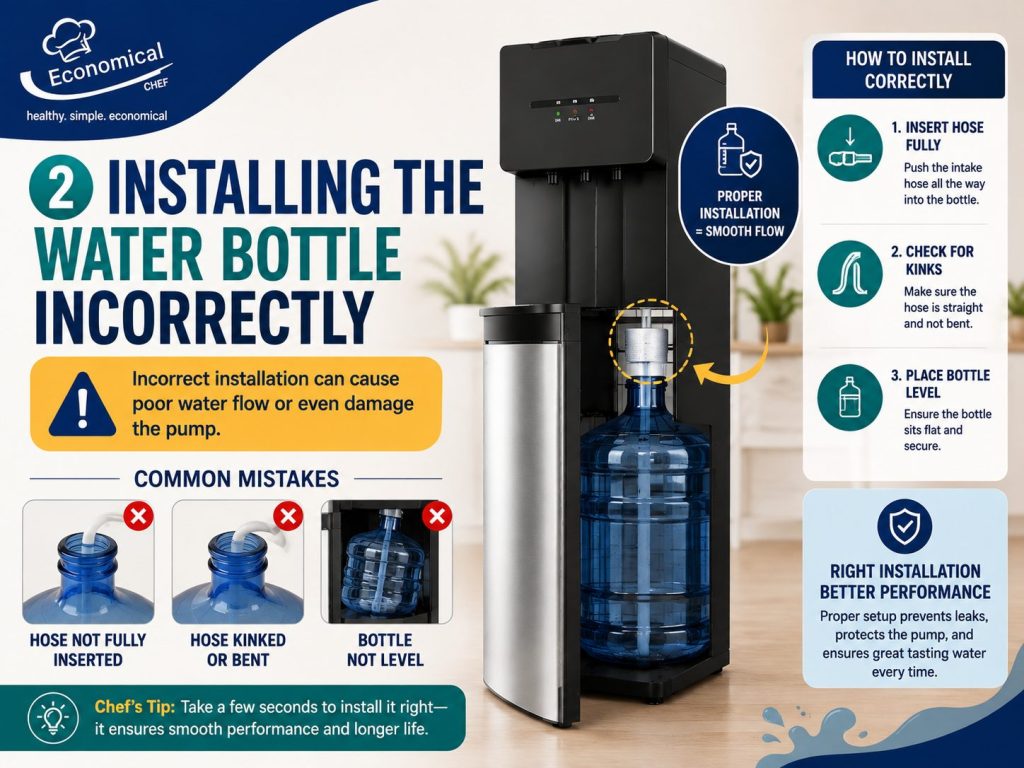
If the intake hose isn’t properly inserted into the bottle, the dispenser may struggle to pump water or stop dispensing altogether.
Before closing the cabinet:
- Make sure the hose is fully seated.
- Check for kinks or bends.
- Ensure the bottle sits level on the base.
A proper installation helps prevent unnecessary strain on the pump.
3. Forgetting to Prime the System
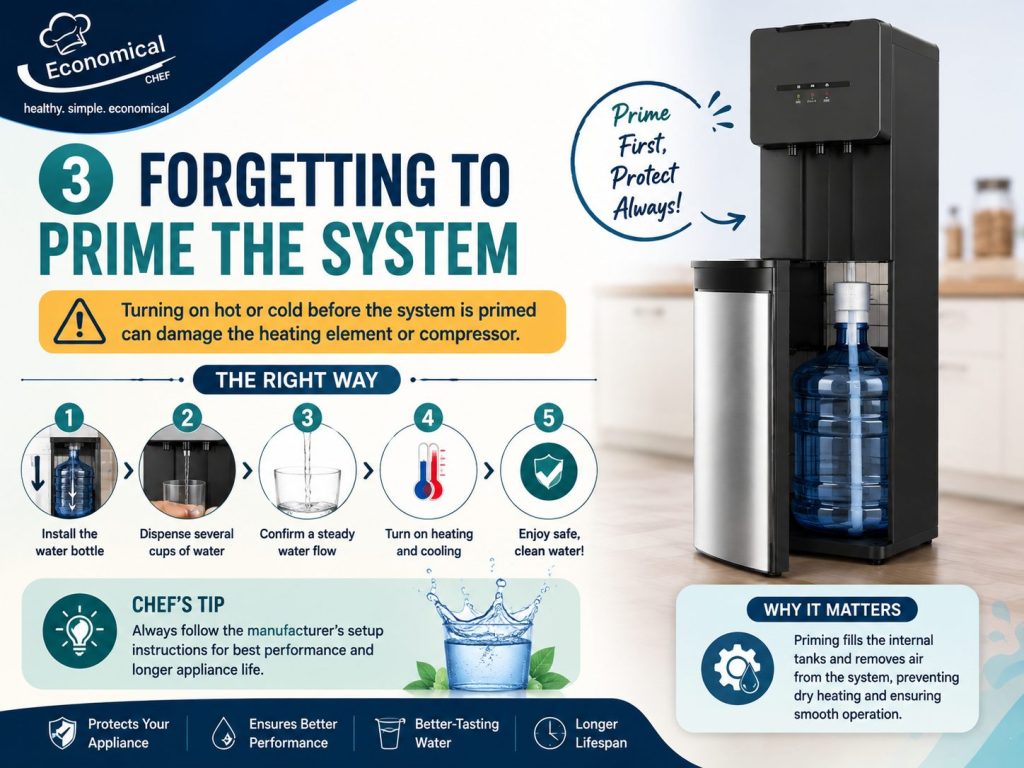
Many first-time users immediately switch on the heating function after installing a new bottle.
This can damage the heating element if water hasn’t filled the internal reservoir.
Instead:
- Install the bottle.
- Dispense several cups of water.
- Confirm a steady water flow.
- Turn on heating and cooling.
Always follow the manufacturer’s setup instructions.
4. Ignoring the Drip Tray
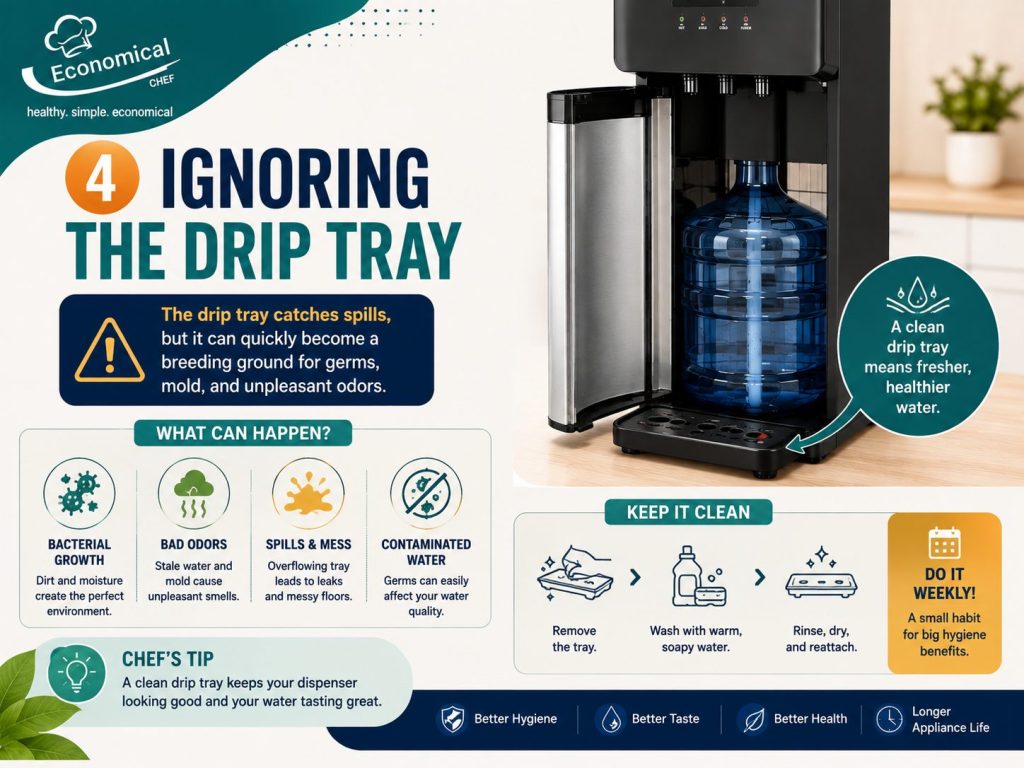
The drip tray catches spills, but it can quickly become one of the dirtiest parts of the dispenser.
Empty and wash it regularly using warm, soapy water.
A clean drip tray helps prevent:
- Mold
- Unpleasant odors
- Bacterial growth
5. Blocking Ventilation
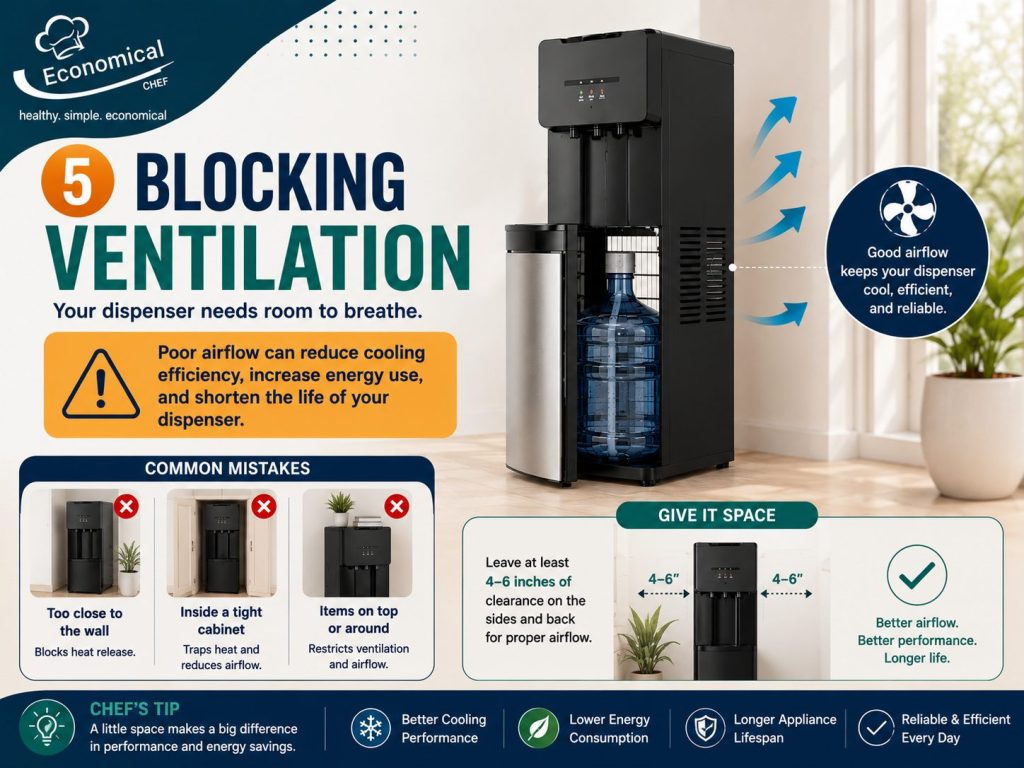
Most bottom loading water dispensers require airflow around the compressor.
Placing the dispenser tightly against a wall or inside a cabinet can reduce cooling efficiency and increase energy consumption.
Leave several inches of clearance around the sides and back whenever possible.
6. Leaving Hot Water On When It’s Not Needed
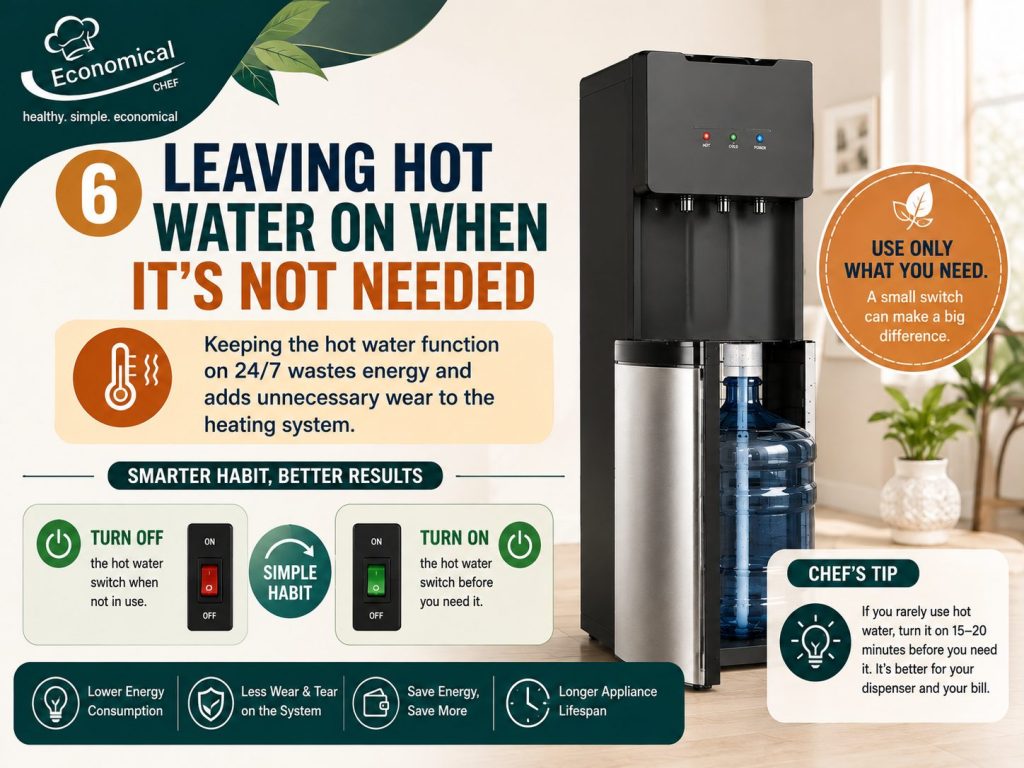
Many people leave the hot water function running around the clock — even if they rarely use it.
If you only use hot water occasionally:
- Turn off the heating switch when not needed.
- Re-enable it before use.
This simple habit can reduce electricity consumption and unnecessary wear on the heating system.
7. Using the Wrong Bottle Size
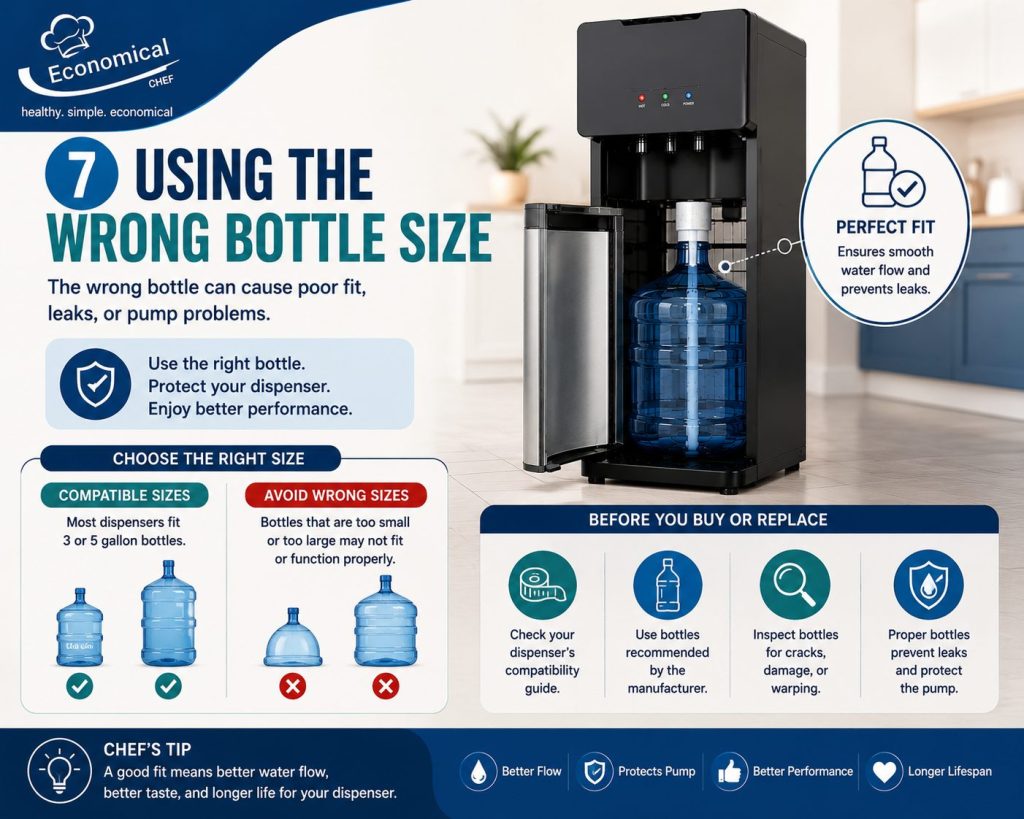
Most modern dispensers accept both 3- and 5-gallon bottles, but not every bottle design is identical.
Before purchasing replacement bottles:
- Verify compatibility.
- Use bottles recommended by the manufacturer.
- Inspect bottles for cracks or damage.
Using the correct bottle helps prevent leaks and improves pump performance.
8. Waiting Too Long to Replace an Empty Bottle
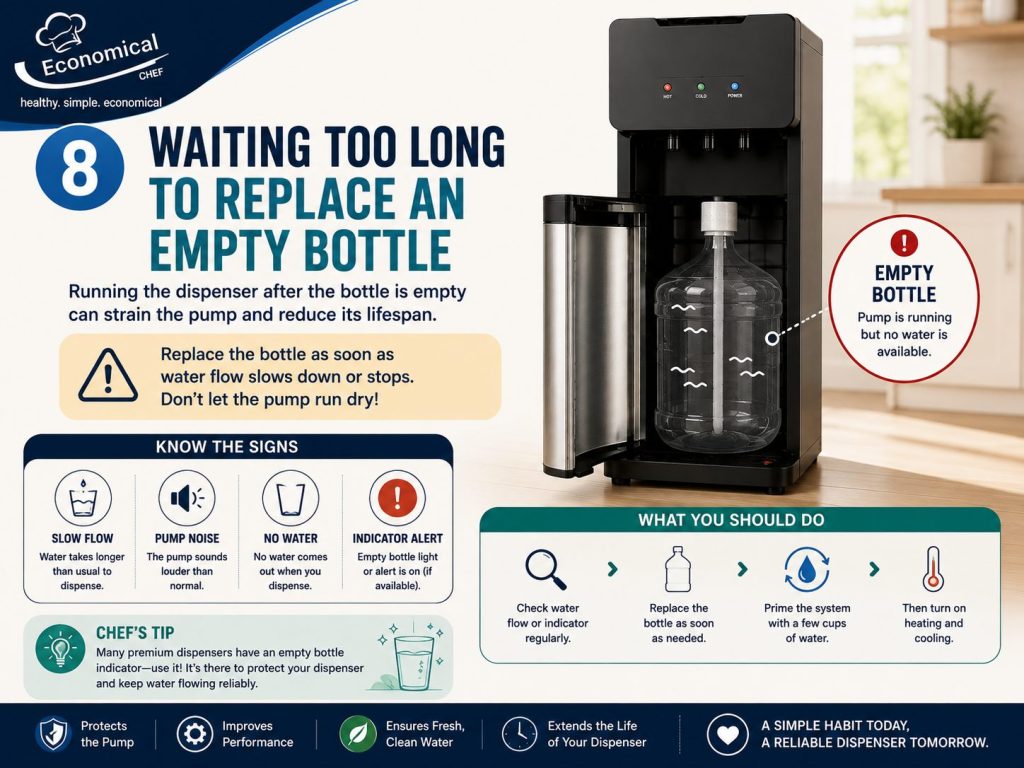
Running the dispenser after the bottle is empty can place unnecessary strain on the pump.
Many premium models include an empty bottle indicator.
If yours doesn’t:
- Replace the bottle as soon as water flow becomes inconsistent.
- Avoid repeatedly attempting to dispense water from an empty bottle.
9. Ignoring Warning Lights
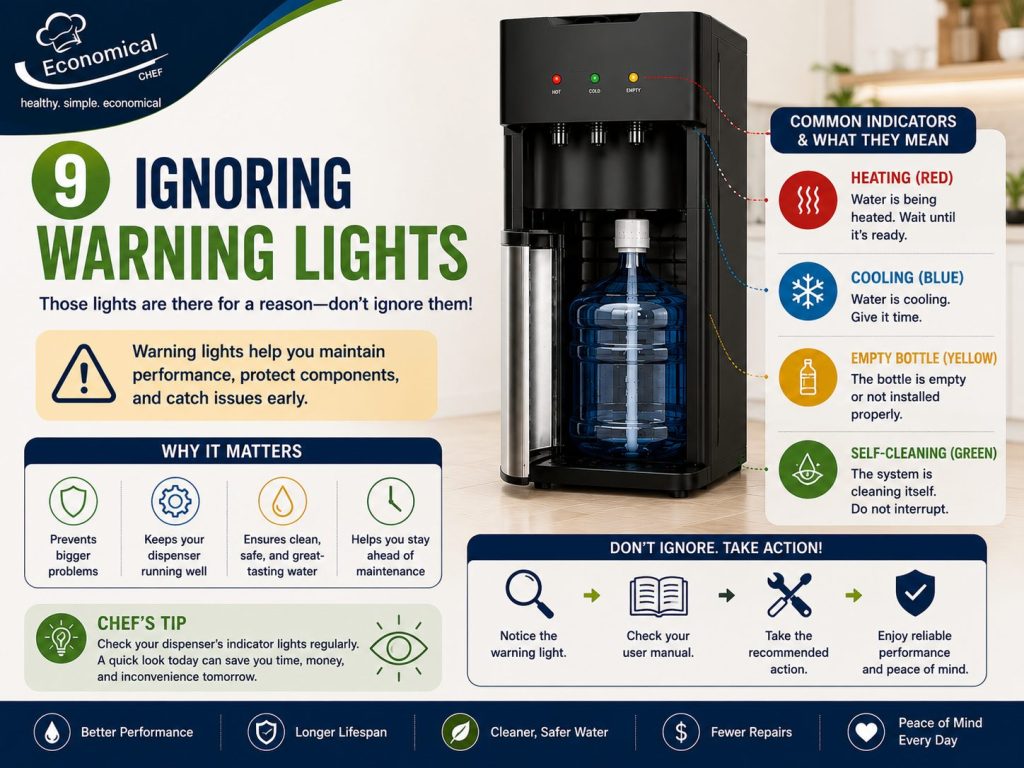
Modern 5 gallon water dispensers often include LED indicators for:
- Heating
- Cooling
- Empty bottle alerts
- Self-cleaning cycles
Don’t ignore these notifications. They’re designed to help maintain performance and alert you to maintenance needs before problems develop.
10. Never Reading the User Manual
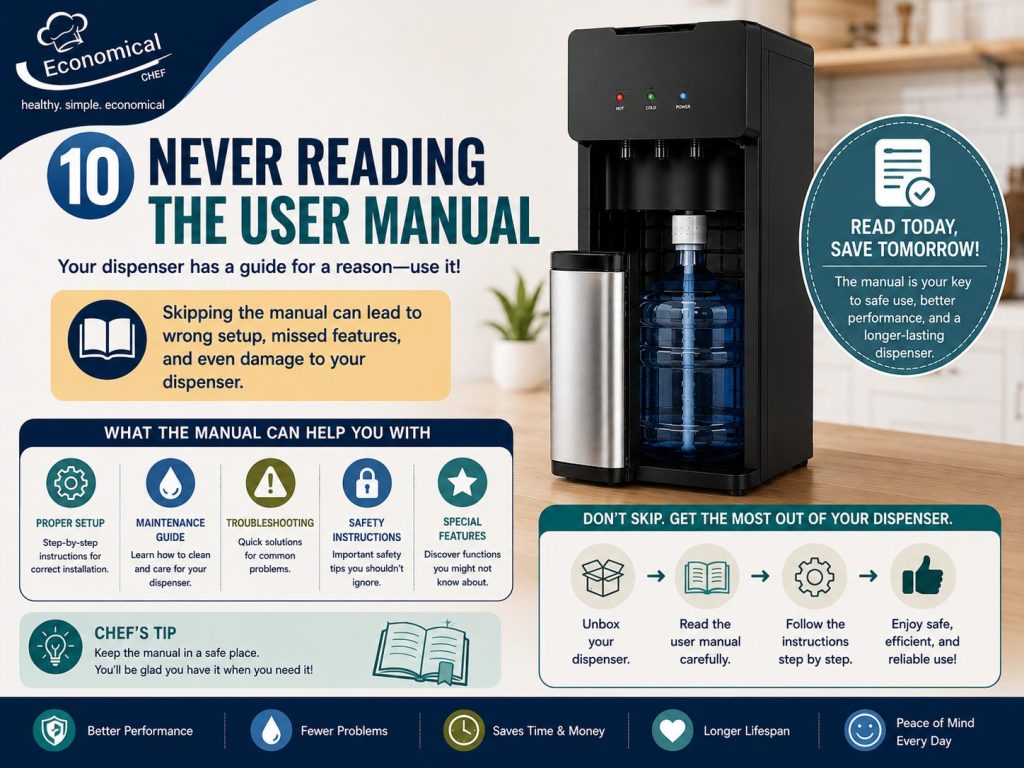
Many owners discard the instruction manual after setup. That’s a mistake. Every manufacturer may have different recommendations regarding:
- Cleaning intervals
- Sanitizing methods
- Compatible cleaning solutions
- Filter replacement (if applicable)
- Maintenance schedules
Following the manufacturer’s guidance helps maximize the lifespan of your dispenser.
Bonus Tips for Longer Dispenser Life
In addition to avoiding the mistakes above, these habits can help keep your dispenser operating efficiently:
- Store bottled water in a cool, dry location.
- Replace damaged water bottles immediately.
- Clean the dispensing nozzles regularly.
- Wipe fingerprints and dust from exterior surfaces.
- Inspect the power cord periodically.
- Use the dispenser on a stable, level surface.
These small habits can significantly improve long-term reliability.
Frequently Asked Questions
How often should I clean a bottom loading water dispenser?
Clean the drip tray weekly, wipe the dispensing nozzles monthly, and perform a full internal sanitization every 3–6 months, or according to the manufacturer’s instructions.
Can I use vinegar to clean my water dispenser?
Some manufacturers allow diluted white vinegar for descaling, while others recommend food-safe sanitizing solutions. Always consult your owner’s manual before using any cleaning product.
Is a self-cleaning water dispenser maintenance-free?
No. UV self-cleaning systems help reduce bacteria inside the unit, but you should still clean the drip tray, nozzles, cabinet, and other removable parts regularly.
Why isn’t my dispenser pumping water?
Common causes include an improperly installed water bottle, a kinked intake hose, an empty bottle, or a pump that hasn’t been primed after installing a new bottle.
Final Thoughts
A bottom loading water dispenser is designed to make everyday hydration easier, but a few simple maintenance habits can make an even bigger difference. By avoiding these common mistakes, you’ll enjoy fresher-tasting water, better appliance performance, and fewer unexpected problems over the life of your dispenser.