A sparkling water maker is one of the easiest ways to enjoy fresh, fizzy drinks at home, but like any kitchen appliance, it performs best when kept clean. Regular maintenance not only keeps your sparkling water tasting fresh but also helps prevent odors, mineral buildup, and unnecessary wear on the machine. Fortunately, cleaning a sparkling water maker only takes a few minutes and doesn’t require any specialized tools.
In this guide, you’ll learn how our chef clean a sparkling water maker properly, including how often to clean it, the safest cleaning products to use, how to care for reusable bottles, and simple maintenance tips that can extend the life of your machine.
If you’re shopping for a new machine, don’t miss our roundup of the Best Sparkling Water Makers in 2026 on Economical Chef.
How Often Should You Clean a Sparkling Water Maker?
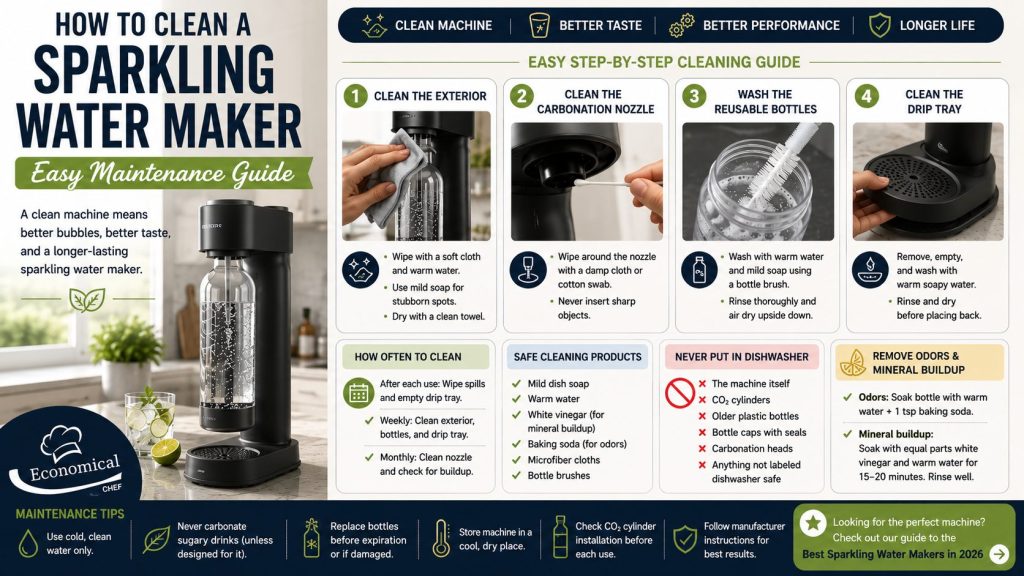
For the best performance, it’s a good idea to wipe down your sparkling water maker after every few uses and give it a more thorough cleaning every one to two weeks, depending on how often you use it.
Here are some general recommendations:
- After each use: Wipe away spills and empty the drip tray if your machine has one.
- Weekly: Clean the exterior, reusable bottle, and drip tray.
- Monthly: Inspect and gently clean the carbonation nozzle and check for mineral deposits.
If you frequently add flavored syrups or fruit after carbonating, clean the bottles more often to prevent residue and odors. Visit our Chef’s Guide on How to Use a Sparkling Water Maker Properly for more!
How to Clean a Sparkling Water Maker Step by Step
Step 1: Clean the Exterior
Start by unplugging the machine if it uses electricity. Most manual sparkling water makers don’t require this step.
Using a soft microfiber cloth dampened with warm water, gently wipe the exterior of the machine to remove fingerprints, dust, and water spots.
For stubborn marks:
- Add a drop of mild dish soap to warm water.
- Wipe gently with a soft cloth.
- Dry immediately with a clean towel.
Avoid abrasive scrubbers or harsh chemicals, which can scratch painted or stainless steel finishes.
Step 2: Clean the Carbonation Nozzle
The carbonation nozzle is where carbon dioxide enters the bottle. Over time, small mineral deposits or moisture can accumulate around this area.
To clean it safely:
- Remove the bottle.
- Wipe around the nozzle using a damp microfiber cloth.
- If needed, use a cotton swab lightly moistened with water to clean around the opening.
- Dry the area thoroughly before using the machine again.
Never insert sharp objects into the nozzle, as this may damage internal components.
Step 3: Wash the Reusable Bottles
The reusable bottles need the most frequent cleaning because they’re in direct contact with water and beverages.
Wash bottles with:
- Warm water
- Mild dish soap
- A soft bottle brush
Rinse thoroughly to remove any soap residue and allow the bottles to air dry upside down.
Many bottles are not dishwasher safe, especially older BPA-free plastic bottles. Always check the manufacturer’s recommendations before placing any bottle in the dishwasher. Some newer dishwasher-safe bottles or stainless steel bottles can safely be cleaned on the top rack.
Safe Cleaning Products to Use
Keeping your machine clean doesn’t require harsh chemicals.
Safe options include:
- Mild dish soap
- Warm water
- White vinegar (for mineral buildup)
- Baking soda (for stubborn bottle odors)
- Microfiber cloths
- Soft bottle brushes
Based on the White vinegar is particularly effective for removing hard water deposits because its mild acidity helps dissolve mineral buildup naturally. For other safe choice, visit the U.S. Environmental Protection Agency for their recommendation.
What Should Never Go in the Dishwasher?
Unless specifically labeled dishwasher safe, avoid placing these items in the dishwasher:
- The sparkling water maker itself
- CO₂ cylinders
- Older plastic carbonation bottles
- Bottle caps with seals or valves
- Carbonation heads or detachable gas components
High dishwasher temperatures may warp plastic bottles, damage seals, or shorten the lifespan of certain components.
How to Remove Odors and Mineral Buildup
If bottles develop an unpleasant smell:
For odors
- Fill the bottle with warm water.
- Add one teaspoon of baking soda.
- Let it sit for several hours.
- Wash thoroughly with mild soap.
For mineral buildup
Mix equal parts white vinegar and warm water.
- Fill the bottle halfway.
- Let it soak for 15–20 minutes.
- Rinse several times with clean water.
Never use bleach or strong chemical cleaners inside reusable bottles, as residue may remain and affect the taste of your drinks.
Maintenance Tips to Extend Your Sparkling Water Maker’s Lifespan
Good maintenance goes beyond cleaning.
Follow these simple habits:
- Always carbonate cold, clean water.
- Never carbonate sugary drinks unless your machine is designed for it.
- Empty and dry the drip tray regularly.
- Replace reusable bottles before their expiration date if required by the manufacturer.
- Store the machine in a cool, dry location.
- Check CO₂ cylinders for proper installation before each use.
- Inspect bottles for cracks, cloudiness, or signs of wear.
Note: Each Sparkling Water Maker might be different. So, always wollow the manufacturer’s care instructions to help keep your machine operating safely and efficiently for years.
Common Cleaning Mistakes to Avoid
Many users accidentally shorten the life of their machine by making simple cleaning mistakes.
Avoid:
- Using abrasive scouring pads.
- Spraying cleaners directly into the carbonation nozzle.
- Washing non-dishwasher-safe bottles in high heat.
- Storing bottles while they’re still damp.
- Using bleach or harsh chemicals.
- Ignoring mineral buildup for long periods.
Regular, gentle cleaning is far more effective than occasional deep scrubbing.
Final Thoughts
Learning how to clean a sparkling water maker is one of the easiest ways to keep your appliance performing like new. A few minutes of routine maintenance each week can help preserve carbonation performance, eliminate odors, reduce mineral buildup, and extend the lifespan of both the machine and its reusable bottles.
Whether you enjoy sparkling water every day or only on special occasions, keeping your machine clean ensures every glass tastes fresh and refreshing. If you’re still looking for the perfect model, be sure to explore our Best Sparkling Water Makers in 2026 guide to compare the top options for every budget and lifestyle.