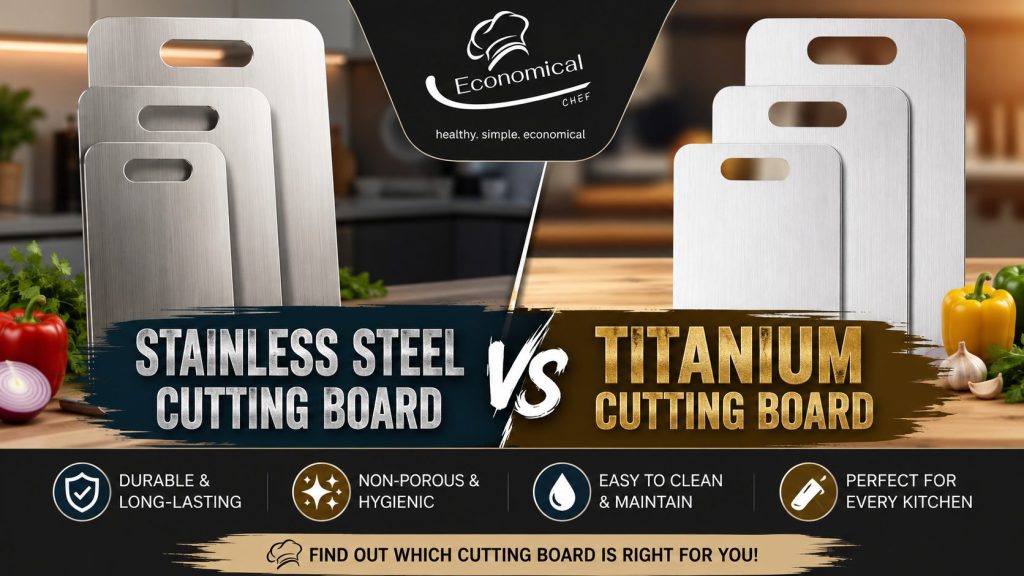
If you’re looking for a cutting board that lasts for years without absorbing odors, stains, or bacteria, you’ve probably come across stainless steel and titanium cutting boards. Both promise exceptional durability and hygiene, but they aren’t identical. As someone who spends hours preparing ingredients in the kitchen, I’ve found that choosing the right cutting board isn’t just about durability—it’s also about how it performs during everyday cooking.
In this guide, our Chef compare stainless steel cutting board vs titanium cutting board based on real kitchen experience, helping you decide which material offers the best value for your cooking style.
Chef’s Overview
For more natural material, check Bamboo vs. Acacia Wood Cutting Board, tested and compared by our Chef!
Stainless Steel Cutting Board
Stainless steel cutting boards have become increasingly popular among home cooks and professional chefs because they’re incredibly durable, easy to sanitize, and resistant to moisture. Unlike wooden or plastic boards, they won’t absorb food juices, odors, or stains.
Most quality boards are made from food-grade 304 stainless steel, which offers excellent corrosion resistance and long-term durability.
Pros
- Extremely durable and impact-resistant
- Non-porous surface helps prevent odor absorption
- Dishwasher safe (on most models)
- Resistant to rust and corrosion
- Easy to sanitize after handling raw meat, seafood, or poultry
Cons
- Can dull knife edges faster than wood or plastic
- Food may slide if the surface lacks texture
- Slightly heavier than other cutting board materials
Titanium Cutting Board
Titanium cutting boards are relatively new to the consumer market. Most are made from pure titanium or titanium-coated metal, offering an ultra-lightweight yet highly durable surface.
Titanium is known for its excellent corrosion resistance and strength-to-weight ratio. It’s commonly used in aerospace, medical implants, and premium cookware, making it an attractive option for those seeking a long-lasting kitchen tool.
Pros
- Lightweight yet very strong
- Naturally corrosion-resistant
- Doesn’t absorb odors or moisture
- Attractive modern appearance
- Easy to clean
Cons
- Often significantly more expensive
- Many products marketed as “titanium” are actually titanium-coated stainless steel
- Can also dull knives over time
- Limited long-term kitchen testing compared with stainless steel
Stainless Steel vs Titanium Cutting Boards
Quick Comparison
| Feature | Stainless Steel Cutting Board
|
Titanium Cutting Board
|
|---|---|---|
| Durability | Excellent – Built to withstand years of heavy daily use. | Excellent – Extremely strong and highly resistant to wear and corrosion. |
| Food Safety | Excellent – Non-porous surface won’t absorb moisture, odors, or bacteria. | Excellent – Non-porous, hygienic, and easy to sanitize after food prep. |
| Ease of Cleaning | Excellent – Dishwasher safe on most models and cleans up quickly. | Excellent – Wipes clean easily and requires very little maintenance. |
| Knife Friendliness | Fair – Hard surface may dull knife edges faster than wood or plastic. | Fair – Also a hard surface that can gradually reduce blade sharpness. |
| Weight | Heavy – Provides excellent stability but is less portable. | Lightweight – Easy to carry, store, and reposition while cooking. |
| Scratch Resistance | Very Good – Resists scratches well during normal kitchen use. | Excellent – Highly resistant to scratches and corrosion. |
| Maintenance | Very Low – No oiling or special care required. | Very Low – Virtually maintenance-free with excellent corrosion resistance. |
| Value for Money | Excellent – Offers outstanding performance at a more affordable price. | Good – Premium material, but the higher cost may not provide significant everyday benefits. |
| Best For | Everyday home cooking, meal prep, and professional kitchens. | Users seeking a lightweight, premium cutting board with modern appeal. |
1. Durability
Both materials are exceptionally durable compared to wood, bamboo, or plastic.
From a chef’s perspective, stainless steel has already proven itself in commercial kitchens for decades. It withstands heavy chopping, moisture, and repeated cleaning without noticeable wear.
Titanium is technically stronger for its weight and resists corrosion exceptionally well, but in everyday kitchen use, most home cooks won’t notice a meaningful durability advantage.
Winner: Tie
2. Knife Friendliness
Neither stainless steel nor titanium is particularly gentle on knife edges.
While many online advertisements claim titanium is “knife friendly,” there’s little independent evidence showing it preserves blade sharpness significantly better than stainless steel. Both are much harder than traditional wooden cutting boards.
If maintaining razor-sharp knives is your priority, wooden or end-grain cutting boards remain the better choice.
Winner: Tie
3. Food Safety
This is where both materials excel.
Their non-porous surfaces don’t absorb liquids, making them excellent for preparing raw meat, seafood, vegetables, and fruit. They can also be cleaned and sanitized much more easily than wooden boards.
Organizations such as the United States Department of Agriculture recommend thoroughly cleaning cutting surfaces after preparing raw foods to reduce the risk of cross-contamination. Stainless steel and titanium make this process straightforward.
Winner: Tie
4. Ease of Cleaning
After years of cooking, one feature I appreciate most is how quickly these boards clean up.
Tomato stains, garlic odors, onion smells, turmeric, and fish residue rinse away easily. Most stainless steel boards are dishwasher safe, while many titanium boards are also dishwasher compatible depending on the manufacturer.
Neither material requires oiling, conditioning, or special maintenance.
Winner: Tie
5. Weight and Handling
Titanium has a clear advantage here.
Because titanium is much lighter than stainless steel, similarly sized cutting boards are easier to move around the kitchen. This makes a noticeable difference if you frequently carry ingredients from prep station to stove.
However, some cooks actually prefer the extra weight of stainless steel because it feels more stable on the countertop.
Winner: Titanium
6. Value for Money
For most kitchens, stainless steel offers better overall value.
Quality stainless steel cutting boards are widely available, affordable, and backed by years of proven performance. Titanium boards often cost considerably more without delivering dramatic everyday performance improvements.
Unless weight savings are your top priority, stainless steel usually provides the better return on investment.
Winner: Stainless Steel
Which Cutting Board Should You Buy?
Choose a stainless steel cutting board if you:
- Want the best value for money
- Need a proven workhorse for everyday cooking
- Frequently prepare raw meat and seafood
- Prefer a sturdy, stable cutting surface
Choose a titanium cutting board if you:
- Prefer lightweight kitchen tools
- Want a premium-looking cutting board
- Don’t mind paying extra for advanced materials
- Appreciate corrosion-resistant, low-maintenance cookware and accessories
Final Verdict
After comparing stainless steel cutting board vs titanium cutting board, I believe stainless steel remains the better choice for most home cooks and professional kitchens. It delivers outstanding durability, excellent hygiene, effortless cleaning, and dependable performance at a more reasonable price.
Titanium cutting boards are certainly impressive and offer excellent corrosion resistance along with reduced weight. However, for everyday food preparation, they don’t provide enough practical advantages to justify the higher cost for most users. If you’re looking for a cutting board that can handle years of daily cooking while remaining easy to clean and maintain, a quality food-grade stainless steel cutting board is still my top recommendation.