A beverage refrigerator that suddenly stops cooling can be frustrating, especially when you have drinks ready for a party or a home bar that depends on consistent chilling. Before assuming the compressor has failed or replacing the appliance, check a few common problems first. In many cases, poor airflow, an incorrect temperature setting, a bad door seal, or an unsuitable installation location can affect cooling performance.
As a chef, I always recommend starting with the simplest checks before attempting anything complicated. You should also verify the actual temperature with an appliance thermometer rather than relying only on the refrigerator’s display. For food and other perishable items, the FDA recommends keeping a refrigerator at 40°F (4°C) or below.
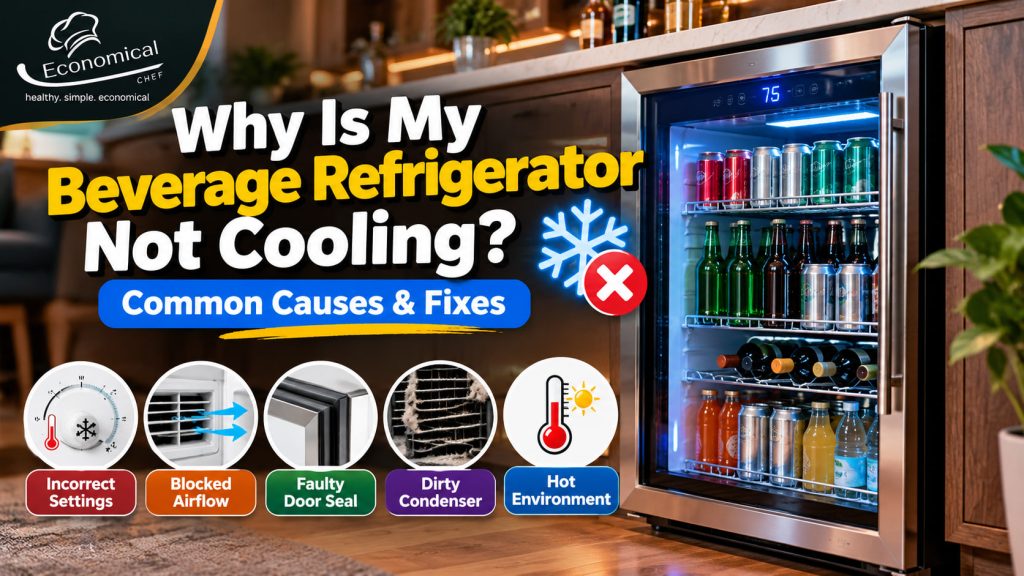
8 Things to Check If Your Beverage Refrigerator Isn’t Cooling
1. Check the Temperature Setting
The first thing to check is the temperature control.
It is surprisingly easy for a setting to be changed accidentally while loading bottles or cleaning the refrigerator. If the setting is too warm, the beverage refrigerator may appear to be running normally while drinks remain lukewarm.
Check your owner’s manual for the recommended temperature range and adjust the control if necessary. After making an adjustment, give the refrigerator enough time to stabilize rather than judging the result after only a few minutes. Some manufacturers recommend allowing up to 24 hours for a refrigerator to reach a stable temperature after a significant adjustment.
Chef’s tip: Keep an inexpensive appliance thermometer inside the refrigerator. The display may show a target temperature, but a separate thermometer tells you what the drinks are actually experiencing.
2. Make Sure the Air Vents Aren’t Blocked
Overloading a beverage refrigerator is another common problem.
Cans and bottles should be organized so they don’t block the internal vents. Cold air needs to circulate around the cabinet, and tightly packed drinks can create warm spots.
This is particularly important with compact beverage refrigerators because there is less internal space for air movement.
The FDA also advises against overpacking refrigerators because cold air needs room to circulate properly.
Fix: Rearrange bottles and cans, leaving the manufacturer’s recommended clearance around vents. Don’t stack drinks directly against areas where cold air enters or exits.
3. Check the Door Seal
A beverage refrigerator cannot maintain a stable temperature if cold air is escaping around the door.
Inspect the rubber gasket around the door. Look for:
- Dirt or sticky residue
- Cracks or tears
- Sections that have become loose
- A gasket that is no longer making full contact
- Bottles or shelves preventing the door from closing completely
A dirty gasket can prevent proper sealing, while a damaged gasket may need replacement. Whirlpool specifically identifies dirty gaskets, blocked doors, and an improperly leveled beverage center as potential causes of sealing problems.
Clean the gasket with warm water and mild detergent, then dry it thoroughly. If the door still does not seal properly, consult the manufacturer’s instructions.
4. Give the Refrigerator Enough Ventilation
This is one of the problems I see overlooked most often with under-counter and countertop beverage refrigerators.
A refrigerator needs to release the heat removed from inside the cabinet. If it is pushed tightly against a wall or surrounded by cabinets without the required clearance, its cooling system may struggle.
Installation requirements vary by model, so check the owner’s manual before moving the unit. GE, for example, notes that many refrigerators require clearance around the sides, top, and back, although the exact requirement varies by design.
Chef’s tip: Don’t treat a beverage refrigerator like a regular kitchen cabinet. Follow the manufacturer’s ventilation requirements, particularly for built-in or under-counter models.
5. Check the Room Temperature
The environment around the refrigerator can affect performance.
A beverage refrigerator installed in a very hot garage, enclosed patio, poorly ventilated cabinet, or other unusually warm location may have difficulty maintaining its target temperature.
Check the operating-temperature requirements in your owner’s manual. Different models have different limits, so don’t assume every beverage refrigerator can operate reliably in the same environment.
6. Clean the Condenser Area — If Your Model Requires It
Dust, grease, pet hair, and debris can interfere with heat dissipation on models that have accessible condenser coils.
However, don’t automatically start taking panels apart. Modern refrigerators differ in design, and some models have condenser systems that do not require routine cleaning.
Whirlpool identifies dirty condenser coils as one possible cause of poor cooling, while GE notes that many newer refrigerators have coils that don’t require routine cleaning. Both manufacturers recommend following the specific instructions for the appliance.
Safe approach: Unplug the appliance if the manufacturer’s instructions require it, then clean only the areas specifically identified in the owner’s manual. Never dismantle sealed refrigeration components yourself.
If your beverage refrigerator continues to struggle with cooling after you’ve checked these common problems, you may need to consider replacing the unit. See our guide to the best beverage refrigerators to compare different sizes, cooling systems, storage capacities, and designs.
7. Check for Frost or Ice Buildup
If you see excessive frost or ice inside the beverage refrigerator, don’t assume that more ice means better cooling.
Heavy frost can interfere with airflow and reduce cooling performance. It can also indicate a door-sealing problem or another fault.
First, check that the door is closing and sealing properly. If your model has a manufacturer-recommended defrost procedure, follow it carefully.
If frost quickly returns after defrosting, the underlying problem may require professional diagnosis rather than repeated defrosting.
8. Listen to What the Refrigerator Is Doing
Sound can provide useful clues.
A refrigerator that is completely silent may have an electrical, control, fan, or compressor-related problem. On the other hand, hearing the compressor or fan running does not necessarily mean the refrigerator is cooling correctly.
Some refrigerator manufacturers identify compressor hum, fan operation, and refrigerant movement as signs that the cooling system is attempting to operate. If the unit has been running for an extended period but still cannot cool, professional service may be necessary.
Avoid opening electrical panels or attempting to repair the compressor or refrigerant system yourself.
When Should You Call a Professional?
If you’ve checked the temperature setting, airflow, door seal, ventilation, installation environment, and any manufacturer-approved cleaning steps—but the beverage refrigerator still isn’t cooling—it’s time to stop troubleshooting and contact the manufacturer or a qualified appliance technician.
Professional service is particularly appropriate when:
- The compressor repeatedly clicks on and off
- The refrigerator runs continuously without getting cold
- There is an unusual electrical smell
- A fan is not operating
- You suspect a refrigerant leak
- Frost returns rapidly after defrosting
- The appliance trips a circuit breaker
- Internal electrical components appear damaged
Refrigeration systems contain electrical and sealed components that aren’t appropriate for DIY repair.
What About Drinks or Food That Have Become Too Warm?
This is where cooling performance becomes a food-safety issue.
If you’re using a beverage refrigerator to store perishable foods, don’t rely on smell or appearance to decide whether they are safe. The FDA and USDA recommend maintaining refrigerators at 40°F (4°C) or below and using an appliance thermometer to verify the temperature.
If perishable food has been above 40°F for an unsafe period, follow FDA/USDA food-safety guidance rather than assuming it is still safe.
For a beverage refrigerator used strictly for sealed drinks, the food-safety risk may be different, but the same principle applies: measure the actual temperature rather than guessing.
Quick Troubleshooting Checklist
Before calling for service, work through this list:
- ☐ Check the temperature setting
- ☐ Verify the actual temperature with an appliance thermometer
- ☐ Clear blocked internal vents
- ☐ Avoid overloading the refrigerator
- ☐ Check that the door closes completely
- ☐ Clean the door gasket
- ☐ Check required ventilation clearance
- ☐ Confirm the room is within the manufacturer’s operating range
- ☐ Inspect for excessive frost or ice
- ☐ Check manufacturer-approved condenser cleaning instructions
- ☐ Listen for unusual compressor or fan behavior
Final Thoughts
When a beverage refrigerator isn’t cooling, don’t immediately assume that the appliance is finished. Start with temperature settings, airflow, door sealing, ventilation, and installation conditions. These are relatively simple checks and can solve many cooling problems without an expensive repair.
If those checks don’t solve the issue, especially when the compressor, electrical system, fan, or sealed refrigeration system may be involved, professional service is the safer choice. And if you’re considering replacing an unreliable unit, our guide to the best beverage refrigerators can help you compare different sizes, cooling systems, storage configurations, and features for your kitchen or home bar.